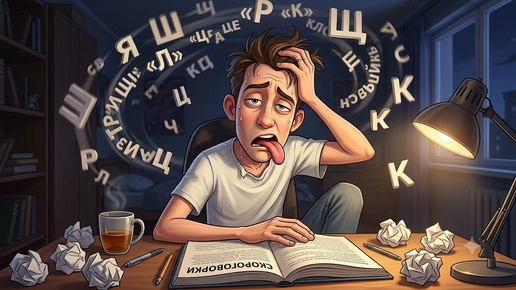
Где взрослому человеку взять мотивацию на занятия английским языком, когда вокруг взрослые проблемы?
кукама.инглиш
18
подписчиков
Я Юля Живцова, преподаю английский
Почему вы так страдаете по этой вашей грамматике, объясняю через стадии развития репетитора. ▪️Препод-новичок: восхищается элегантностью английской грамматики, ищет способы быстро и легко преподавать её не по школьным учебникам, находит Мёрфи, всегда рад удивить сильных учеников хитрожопыми конструкциями, провоцирует в учениках грамматическую тревожность, удивляется, почему ученики не выдерживают и уходят. ▪️Продвинутый новичок: «ну Мёрфи — это несерьёзно, сейчас мы будем выводить-грамматику-в-речь!» Гордится, что уж он-то умеет понятно объяснять грамматику, считает себя сильно лучше обычного новичка, постоянно находит или даже, прости Господи, изобретает якобы классные упражнения для развития ещё большей grammar anxiety и у своих студентов, и у себя, оказывается в ещё большем недоумении, когда ученики сдаются и уходят. Здесь находятся 80% преподавателей и не торопятся дальше, их ученики обречены снова и снова проходить много кругов ада, пока либо окончательно не сдадутся, либо каким-то образом не найдут в себе силы на космический рывок. ▪️Препод, недавно открывший для себя лексический подход: молится на Хью Деллара и Стивена Крашена, справедливо считает преподов-новичков ленивыми недоучками и вредителями, ломающими ученикам мозг, пытается исцелить и тех, и других, но не может, потому что слишком горит жопа, ведь теперь ему одному открылась истина! ▪️Препод, давно работающий в лексическом подходе: спокойно и уверенно лечит грамматическую тревожность и у учеников, и у других преподов, сам ей не страдает. Гордится своей миссией и достойно с ней справляется 🔥 📌я нахожусь здесь Подозреваю, что дальше существует ещё один этап. ▪️Препод, познавший дзен: уроки не отличаются от уроков препода-новичка, ведь «по Мёрфи, так по Мёрфи… Любой каприз за ваши деньги».
FIND YOUR BIRTH CARD
Let’s find out what your birth card is. The standard tarot deck consists of 78 cards divided into two sections, the major and minor arcanas. The word arcana is the plural of arcanum, which means “profound secret.” The tarot cards are therefore a collection of the “secrets” that explain our universe. The 22 cards of the major arcana are the heart of the deck. Each of these cards symbolises some universal aspect of human experience. Each card in the major arcana has a name and a number. Numerology...
TIME IDIOMS pt.2
⠀ IN THE BLINK OF AN EYE Something that happens in the blink of an eye, happens extremely quickly: I don’t recall many details of the crash – it all happened in the blink of an eye. MAKE UP FOR THE LOST TIME If you do something enjoyable a lot because you haven’t had the opportunity to do it before, you might say you are making up for lost time: He didn’t get the chance to travel much when he was younger but he’s certainly making up for lost time now! ⠀ AT THE CRACK OF DAWN When you do something...
IDIOMS WITH TIME
TIME FLIES Let’s start with the nice, short phrase time flies, used for saying how quickly time seems to have passed: Wow, Otis was a little boy the last time I saw him! Time flies. BETTER LATE THAN NEVER When something happens later than you were hoping, you might say better late than never, meaning that you are happy about it, even though it should have happened earlier: Eventually, he wrote and apologized. Better late than never, I guess. ⠀ ON THE DOT Conversely, something that happens on the dot happens exactly at the expected time: They arrived at nine o’clock, on the dot...
FLOWER IDIOMS
COME UP ROSES The flower that we most often find in idioms is the rose, and this beautiful, fragrant flower, not surprisingly, has very positive associations. If something is coming up roses, it is starting to be a great success: Earlier this year, she reached the third round of the tennis tournament. In fact, everything has been coming up roses for the young tennis player. COME UP SMELLING OF ROSES Someone who comes up smelling of roses emerges from a scandal or other difficult situation with...
DIFFERENCES BETWEEN BRITISH AND AMERICAN IDIOMS
Differences between US and UK English are particularly pronounced in informal and idiomatic language. There are lots of idioms that are used in one variety but not the other, for example go pear-shaped (to fail or go wrong) is used in British but not American English and strike pay dirt (discover something valuable) is American but not British. ⠀ ICING/FROSTING ON THE CAKE Some, such as that idiom, come about because of general UK/US vocabulary differences. The icing (UK)/ frosting (US) on the cake, is something that makes a good situation even better...
TASTES = TRAITS
SALTY Sure, salty is a taste, but it’s also a trait used to describe somebody, their language specifically, as racy and coarse. The term’s origin as a trait came to us in the 1900s as a way to describe sailors coming home from sea (a particularly coarse and vulgar-speaking breed if ever there was one). And, salty has continued to grow in use to describe just about anyone who’s a little rough around the edges. BITTER As a taste, bitter is defined to mean “something acrid or harsh.” As a trait, on...
WHY DO PEOPLE SAY “RABBIT RABBIT” AND “HARE HARE”?
Though it sounds a bit like gibberish, the phrase rabbit rabbit is a long-held superstition thought to bring about good luck. But it’s not to be uttered just any old random day. Rather, if you say it on the first day of the month before any other words come out of your mouth, then luck is thought to be coaxed your way. If you get your rabbits in, luck is yours for 30 days … or so goes the folklore. ⠀ WHERE DID RABBIT RABBIT COME FROM? According to the Farmers’ Almanac, the phrase goes back to at...
DIFFERENT WAYS OF SAYING QUIET
DEATHLY SILENCE Something or someone that is silent makes no noise at all. We sometimes say that people do things in silence, while the collocation deathly silence is used when the lack of noise is ominous: You must sit here in silence. When he finished speaking, there was a deathly silence in the room. DEAFENING SILENCE Possibly the most famous oxymoron of all – a deafening silence – is used to describe a situation where you might expect a response and it is very noticeable and significant that nobody says anything...
WORDS AND PHRASES MEANING ‘END’
⠀ CONCLUSION Similarly formal is the word conclusion, meaning ‘the final part of something’: In a fitting conclusion to a wonderful season, they won the match 4-0. ⠀ CESSATION The noun cessation, meaning ‘ending’ (from the verb ‘cease’), is usually used in formal contexts: It is hoped that the agreement will bring about an immediate cessation of hostilities. ⠀ PASSING We also talk about the passing of an old way of doing something, meaning ‘the end’, especially when it is replaced by something new: She regrets the passing of a more caring time, when neighbours looked out for each other...
MAKING UNCOUNTABLE NOUNS COUNTABLE
You probably already know that you can use many uncountable nouns in a countable way with words such as PIECE or BIT: I ate a small piece of cheese. Why don’t you add a bit of cream? ⠀ However, we can also use more interesting and specific words. We often use the names of containers when we talk about amounts of food. These might be items of crockery or cutlery, for example BOWL, PLATE, CUP, GLASS, TABLESPOON or TEASPOON, or items of packaging such as PACKET, BOTTLE, CAN, CARTOON, TUB or TUBE: I ordered a bowl of soup...
"A LOT" VS. "ALLOT"
We use a lot … a lot. But ask someone to define a lot and they’ll probably start by saying “A lot means … a lot!” That’s because it’s so commonly used that it can be hard to think of how to explain it. ⠀ WHAT DOES A LOT MEAN? As a noun, a lot means “a large number, quantity, or amount,” as in That’s a lot of cheese! or I only have a few hobbies, but my husband has a lot. As an adverb, a lot means “very much” or “a great deal,” as in I love you a lot, or “often,” as in I’ve been practicing a lot...