15 Nov 2024
Do you have a question you want us to answer?
Introduction
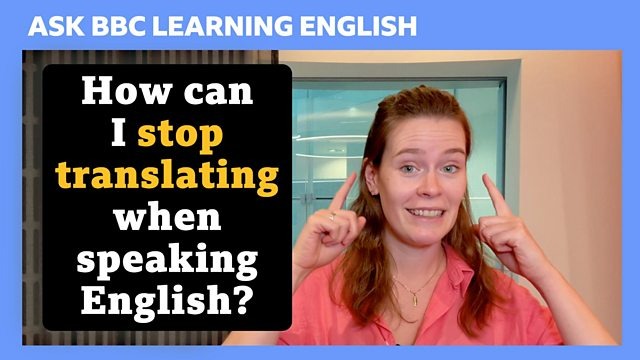
Semsihan has sent us a question. She wants to know how to stop translating when speaking English.
Beth's top tips!
1. Don't worry about making mistakes! They're a great way to learn, and everyone makes them, so don't be embarrassed – embrace them!
2. Think and talk to yourself out loud in English, especially when on your own because they no one can hear you practising! The more familiar you are with speaking in English, the easier it will be when you actually communicate with someone.
3. Associate new language with language that you already know. For example, if you learn a new noun that goes with 'do', try to associate it with other nouns you know that are used with 'do', like do the washing up, do a dance and do your homework. This will make it easier to remember vocabulary when you're speaking.
4. Learn phrases instead of words. English is made up of lots of words that frequently go together - these are sometimes called collocations, but certain grammatical structures have these too. If you know the meaning and how to use some of these phrases, it will help you to not translate when communicating. Here are some examples of English phrases: at the end of the day, I've been + -ing for ages, by the way, catch a flight.
5. The best way to learn English is to enjoy the way you study it! If you like reading fantasy novels, read fantasy novels in English, watch your favourite series in English... You don't have to memorise grammar rules if you know that's not the best way that you learn.
______________________________________________________________________________________________
To speak English without translating, train your brain to form thoughts directly in English. You can achieve this by narrating your daily activities, memorizing ready-made phrases instead of individual words, practicing daily listening without text, and speaking out loud to build natural reflexes. [1, 2]
Master speaking English naturally without mentally translating from your native language by focusing on these core techniques:
- Narrate Your Day: Describe your actions out loud as you do them. For example, say, "I am opening the door," "I am drinking coffee," or "I am walking to the car." This forces your brain to connect concepts directly with English words without an intermediary language. [1]
- Listen Without Reading: Many learners read English subtitles while listening, which triggers native language translation. Practice listening to native audio (podcasts, shows) several times to understand the ideas before reading the written text. [1]
- Use the Shadowing Technique: This highly effective method requires you to listen to a native English speaker and immediately repeat what they say. It trains your mouth and brain to produce sounds and rhythms instinctively without needing to construct the sentence from scratch. [1]
Explore Keith Speaking Academy for more structured lessons on learning language patterns, or try the deep immersion strategies recommended on the Effortless English blog to break the mental translation habit.