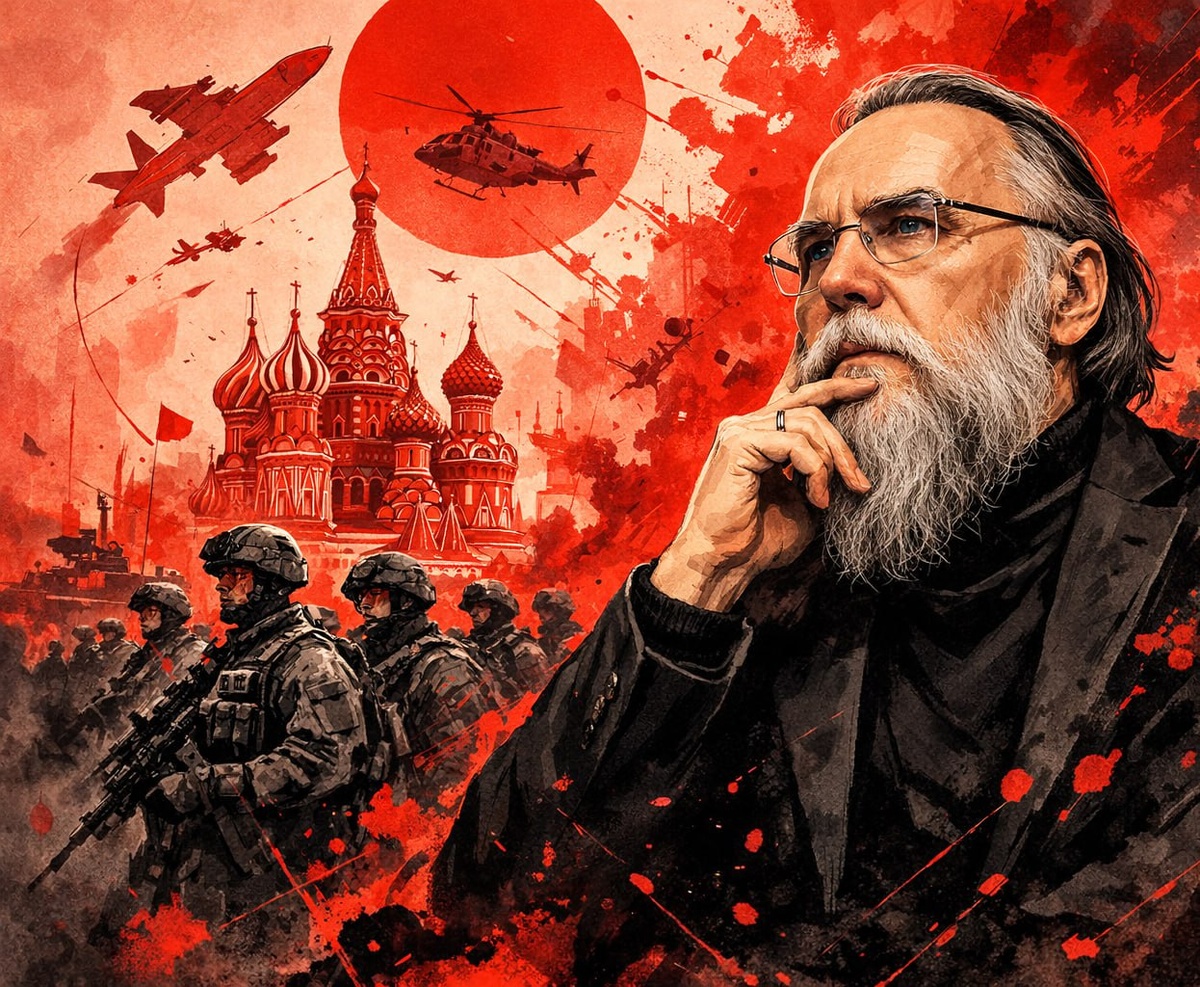
Alexander Dugin: Now to the 23rd. February 23. For a long time, during the Soviet period, this truly was a men’s holiday. Because the memory of the war—above all the Great Patriotic War—gradually receded from our society, becoming something official, something important, something truly commemorative, but museum-like. It belonged to the past. And as something past, everyone felt that it had passed—it was gone. Therefore, the army as such, the defense of the Fatherland, was regarded as something abstract. Later, towards the end of the Soviet era, Soviet power itself began to evoke more ironic feelings. And so, in essence, it became simply a men’s day—a kind of gender holiday.
Now, of course, its meaning is changing. Because there is a war. The defense of the Fatherland is on the agenda. People are dying; people are giving their lives. People are at the front; they are forced to kill the enemy. The very image of the warrior, the nature of war itself, the heroism we now encounter constantly in the present—all of this changes our attitude towards this holiday.
Therefore, I would first like to congratulate our warriors who are now on the line of combat contact. If we speak of whose holiday this is first and foremost—it is theirs. It is the holiday of real people—not conditional, not from the past, not abstract—but entirely concrete individuals upon whose shoulders now rests the being of our people and our state.
Every person who is fighting now, who is at the front, who is directly involved in this war or supports it internally or plans it strategically—it is precisely the army today, and our people who voluntarily went to the front, that form our line not only of defense, but of our very existence.
Thus, perhaps more than ever before, this holiday has acquired very deep and concrete meaning. Today it is a holiday washed in blood. It is interwoven with death, loss, immense suffering of those who have lost loved ones, lost limbs, become disabled, who have faced horrific trials at the front. It is difficult to suffer, difficult to lose loved ones, difficult to die—and no less difficult to kill other living people, our brothers who speak the same language. That too is very difficult. It means stepping over something within oneself.
I think that war, heroism, defense of the Motherland and the Fatherland have now acquired a significance that truly has not existed since the period of the Great Patriotic War. Therefore this is a holiday of the present, a holiday of real people.
At the same time, this changes our understanding of whom we call men. It is very important now to distinguish the biological male from the warrior. Not all men should be congratulated.
There are those who fled abroad. There is a “sixth column” that sleeps and dreams of when this will all end so they can unfreeze their stolen money in the West. They are not men. They may be biological males, but they are not defenders of the Fatherland, and they should not be congratulated.
Nor should those who hold their own “special opinion” about the Special Military Operation be congratulated. They are cowards, scoundrels, traitors. This is not their holiday, even if they are biological males.
This is our holiday—the holiday of those who today are fighting in this same Patriotic War against the collective West.
In this respect, in order to be congratulated, one must deserve it. Being male is insufficient. One must be a real warrior, a real patriot, a real hero. And not merely inwardly or abstractly, but having proven it in action.
Therefore, I would like to congratulate precisely those who are worthy. Not everyone indiscriminately. Those who are unworthy—those who are not spiritually within this war—are simply unworthy of congratulations and unworthy of being called men. You are trash, not men. We will congratulate only the real patriots of our country—the heroes who responded at the necessary moment to the call of the Motherland and stood up in her defense.
Read the full interview here:
https://www.multipolarpress.com/p/defender-of-the-fatherland-day