December 16, 2022
For some, the winter months may lead to feelings of sadness and loneliness. Cold temperatures, less sunlight and holiday stress can cause seasonal affective disorder or “the winter blues.“
How to Beat the Winter Blues
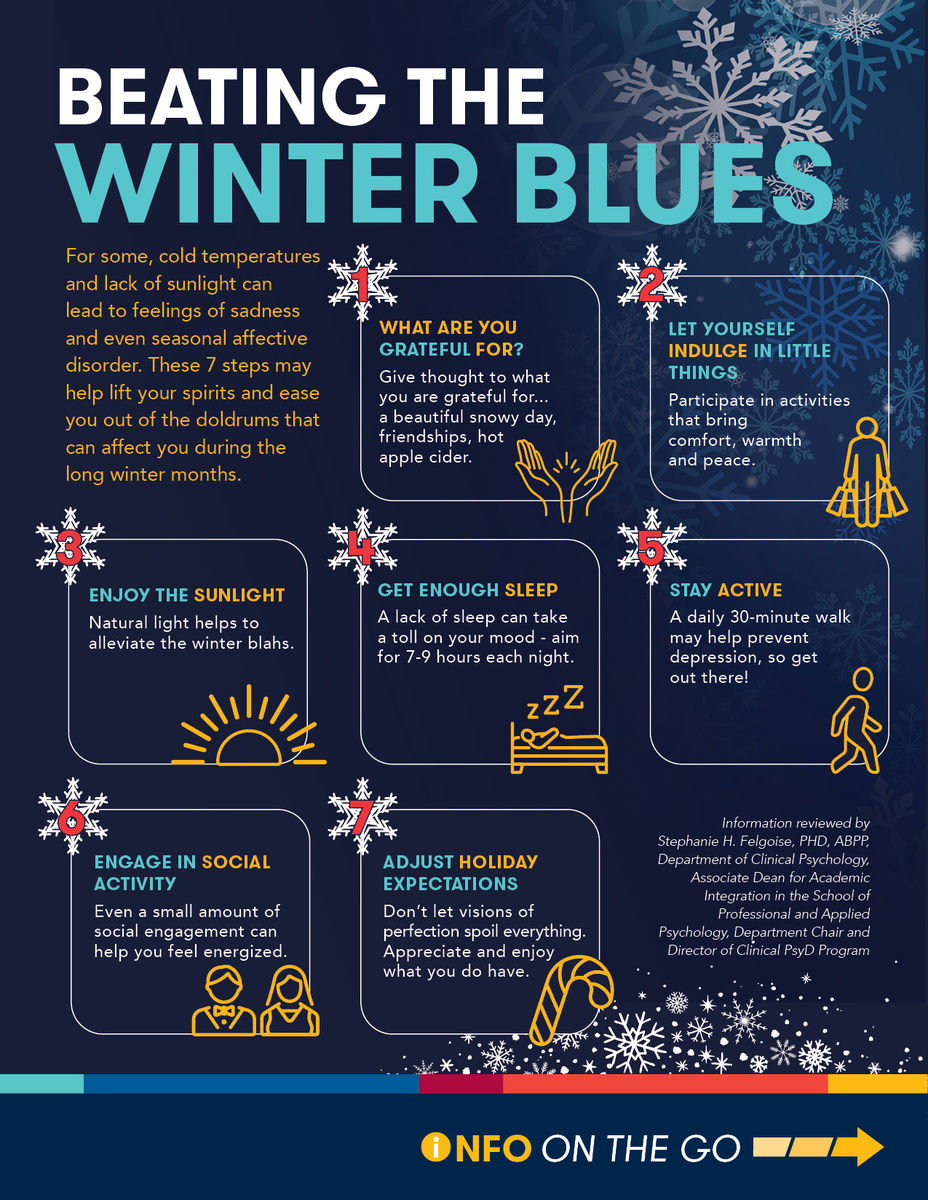
PCOM's Stephanie H. Felgoise, PhD, ABPP, Department of Clinical Psychology, shares tips for how to beat the winter blues. Our pieces of advice may help ease seasonal depression symptoms and lift your spirits during the long winter months.
Stay active
Exercise can help release beneficial hormones in our brains and nervous systems called endorphins. Endorphins have helpful physiological effects on our minds and bodies. A daily 30-minute walk may help prevent depression, so get out there!
Can't get outside? Try walking up and down stairs in your house or office for five-minute breaks throughout the day. Any movement is better than no movement throughout the day; even marching in place for a few minutes will get your blood flowing and increase your energy!
Enjoy the sunlight
Natural light helps to beat the winter blues. Try to take a walk or find ways to get outside on sunny days. Do your best to enjoy the sunshine when the weather is mild. If you need to make a few calls or appointments during the day, maybe do so as you walk up and down the street?
If you are near a window, take time to look outside and label things you see. What colors do you notice? What do you see that is moving? Be intentional about viewing the scenery. No window near your workspace? Get out of your chair and go to the nearest window or door for a few minutes throughout the day.
Get enough sleep
A lack of sleep can take a toll on your mood. Most adults should aim for 7-9 hours of restful sleep each night. Try reducing or eliminating caffeine in the afternoon. Avoid viewing a screen in the hour or so before bedtime. Better sleep will give you more energy throughout the day and a consistent sleep schedule helps your body rise and shine each day!
Engage in social activity
Even a small amount of social engagement can help you feel energized and combat seasonal affective disorder. Use local news outlets, borough websites and social media channels to find community events and holiday gatherings near you. Pairing up with a neighbor for a walk can be a great way to stay connected. If you don't plan it, it might not happen. Set social goals for the week, the month or year.
Let yourself indulge in little things
Participate in activities that bring you comfort, warmth and peace. Visit friends and family. Buy small gifts for yourself or loved ones. Order your favorite dish at a local restaurant. Other small indulgences may include lighting fragrant candles, listening to cheerful music or taking a warm bath.
Adjust holiday expectations
Don't let expectations of perfection spoil the holiday months. Holiday stress can add to your feelings of sadness around the winter blues. Appreciate and enjoy what you have in your life.
Express gratitude
Give thought to what you are grateful for. Reflect on people, experiences and simple pleasures in your life that bring you happiness such as a beautiful snowy day, hot cider, friendships, etc. Random acts of kindness have been shown to spread!
How to Beat the Winter Blues
When the temperature drops, and the daylight fades, it's not uncommon to feel a dip in our mood. Seasonal affective disorder, or as it's more commonly known, the winter blues, can make the colder months seem like an uphill battle. We're providing tips on how to beat the winter blues, with the help of PCOM's Dr. Stephanie H. Felgoise, the director of the PsyD in clinical psychology program.
First off, staying active is crucial! When you exercise, your body releases endorphins, those feel-good hormones that help relieve pain, reduce stress, and improve your sense of well-being. Even a 30-minute walk each day can help keep the depression at bay. If the weather is too wet or cold, get creative indoors. Take a stair break, march in place, or dance around-just get that blood pumping!
Next, we need to remember that natural light is a powerful mood booster. On those sunny winter days when the temperature is a little more mild, find time to get outdoors. However, if you're stuck indoors, find small ways to sit in the sun's glow. Dr. Felgoise recommends we find a window to sit near to catch up on reading, do a little daydreaming, or just watch the world go by. Getting a good night's rest can also be a real game-changer for your mood. Adults should aim for 7 to 9 hours of sleep, and try to cut out late-day caffeine, bedtime snacks, and late-night screen time. Good sleeping habits will help our emotions wake up refreshed. Let's also not forget the power of a little social interaction. Socializing with friends and family is another good way to release those helpful endorphins. Engage with your community, find local events, or just pair up with a friend for a walk. Setting social goals sounds formal, but really it's about making sure you don't become a hermit. A simple chat with a neighbor or a call with a family member can easily lift your mood.
When we're feeling a little blue, Dr. Felgoise recommends we indulge in the little things that bring us joy. Be it lighting a candle, listening to your favorite song, or treating yourself to your favorite dish. Practicing gratitude can also help relieve stress and improve our mood. Find moments to reflect on what you're grateful for, and not just the big things. Sure, family and friends are great, but don't overlook the small joys. That hot cider, the glitter of fresh snow, or the way your dog's tail wags excitedly-they all count.
In conclusion... Psychology is a powerful tool in understanding and managing our mental health. At PCOM, the PsyD in Clinical Psychology doctoral program trains caring, competent psychologists who are ready to make a difference in their patients' lives, focusing on holistic approaches to mental healthcare. Want to learn more about PCOM's psychology programs and how you can become a mental health professional? Visit pcom.edu to learn more about our degree programs, hear from our current students, and learn how to apply.
Explore Psychology at PCOM
The Doctor of Psychology in Clinical Psychology (PsyD) program trains competent, caring psychologists to treat individuals in a range of clinical settings.
Disclaimer: This article features AI-generated audio.