An effective AP Argument Essay (FRQ3) requires a 40-minute, 5-paragraph structure: an introduction with a defensible thesis, 2–3 body paragraphs providing specific evidence (from personal knowledge, history, or current events), and a conclusion that reinforces the thesis. The thesis must establish a line of reasoning, and body paragraphs must connect evidence to the argument through clear commentary.
AP Argument Essay Structure
- Introduction (1 Paragraph):Hook/Context: Briefly introduce the topic or quote provided in the prompt.
Defensible Thesis: Clearly state your position (for, against, or qualified) and outline your main points. - Body Paragraphs (2–3 Paragraphs):Topic Sentence: Start with a claim that supports your thesis.
Specific Evidence: Provide concrete examples, facts, or anecdotes.
Commentary: Analyze how the evidence supports your thesis and links to your topic sentence. - Optional Counterargument/Refutation: Address an opposing viewpoint and explain why it is incorrect or less compelling.
- Conclusion (1 Paragraph):Restate the thesis in a new way.
Summarize main points and provide a final insight (broaden the topic).
Key Requirements
- Evidence: Use specific evidence rather than generalizations.
- Commentary: Explain the why and how behind your evidence.
- Time Management: Dedicate roughly 40 minutes to planning and writing.
Note: For the AP US Government Argument Essay, you must include at least one piece of evidence from the required foundational documents.
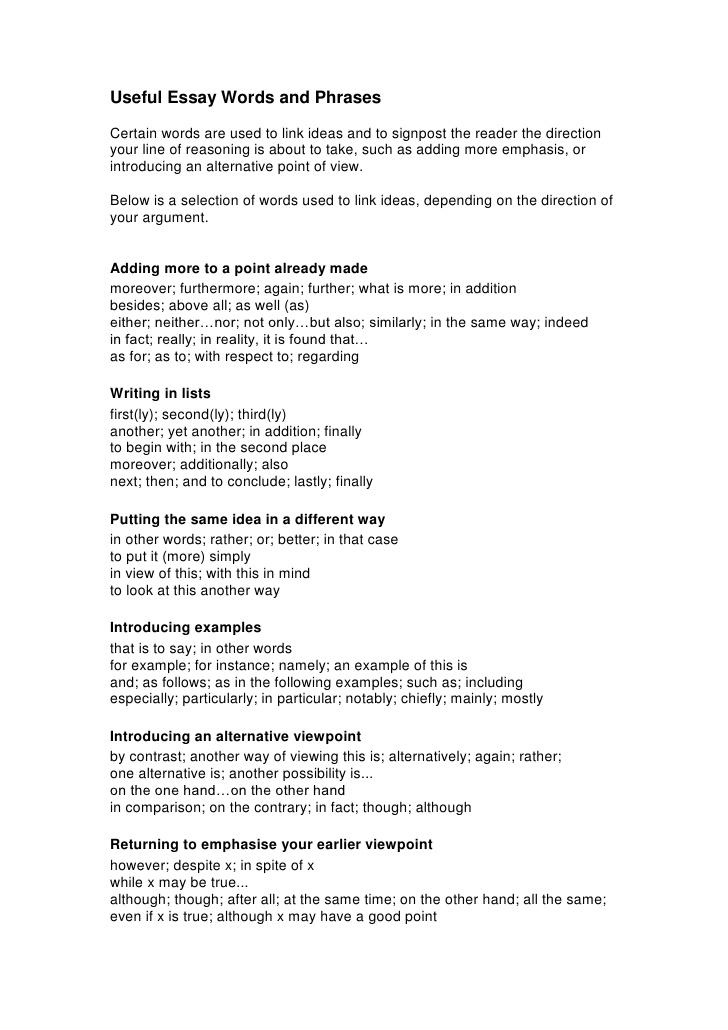
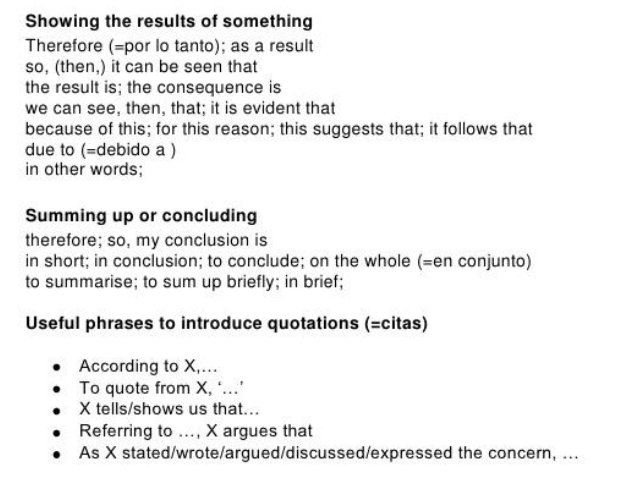
Useful Argumentative Essay Words and Phrases
Examples of Argumentative Language Below are examples of signposts that are used in argumentative essays. Signposts enable the reader to follow our arguments easily.
When pointing out opposing arguments (Cons):
Opponents of this idea claim/maintain that…
Those who disagree/ are against these ideas may say/ assert that…
Some people may disagree with this idea,
Some people may say that…however…
When stating specifically why they think like that:
They claim that…since…
Reaching the turning point:
However,
But
On the other hand,
When refuting the opposing idea, we may use the following strategies:
compromise but prove their argument is not powerful enough:
- They have a point in thinking like that.
- To a certain extent they are right.
completely disagree:
- After seeing this evidence, there is no way we can agree with this idea.
say that their argument is irrelevant to the topic:
- Their argument is irrelevant to the topic.
Signposting sentences
What are signposting sentences?
Signposting sentences explain the logic of your argument. They tell the reader what you are going to do at key
points in your assignment. They are most useful when used in the following places:
In the introduction
At the beginning of a paragraph which develops a new idea
At the beginning of a paragraph which expands on a previous idea
At the beginning of a paragraph which offers a contrasting viewpoint
At the end of a paragraph to sum up an idea
In the conclusion
A table of signposting stems: These should be used as a guide and as a way to get you thinking about how you present the thread of your argument. You may need to adapt certain words and phrases for your own purposes. You may also wish to add your own sentence stems to the list below:
Signposting stems for an introduction
To understand the role of ... (your topic*) this essay aims to provide a discussion of ... (the ideas you will develop)
This essay seeks to investigate/evaluate/illustrate/discuss the impact of ... (your topic) in relation to ... (the ideas you will develop)
Firstly, this assignment examines ... (your topic) and its links with ... (your first idea) Next, it closely examines ... in relation to ... (your next idea) Finally, it focuses on ... and how this affects ...(your next idea)
Signposting stems for a paragraph which introduces or develops a new idea
One aspect which illustrates ... (your topic) can be identified as ... (the idea you want to develop)
The current debate about ... (your topic) identifies an interesting viewpoint on ...(the idea you want to develop)
This first/next/ final section provides a general discussion of ...(the idea you want to develop)
Signposting stems for a paragraph which expands upon a previous idea
Building on from the idea that ... (mention previous idea), this section illustrates that ... (introduce your new idea).
To further understand the role of ...(your topic or your previous idea) this section explores the idea that ...
(introduce your new idea)
Another line of thought on ... (your topic or your previous idea) demonstrates that ... (introduce your new idea)
Signposting stems for a paragraph which offers a contrasting view
However, another angle on this debate suggests that ... (introduce your contrasting idea)
In contrast to evidence which presents the view that ... (mention your previous idea) an alternative perspective illustrates that ... (introduce your contrasting idea)
However, not all research shows that ... (mention your previous idea). Some evidence agrees that ... (introduce your contrasting idea)
Signposting stems to sum up an idea in a paragraph
This evidence highlights that ... (sum up your idea)
There is general agreement that ... (sum up your idea)
The strength of such an approach is that ...(sum up your idea)
Signposting stems for a conclusion
Clearly, this essay has shown that the main factors which impact upon ... (your topic) are ...(summarise your main ideas)
The evidence presented in this assignment has shown that ... (mention the conclusions you have drawn)
To conclude, this assignment has addressed a number of significant issues which show that ... (mention the conclusions you have drawn)
Argumentative Essay Outline (Sample)
Introduction
- Thesis statement/claim
- Main points (at least three)
Body Paragraph 1
- Present your first point and supporting evidence
Body Paragraph 2
- Present your second point and supporting evidence
Body paragraph 3
- Present your third point and supporting evidence
- Counterclaim/ refute opposing claim
Conclusion
- Restate your thesis