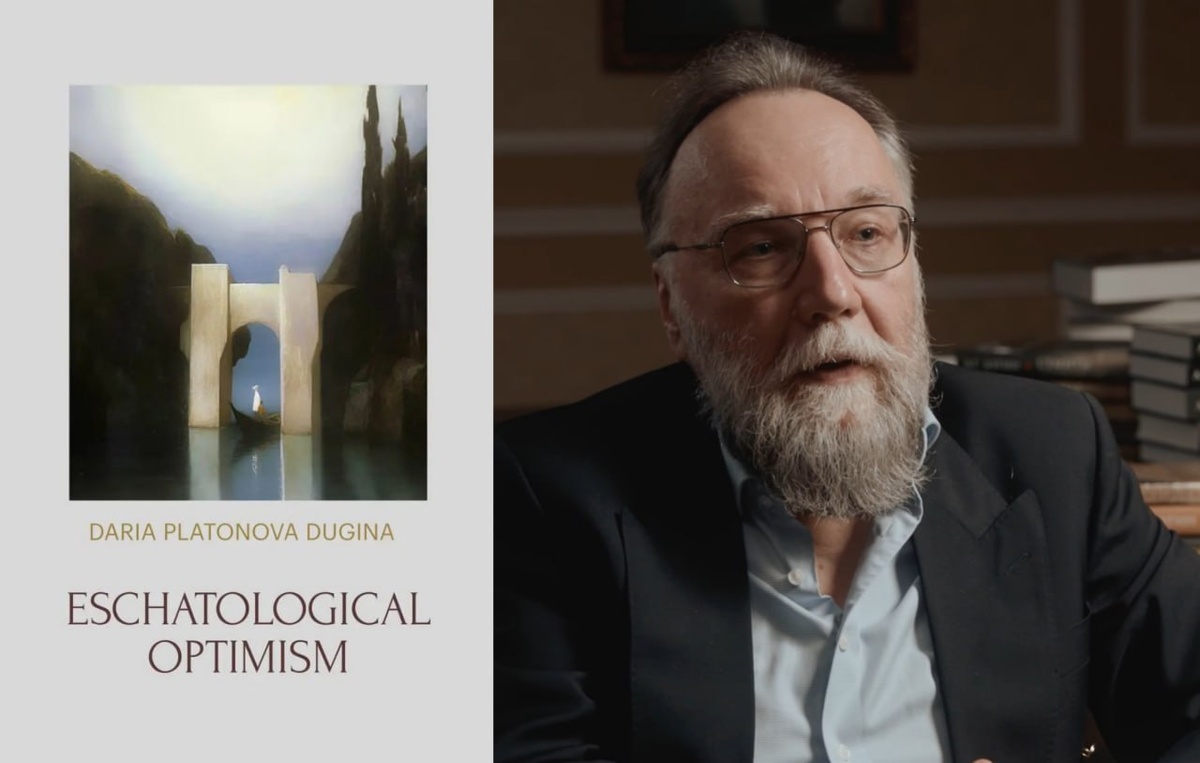
Here, perhaps, is the most important point of this book, Eschatological Optimism. This is a book of living thought. What is important here is not the scale, depth, or sheer volume of the theories, names, and authors cited in it. What is important is how a genuine philosopher reveals, lives, and embodies what they think in their very being. What is important is that they think philosophically, in the light of Sophia. Herein lies the novelty and freshness of this book. In the end, Daria writes and speaks not in order to move outwards to meet diverging lines of interpretations and observations of details, but to invite those to whom it speaks to make their journey inward, to live philosophy, to commit to a “turn” (ἐπιστροφή), as the Neoplatonists called it, and which Daria reiterates by no coincidence. This turn is key to her. Having experienced Sophia, she wanted to help others — readers, listeners, all of us — to experience the same illuminating insight by the Logos. Her book consists of multifaceted and widely differing approaches to the closed court of the king — in one place there is an imperceptible breach in the wall, in another there is an underground passage, in another there is a low-lying fence. Whoever has been inside knows how to enter, how to exit, and how to return.
Therefore, Daria Dugina’s book is initiatic and dedicatory. For someone who has the gift, the calling, the will to philosophy, this book might become a revelation. For phronetic people, it might be a useful and concise encyclopedia of Platonism. For aesthetes, it might be a model of graceful thinking. For those seeking the mystery of Russia, this book might be a humble milestone along such a difficult and noble path.
— Alexander Dugin, Father of Daria Dugina
Excerpt: from Eschatological Optimism by Daria Platonova Dugina
https://pravpublishing.com/eschatological-optimism/