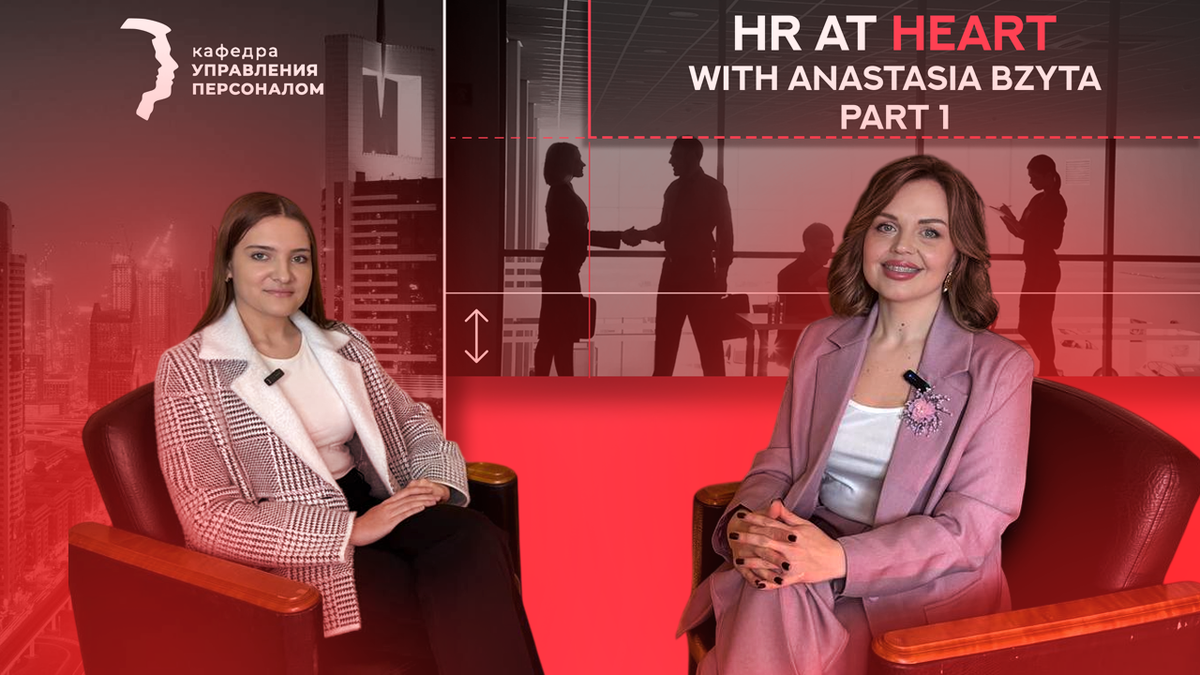
Host Polina:Hello, dear readers! My name is Polina, and we continue our series of podcasts "HR at Heart." Today, we have with us the General Director of the independent veterinary laboratory SHANS BIO, Anastasia Alexandrovna Bzyta. Hello, Anastasia!
Anastasia Bzyta:Hello!
Host Polina: Please tell us more about your company.
Anastasia Bzyta:I am very proud of the company I work for. Next year, our company will celebrate its 30th anniversary. I have been with it since 2007, for 18 years. I started as a simple lab assistant, and now I hold a managerial position. I must say that over these 30 years, we have developed into the largest private veterinary laboratory.
We provide quality veterinary assistance, and now we offer a full range of services: from receiving animals and laboratory diagnostics to diagnosing and performing surgical interventions if necessary, along with further procedures. Under our brand, we operate 4 multidisciplinary veterinary centers and 6 veterinary laboratories that serve all clinics in Moscow, many regional clinics, and even some veterinary clinics from other CIS countries.
We work with small pets such as cats, dogs, and some species of exotic animals. We also conduct laboratory research for agricultural and productive animals. This means we collaborate with various factories, combinations, and peasant-farmer households, and we currently perform more than 3000 studies. We are the only private veterinary laboratory accredited under the 17025 ISO system, which pertains to laboratory practices and quality management standards. At the moment, we are actively moving forward and developing, which makes me proud of our activities.
Our organization is part of the association; we are members of the "National Veterinary Chamber," which includes more than two hundred members from veterinary organizations across Russia. We are involved in standardizing the provision of quality veterinary care.
Host Polina: We know that you received additional professional education at our university. Please tell us why you chose the State University of Management and how satisfied you are with the knowledge and results you obtained.
Anastasia Bzyta:Thank you for the question. In fact, this question was very important for me at one time, when after about 8 years of working in my specialty, my primary education as a veterinary doctor-biochemist, I was directly involved in laboratory diagnostics.
I was seeing patients, taking samples, and studying biological material. At some point, as our organization grew and developed various divisions, I had the honor of leading one of the divisions. I had to lead my colleagues, with whom I had just shared tea the day before, and start trying to build communications in a completely different way, from the perspective of a manager-leader and subordinate.
Since my professional competencies did not allow me to do so, I lacked the level of knowledge that was provided in our veterinary-focused university because we were taught to treat animals, not to manage people. I felt I needed skills and knowledge related to personnel management and human resources management. In 2016, I came up with the idea that I needed to go and study. I wanted to learn how to build competent, qualified communication with the people under my supervision. How to make them listen to me, understand me, and, most importantly, follow my orders.
At that time, I was still young, with limited experience, and I often emotionally got involved in various conflicts. I felt that I lacked specialized knowledge, so I started looking for an educational center to obtain additional education. Of course, the first place that came to mind was the State University of Management—where else to go but to the State University of Management? I chose additional education because I decided that I wouldn't have enough energy for a second degree, and additional education would be a good support. I chose the faculty for additional professional education, which was then called "Personnel Management." Now, as far as I know, it is called "Human Resource Management."
My colleague and I studied together; I motivated my colleague, the Chief Veterinarian, to join me, and we enrolled in this specialized program, attending classes twice a week, diligently completing all homework, and eventually defending our graduation qualification works. My work was related to innovations in communication; I presented the corporate portal we use in our work to have quick access for fast communication with the staff, a kind of internal social network. This work was brilliantly defended, and I received my additional education, for which I was very grateful. Besides gaining the necessary competencies that the university provided, I also gained the most important thing—confidence in myself as a leader. Because a long journey lay ahead in applying the knowledge I obtained, through additional education and self-education, which I continue to pursue and love. That first signal to take action actually came from the State University of Management, specifically from additional education. I gained the confidence that I could indeed build effective communication with the staff, work competently with subordinates, and establish not only an authoritarian management style but also a more coaching one, where my subordinates also take on certain responsibilities and form specific processes that they can influence, rather than just waiting for orders. In our field, the veterinary field, I currently really like the trend that many leaders are going to get additional education. At this moment, it is crucial to choose the right educational center where we can obtain this education. Because at the time I was choosing where to study, there were very few accredited, licensed centers. Of course, the first was state education. Now there are plenty of additional courses, various centers, and intensives, which is generally good, but again, one must approach this with critical thinking regarding whether qualified knowledge will be provided there, how relevant the knowledge will be, and whether it will be modern knowledge. Here, critical thinking must be engaged.
Host Polina:Please tell us what requirements modern leaders have for young specialists?
Anastasia Bzyta:That's a very good question because everything is changing; we live in a rather fast-paced information age, and the demands on young specialists have increased. Twenty years ago, when we graduated from our universities and entered the workforce, we were evaluated more on our hard skills, our professional knowledge, and theoretical skills.
For example, in our case, it was about treating animals, which includes knowledge of biochemistry, biology, and so on. However, we were not taught to develop soft skills; we did not practice them, and we did not know how to build communication properly. Nowadays, modern employers expect not only professional skills from young specialists but also teamwork skills, stress resilience, and interpersonal skills. In the field of veterinary medicine, this means providing assistance to animals, but in reality, we continue to work with people.
Unfortunately, young specialists today may find themselves unprepared for communication with people when they start working. Twenty years ago, when we began our careers, it was important for us to provide proper assistance, to conduct research, and to perform procedures on animals. Yes, this is still necessary, but now it must be done with consideration for interaction with the pet owners.
One must learn to be confident in certain stressful and shocking situations. Because in our work, it is not about gaining pleasure. We operate in an environment where we have to interact with diseases and death every day, and we need to know how to handle this, yet young specialists are sometimes not ready for it. Young specialists differ from the previous generation in that they want quick results. They want to quickly enter the profession, try themselves out, perhaps not find their place, get tired of it, and move on to another field, maybe a simpler one.
But life is such that even in another field, you will encounter the same difficulties. They may be of different intensity or nature, but for a young specialist, it is crucial to understand that there will be challenges everywhere. If you want to succeed in your profession, it is very important to realize that you will have to face difficulties. You will need to demonstrate endurance, and you will need to be flexible in some ways. You must learn to build your interactions with the people around you, your colleagues, and your clients because now, practically everywhere, we either offer a product or a service—there are two options.
Therefore, in any case, you may have to deal with dissatisfaction. Employers expect motivation from young specialists and, of course, a desire to do a little more than what is expected of them. This has always been the case, but now it is especially important. We live in a fast-paced era where one can develop, learn, apply new skills, and familiarize oneself with them. Employers are looking for young specialists with bright eyes who will come and be interested in everything happening in the team, not just in their narrow little part assigned to them by their job description.
Host Polina:A motivated employee is indeed the key to a good company and working in it.
Anastasia Bzyta:Yes. There is a significant responsibility on the employer as well because this motivation needs to be supported and stimulated. That is a separate issue. What else does a leader expect from a young specialist? Of course, honesty—without honesty, there is no way to build trusting long-term relationships.
In our complex era of conflict in the external environment, in foreign policy, and internally, we do not want to work with overly politicized young specialists. This can also be a hindrance, as excessive politicization and certain viewpoints can distract a person from their work. We would like to see a person who is stable in this regard. Of course, no one denies that you can have your views on everything happening; however, it is essential to separate your workday from everything that is not related to your direct responsibilities.
Host Polina: So, it's best to avoid people who talk more about tense topics and issues that can distract from work.
Anastasia Bzyta:Yes, including provoking conflicts within the organization because any leader expects a team player. No matter how much we try to say that some professions do not involve teamwork, we are still part of certain systems, and we are all elements of these systems.
We are in teams, and we need to learn to communicate with those around us. If we are excessively conflictual on any grounds, creating an atmosphere of aggression, we will not be able to establish normal working processes. Therefore, employers do not so much avoid this but pay attention to it. What else does an employer expect from a young specialist? Of course, returning to the most important point, it is their professional skills.
You know how it goes? You get hired for your hard skills but fired for your soft skills. That's how it is. In any case, there will be questions regarding your personal performance. You need to understand this. As for additional expectations from employees, each employer has their own, for the most part.
Host Polina: You mentioned that the previous generation, 20 years ago, differs from the current one in that hard skills were important back then, while now there is a new trend towards soft skills. Are there any other changes between the past generation and the current one? And are there differences in attitudes towards work?
Anastasia Bzyta:You know, that's an excellent question. I love the theory of generations. I think many people know that there is a certain gradation of generations over a time span of about 20 years. I am speaking to you from the perspective of a millennial, or Generation Y. The next generation is Generation Z.
Host Polina: That's us!
Anastasia Bzyta:Yes, that's you. And the next generation is Generation Alpha. Each generation is defined by the environment in which it was raised. Accordingly, this environment shapes certain qualities in individuals. I'm not saying that everyone is the same; by no means, but certain trends can be traced. Our generation of young specialists 20 years ago was focused on stability, on the desire to establish ourselves and prove that we are capable professionals. We could work for free, we interned for long periods, and we held the same positions for many years because it was important for us to establish a certain authority.
Your generation is faster. You have been raised to understand your self-worth. You realize that everything is already in place for you to be valued. There is no need to prove anything. The most important thing is to develop your professional qualities. You are bolder, more decisive, and more willing to sever ties. Of course, not everyone, but for the most part, this is a trend. Modern employers need to be ready for this.
It is quite strange for an employer to expect the same competencies from different generations. I’m not talking about professional competencies; I’m referring to soft skills. And what’s important to note here is that we, as employers, need to learn how to interact with you. We also need to address the issue of workforce shortages. I think this is an important topic.
Employers must learn to adapt to current trends: what kind of young specialists are coming in, what to pay attention to, what activities to offer them, how to evaluate their work, and where to see their strengths. When a leader recognizes the strengths of a person, it becomes easier to shape the work process for that specialist so that they can showcase those strengths more prominently than any weaknesses they may have. We need to be as quick as you are.
Host Polina: Regarding workforce shortages, it is said that by 2030 there will be about 6 million specialists in deficit.
Could you please share if your company feels this workforce shortage and which specialties are most affected by this deficit?
Anastasia Bzyta: Here, I can only speak from my industry because that’s what I focus on. But I can say that not only my company but the entire industry is experiencing this significant shortage of specialists. I am a member of our large association, the "National Veterinary Chamber." It has existed since 2010 and includes about 200 veterinary institutions across Russia. This is a voluntary association; we self-regulate and adopt certain standards for ourselves to make our work easier. This trend of workforce shortages is evident in all veterinary clinics, from the smallest veterinary offices to the largest hospitals. Why is this happening? Of course, it is related to the demographic crisis; at one time, not enough children were born to become specialists now. It is also connected to recent emigration trends. Additionally, it relates to the new generation, which finds it quite challenging, at least in our profession, to cope with our difficulties.
To be a veterinary specialist, one must show mercy. Veterinarians need to be compassionate because they provide help to those who cannot ask for it. At the same time, a veterinarian must not only be compassionate and kind but also very resilient and strict. They need to understand that not only the health of the animal but also the psychological state of the owner depends on them. This can be difficult for a young specialist from the new generation.
As a result, we face the issue of people leaving the profession. Those veterans who started in our field 20 years ago or 15 years ago are still in the profession. However, young specialists burn out more quickly, and not only because they do not maintain a work-life balance, which is essential to dedicate time to rest, but also because this work spills over into their personal lives. A young veterinarian becomes passionate about their profession and begins to provide help at times when they themselves need assistance and rest.
This balance gets disrupted, leading to burnout, and they leave the profession. But that’s one aspect. The other is when a young, still inexperienced specialist encounters difficult conflict situations that they cannot handle. Our task now, as the older generation, is to teach young specialists to be resilient in their workplaces. I believe that this trend exists in other professions as well—being resilient in the face of the challenges they will have to confront.
(To be continued…)