Question: If certain conditions are required for the birth of a philosopher, then what is the role of scientific institutions that claim to engage with philosophy?
Alexander Dugin: For philosophy to exist, there must be at least one genuine philosopher. If there are two — splendid. Three — even better. Around authentic philosophy, this most delicate substance, institutions can then be built. Pupils, followers, even opponents will emerge. Take Aristotle, for example: he continued Plato’s line while building his own model. This applies only to true philosophers — such as Plato. Even in rejecting him, one still produces something meaningful and rational.
If, however, we speak of bureaucrats in philosophy, it makes no difference whether you accept or reject their ideas — there is simply nothing there to develop or refute. Thus, the initial yeast — the birth of a philosopher — is the essential condition. When such a person appears, the state, if it truly wishes to affirm its sovereignty, must help create around him an atmosphere conducive to the emergence of a school. Only then will an institution led by a philosopher become a genuine school of philosophy.
For in a philosopher lives the image of what he wishes to see in others. He can discern: this one is a philosopher, that one is a bureaucrat. Yet there is a place for bureaucrats too — they may prepare auxiliary materials or study the technical aspects of a given philosophical school. Thus, even those who find themselves in philosophy without being philosophers can have a function within the broader process. A true philosopher will reorganize everything so that each finds his proper place. But if a simulacrum stands at the head, everything will work in vain. Institutions will transmit nothing to society, and living philosophy will be replaced by its imitation — which, sadly, is what we see today.
Read the full interview here:
https://www.multipolarpress.com/p/philosophical-sovereignty
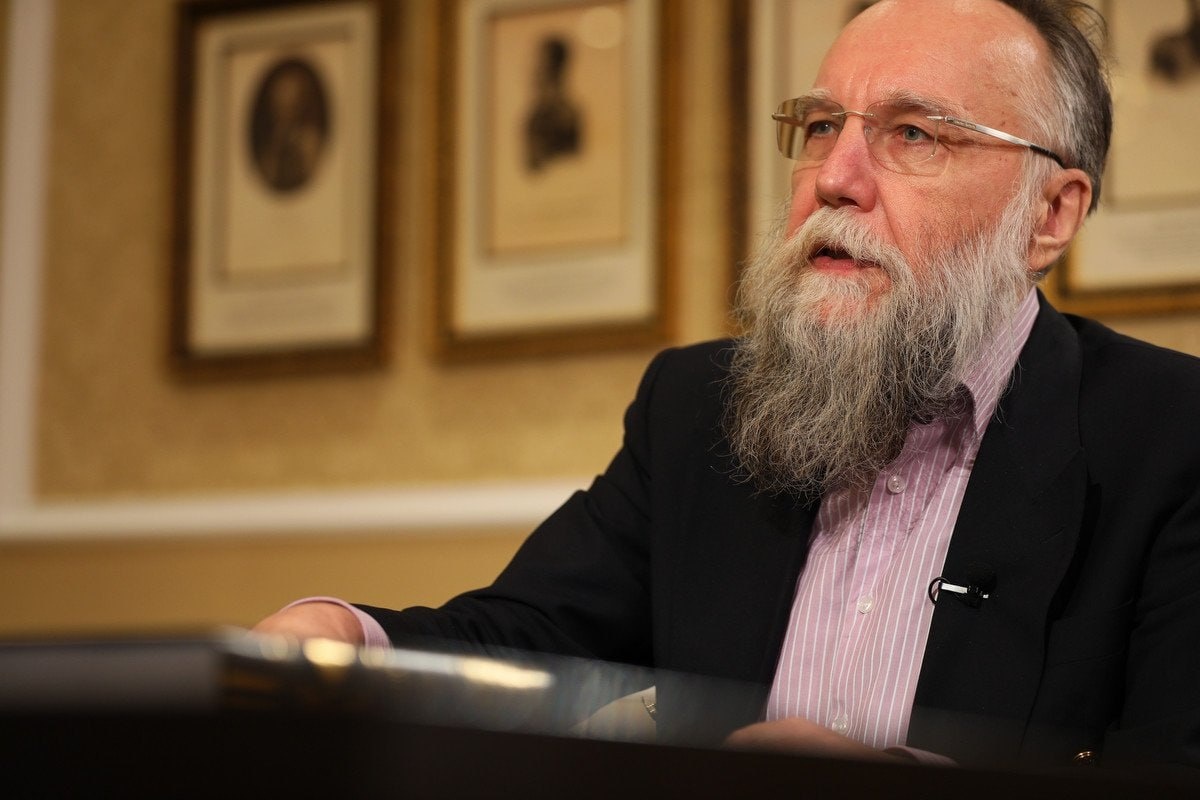
Photo: Nikolai Malakhin / Nauchnaya Rossiya (Scientific Russia)