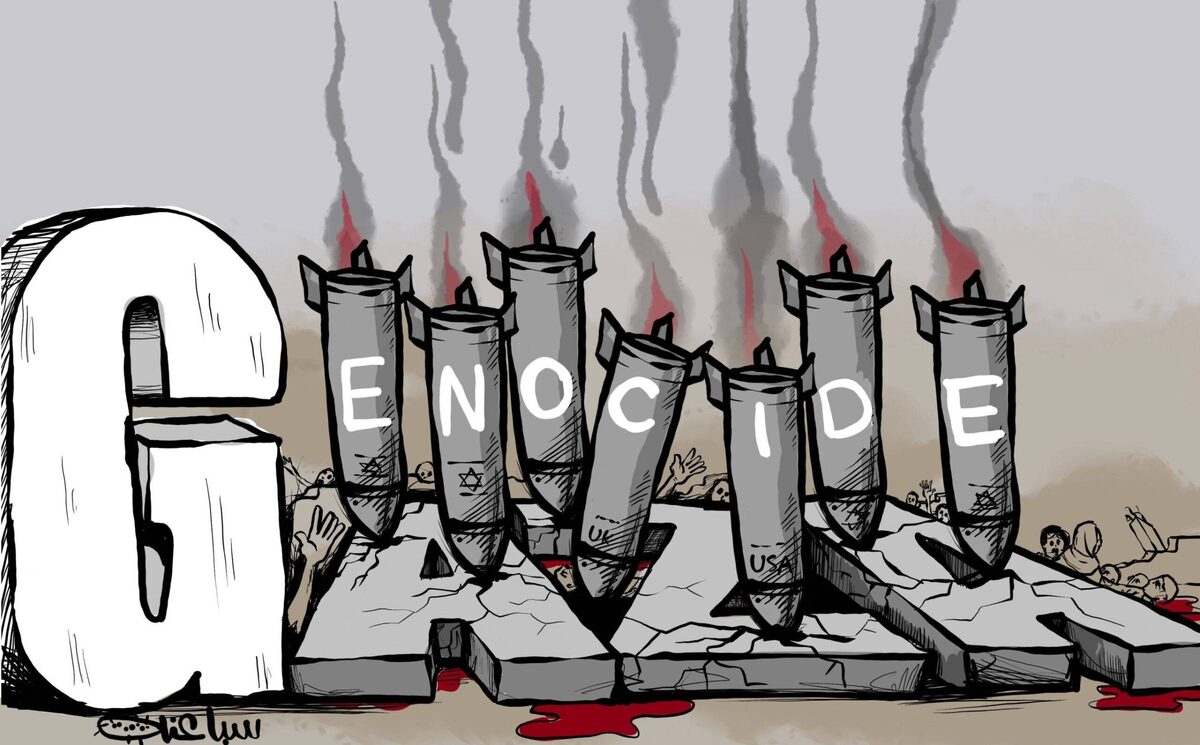
Revenge never brings peace — it only fuels more hatred. When the response to a crime becomes a collective punishment against an entire people, justice loses its meaning: revenge ceases to be personal and turns into a war against the innocent — children, mothers, the elderly. Such revenge is wild, inhuman, and devoid of morality; no religion blesses the destruction of the innocent.
And yet, we must face the truth: sometimes revenge becomes a political tool. When punitive operations turn systematic, when "retaliation" takes on a planned, total nature, one begins to suspect — is revenge being used to achieve other goals? The elimination of leaders and organizations may hide narrower political objectives, leaving many unanswered questions. In such cases, brutality can no longer be explained by grief alone: it serves a strategy. And that makes the tragedy even deeper — because politics, under the mask of revenge, shatters the lives of those who had nothing to do with the crimes.
There is another grim side to this story — the confidence of power. When one state, supported by a powerful ally, acts mercilessly against its neighbors, the victims are never the guilty — but ordinary people. External support makes responsibility collective: taxes, political decisions, diplomatic silence — all of this weaves a web in which the innocent die. Every civilian, in one way or another, becomes a witness or even a silent accomplice if they allow their government to continue such policies. This is a heavy moral charge, and it cannot be ignored.
When the methods of war come down to systematically destroying the population of an occupied or blockaded land, we must speak plainly: this is no longer just warfare — it bears the marks of genocide. The essence of genocide is not only mass killings, but also the intent to erase a people. If policy is directed at wiping out a nation from the map, this is no longer military action — it is a crime against humanity. The key word here is intent. To remain silent, to close our eyes, or to excuse it as “collateral damage” is to abandon human responsibility.
This is all the more shocking if we recall history. The Jewish people themselves have suffered expulsion, exile, and destruction. The memory of one nation’s pain should have served as a warning never to repeat such cruelty against another. To inherit suffering is not a license to inflict it on others. On the contrary: to have endured pain should obligate us to mercy.
There is also a deeper tragedy in this conflict: the biological and historical closeness of the two peoples. Scientifically, Jews and Palestinians share remarkably similar genetic roots. Both come from the same region and share common ancestors. Differences emerged later, through diaspora and wider historical mixing. This means the current enmity tears apart not only societies, but something far older — almost familial bonds. Imagine: people who are genetically close are locked in a struggle to erase each other. Is that not one of the greatest tragedies of human history?
When we see the news of dead children, grieving mothers, and the cold rhetoric of governments justifying violence, we cannot remain unmoved. Hypocrisy and indifference bury the voices of the victims; and if we remain silent, we too consent. Silence is not neutrality — it is complicity.
Remember this truth: if you close your eyes to injustice done to others, sooner or later they will come for you. “Then they will come for you.” These words are not a threat, but a warning. History teaches us that compassion and truth are the only forces capable of breaking the cycle of revenge. Anger does not heal, revenge does not restore. The path to justice is not through erasing lives, but through recognizing human dignity in every person — even in those with whom we do not share a past or a future.
If you have even one chance to speak up for the innocent — do it. If you have one chance to raise your voice against destruction — raise it. Because silence and indifference are also a choice. And this choice will decide who we are tomorrow: those who helped prevent another wave of suffering, or those who became accomplices to it.