Translation of a fragment of a paired conversation with Vasilisa Kaganovskaia and Maxim Nekrasov from their large video interview.
– You two are quite different in temperament. How do opposites get along?
– Vasilisa: As they say – opposites attract. Though I can’t really say we’re complete opposites.
– Maxim: We’re fun.
– Vasilisa: (laughs). If we’re talking about personalities in life, I think we’re actually similar in many ways. On the ice – yes, we’re probably different. But now we’re starting to find common ground.
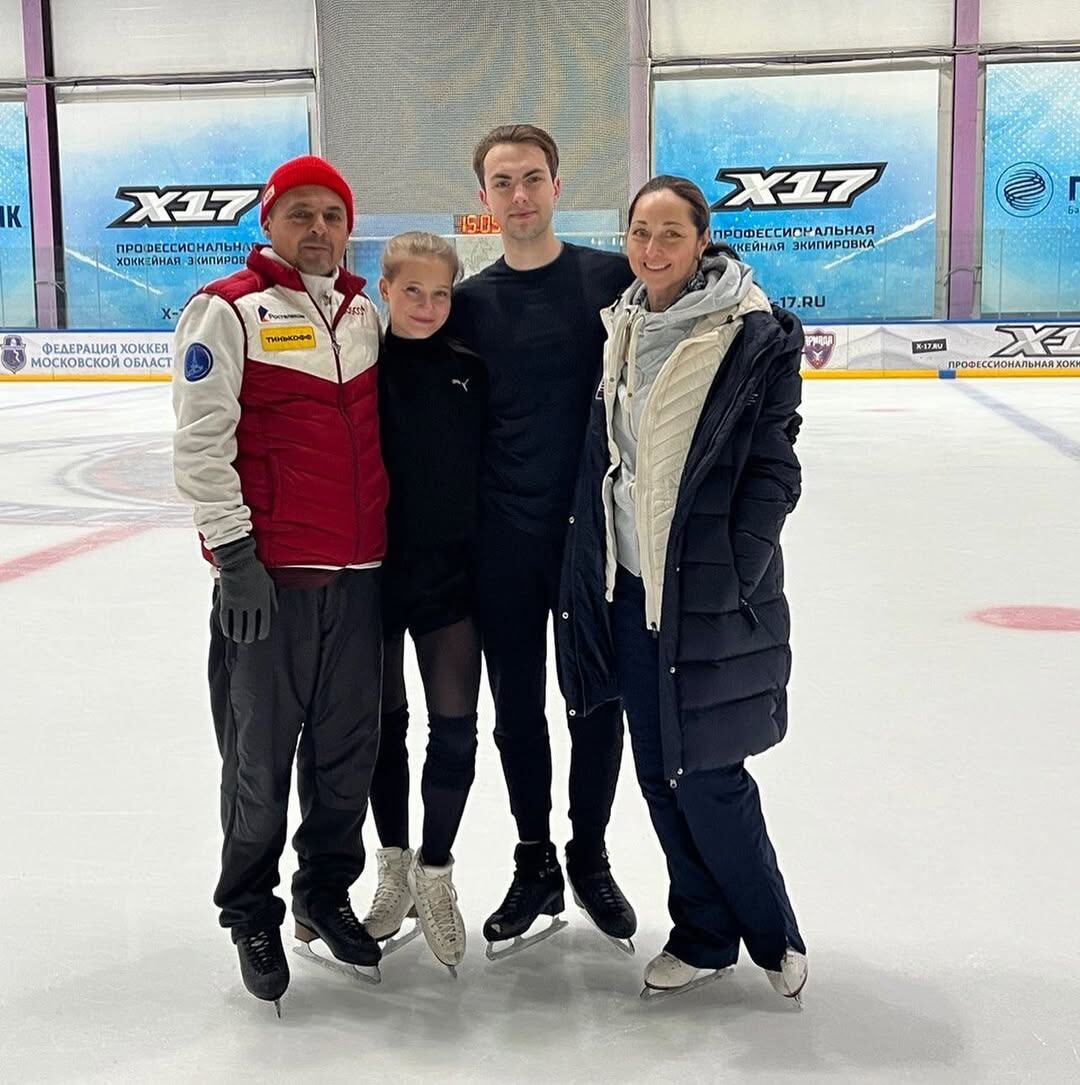
– What are the common features?
– V: Before, we skated in different styles, but now we’re starting to see one direction.
– M: I agree. A lot of work went into that.
– V: There’s more understanding now. Before, certain moments slipped by – like when we worked on programs, sometimes I didn’t get it, it felt too strange for me. Sometimes Maxim didn’t understand. Now, I’d say, that doesn’t really happen anymore.
– What does your training schedule look like?
– M: If we’re in Odintsovo, then at 8 a.m. we have about a 45-minute warm-up. At 9 – we’re on the ice until 11. After that, on Monday, Wednesday, and Thursday we have off-ice training, while Tuesday, Friday, and Sunday are choreography. Saturday is our day off.
If we’re training at "Kristall" then on Saturday we skate instead, and Sunday is the rest day. But sometimes during the week we don’t rest at all. Like now.
– Why no days off now? Isn’t it the off-season?
– V: That’s actually a pretty common misconception – that in the off-season the training load drops. In reality, it’s the opposite – training only increases in the off-season. During the season, the load is higher because we run programs.
– M: But in general, everything is more stable then. You know exactly what you need to do in the gym and on the ice. And here you have to come up with something new. You come at 8 in the morning – and it’s a mental workout from the start.
– Sounds sad.
– M: No, actually it’s fun (laughs).
– Does the heavy load in the off-season start right after the last competitions? I thought the toughest part comes after choreography is set.
– M: No, it starts right away. We try to put together at least some kind of program drafts before vacation, so that later, at training camps, we can work on them with the choreographer and load them with all the details.
– V: Right now we have more training hours because of the choreography process. And afterwards, even when everything is set, we can’t reduce ice time because we need to run-through. Intensity is heavier during the season, of course, but in terms of sheer volume, it’s bigger now.
Honestly, I like it more during the season. I don’t really like the off-season (laughs).
– I won’t ask about the specific music for the programs, but can you at least describe the temperament? Last season you had opposite moods in your programs. This year, will it be another contrast and step out of your comfort zone? Or have you more or less settled on a style?**
– V: This season our programs will be even more diverse. And the contrast will be even greater.
– M: I agree. The contrast will be huge.
– So last season there was a big contrast. And now – even more?
– V: Yes, now it’s really going to be even more contrasting. As for style, I can’t say we’ve fully settled. We keep experimenting.
– M: Just so you understand – what we’ve come up with for the short dance… that was tough! We went through a ton of music. We thought picking the free dance would be harder, but it turned out the opposite.
– How interested are you in the rhythm dance theme – the 90s?
– V: Very interested.
– M: Lots of cool music.
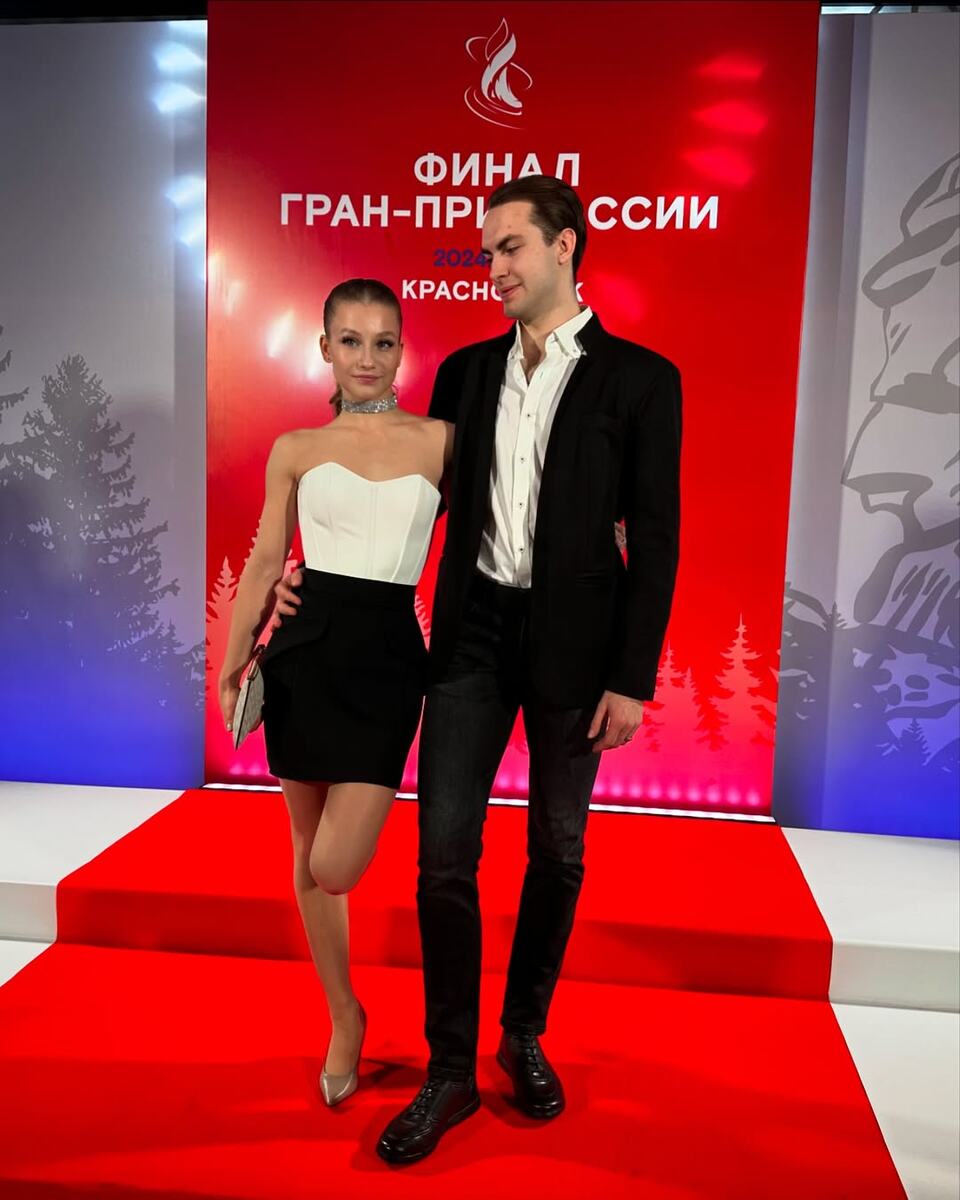
– V: Last season it was a broader timeframe – the 50s, 60s, 70s. Seems like a wide range, lots of options. But since they gave us a specific style, it actually narrowed things down. And this year, though the timeframe is smaller, they allowed us to choose anything – from disco to heavy grunge rock. That’s awesome, big thanks to them!
– How would you rate the past season for yourselves?
– M: Good, stable. Well, almost stable. Except for one slip… But we’ve already let it go. What’s done is done.
– V: I’d say the season met our expectations. We didn’t even think about impressing anyone or anything like that. The goal was to start and get better with every event. A debut season is always nerve-racking, because you don’t yet feel each other fully. But by the end of the season we both understood how to make things more comfortable for each other, how to get in the right mindset.
By the end, it was calmer. Not like at the test skates, when our knees were shaking like crazy! (laughs). So the main goals we set with the coaches were achieved, and we’re very happy about that.
– What do you think made this progress possible?
– M: We owe a huge thanks to our big coaching staff. We progressed thanks to them.
– V: We’re really lucky to have two wonderful coaches – Angelika Alexeyevna (Krylova) and Alexey Yuryevich (Gorshkov). They’re very different.
– M: They even think differently. But it all comes together – and results follow.
– V: They have different training processes, different visions of choreography. Each of them gave us the maximum from their side. And us – we just worked…
– And the work paid off.
– (laugh)
– V: It’s boring to put it like that, but really, what else is there? I could say it’s all about meditations or spiritual practices.
– Well, if that were true…
– V: But no – it’s all achieved in the gyms, with the help of our coaches. Nothing supernatural.
– Maxim said Angelika Alexeyevna and Alexey Yuryevich think differently. How does that show?
– V: For me the funniest part was during practice, how differently they see the process. Angelika Alexeyevna constantly told me I had to be beautiful, I had to be perfect…
– M: Basically, she tries to make everything beautiful, and we make everything ugly!
– V: Wait! (laughs). And then Alexey Yuryevich, at the very first warm-up, told me: “You don’t need to try to be beautiful! You’re already beautiful!” My brain exploded. Like, wait, what?
– M: And I’m just in the background skating awkwardly (laughs).
– V: For me, that was the biggest contrast – in how they see ice dance. For Angelika Alexeyevna, beauty is key. Alexey Yuryevich thinks more about comfort, unusual – and not always beautiful – positions, while beauty comes naturally.
– Maxim, does Angelika Alexeyevna make you beautiful too?
– V: (nods and laughs).
– M: In every little detail! We paid attention to these things before, but with her it’s on another level. I usually focus more on technique, and here suddenly I had to make it beautiful too. At first it was hard, but now I get that it’s necessary.
– I think at the "Russian Challenge" it looked both beautiful and technical. For Vasilisa, that "Suicide Squad" image seemed natural, but looking at Maxim, I was stunned.
– V: I was stunned myself!
– M: I think a lot of people were. Especially when they did my hair and makeup, everyone was like “Oh my god!” (laughs). Like, who is this guy? In a good way, everyone was shocked. I went all in, into nirvana.
– V: I was really happy that many people highlighted Maxim in that number.
– M: Just no one expected me to be like that.
– V: Exactly! I always expected it. I always knew.
– M: Normally I’m reserved, calm, shy. Well, what can I say, I showed my other self (laughs).
– V: I just know him well. From the very start I was sure Maxim could show himself in any role. We’re really happy we managed to show that number so well.
– If you name your long-term goal – what would it be?
– M: Improve, improve, and improve again.
– V: One less obvious goal – to stay healthy, so we have the strength to work long-term.
– M: Well, I’ve already been battered enough…
– V: So that you won’t be battered anymore!
– Maxim, so now you just need to keep improving.
– (laughs).
– V: Honestly, it’s something people don’t often talk about. Many forget how important it is. If you don’t have the resources, at some point you simply can’t go on. You need to treat your health carefully if you want to skate for a long time.
– M: And beautifully.
– V: And technically! (laughs).
– Few expected that last season young pairs would get so close to the leaders. When you went out and saw that, what was your reaction?**
– V: I can speculate in general, not just about us. When young duets come out and they’re really good, cool – of course they get closer. As for leaders… If we talk about this “waiting line” in dance, I personally don’t believe it ever existed.
Leaders are leaders objectively. They’re stronger, more polished, more technical, more artistic, more experienced. And why, if they are like that, shouldn’t they take their rightful first place? Just because of “make way for the young”?
– Maxim, do you agree there’s no line?
– M: There never was one.
– But people say there was.
– (laughs).
– V: I still think there isn’t one. Now they say “the line is breaking.” But why? Maybe the leader stopped being more technical, artistic, etc. And other pairs emerged who stood out. People see it as the line breaking. No, it’s just a new generation coming in, other pairs getting stronger, working hard, putting together great programs. That’s what it depends on, not on some unwritten rule.
– Even though your goal is “improve, improve,” the Olympics is important for any athlete. For you – is it a dream or a goal?
– V: I think you shouldn’t talk about goals like that. For me, it’s a little strange when people share it with everyone – like, look, this is my goal, and I’m going for it.
– So for you it’s more personal?
– V: Yes. My mom always told me – the less you say, the better it will be for you.
– M: Silence is golden! (laughs).