English version of a fragment of an interview with Vasilisa Kaganovskaia and Maxim Nekrasov (the part with Vasilisa).
– How did you even end up in sports? I don’t think people really know much about that.
– Honestly, nothing interesting. I was born in St. Petersburg, lived there until I was 12. And as my mom and grandma told me, one day they were out walking with the stroller just a few minutes from our house – there was a construction site. They checked what was being built – turns out it was an ice rink! “Well, you’ll be a figure skater then.” That’s the whole story.
– You got into ice dance pretty early.
– Well, I wouldn’t say people immediately told me I couldn’t be in singles… Although it’s true, I was terrible at singles. I still can’t jump. Anything even remotely connected with jumps just doesn’t work for me. I guess gravity pulls me too hard!
Seriously though – as a kid, I was kind of lazy. All the singles skaters around me were constantly running around, doing stuff, so energetic. And me – when I was little, I’d slowly walk to the middle of the rink, sit down, and eat snow. In the end they looked at me and said, “Well, you’ll be a dancer then.”
– Like, all dancers are lazy?
– I guess back then there was that stereotype. But really, I always loved dancing. Plus my mom later told me that she and my grandma liked ice dance more when they watched it. So everything fell into place – and thank God it did, because I love ice dance with all my heart. And I’m sure I wouldn’t have lasted nearly as long in singles.
– When did you try ice dance first time?
– Very early. As far as I remember, I went to my first tryout with a coach when I was 6. At first they didn’t want to take me because I was too little. Then they agreed, but on the condition that I pass at least some standards, because back then I only had “Young Skater” level, or something like that. And you needed at least the third youth level.
So there was a period when my partner and I trained both as a pair and practiced jumps for singles competitions. Otherwise we couldn’t skate in dance. We only fully joined the dance group around age 7 or 8.
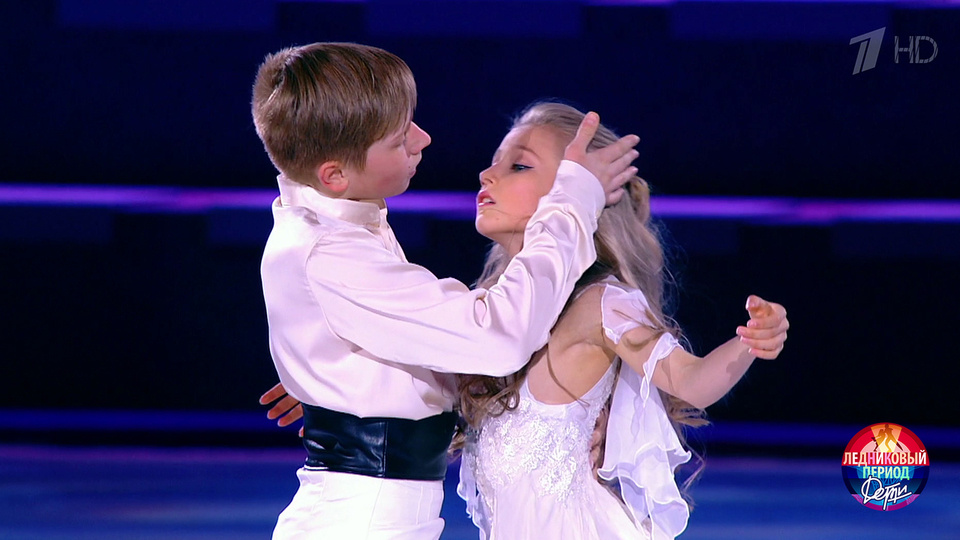
– Probably the children’s show "Ice Age" was a key moment in your development.
– I’d agree. Thanks to that project I started to believe I could achieve something. It also helped me move to Moscow. The feelings I experienced there I’ll never forget. You suddenly find yourself on the same ice as your idols, the ones you’d just watched on TV – at that age it gives you a huge push to rethink yourself. You realize that sports are no joke anymore. Either you keep going and admit it to yourself, or you’re not ready.
I chose the first option. I understood I wanted to devote my life to ice dance and decided to move to Moscow to train seriously. St. Petersburg just didn’t have the same conditions.
“We arrived on the night train – and started looking for an apartment”
– What were the problems back then?
– When I trained in St. Petersburg, I didn’t have nearly enough ice time. Practices were only 45 minutes a day – that’s very little. Plus we trained late at night. The latest was from 10:15 p.m. to 11:00 p.m. Of course, that was tough. So there was a suggestion that if I wanted to take it seriously, we could try Moscow. And they sent me there.
– How was the move?
– It was… funny. Now I realize it was kind of crazy. First of all, my mom and I only told my dad we were leaving a few hours before the train.
– He didn’t know anything?
– No. Otherwise he just wouldn’t have let me go! My mom and I made the decision, and we just told him when it was already too late. I know he was very hurt by that. At my mom – yes, very much. But not at me. Later, I think he accepted that maybe it was meant to be.
We went by night train. Around 5 a.m. we arrived at the station – and immediately went to a morning practice at around 7. They told me I was supposed to skate alone, they’d just watch me, nothing serious. But then Angelika Alexeyevna (Krylova) suddenly says, “There’s a boy, take him and skate together.” I was shocked – everything was happening so fast!
After practice we talked with Angelika Alexeyevna. She said, “Yes, yes, just an hour break – and then another practice.” And back in Petersburg I only had 45 minutes a day! It felt so unusual. I had prepared myself mentally that they’d just take a look and send me home right away.
In the end I skated the second practice, all went well, and they accepted me. Mom and I left “Megasport,” sat in a café in “Aviapark,” and said, “So, let’s look for an apartment.” We had nowhere to go – we hadn’t prepared anything. We found one quickly, went to see it, and that was it, we moved in.
– Was it hard to move? Another city, a different rhythm of life…
– I wouldn’t say it mattered much to me then – Moscow or Petersburg. I was only 12, what difference does it make? The hardest thing was living without my parents. They weren’t planning to move, only my grandma came with me.
The first week I felt great – freedom, no one controlling me! But then it hit me – I’m sitting here alone, no dad, no mom… Sad. I realized how much I missed them. I’d sit at home in the evenings and feel that emptiness.
And it’s not like I had friends here either. In Petersburg I went to school like a normal kid, talked with classmates. Here – school basically ended. Instead, I had full training, and not at 10–11 p.m. like before. Angelika Alexeyevna’s group was very adult back then – and I was the only child among them. I thought, “Well, okay, nobody to talk to…”.
But the hardest thing was going back and forth between Moscow and Petersburg. After a couple of years I got used to it, but at first it was really tough. Like, it’s my birthday, we celebrate with family, then I meet my friends – and the next day I have to leave again…
– You said, “school ended.”
– Yes. Until sixth grade I went full-time to a serious lyceum in Petersburg, with all six lessons a day. Normal education, like kids who don’t do serious sports. In Moscow, school really took a back seat. We tried to find a way to combine it with training, but we knew it wouldn’t work. Nobody was going to teach me alone from 6 to 11 p.m. It just wasn’t realistic.
For me, honestly, it was a joy – no school, everything’s great! That was me in seventh grade. Even when I went to school, I didn’t do anything. The teacher talked, and I was on my phone or doodling. I was very careless about studying. I guess I needed that period of freedom, I wanted to feel it.
But thankfully, it ended quickly. I pulled myself together, started studying on my own, worked with tutors. I tried to at least go to the last class of the day.
– So you still combined it somehow?
– I tried. I ended up changing schools twice. First I went to a regular one where they had something like a sports class – lessons started later than usual. Then, when I already had a work record book, I transferred to evening school.
And that was great. Classes were in the evenings, I could get there after practice. My classmates were much older than me – they helped me a lot, treated me very well. I was the only minor among them. Teachers also treated us differently. They knew nobody there needed to be forced.
– Are your parents connected to sports in any way?
– Not at all, I’m the first professional athlete in the family. My mom did gymnastics a little when she was 7 or 8, but before one competition my grandma refused to sew her a skirt, and they didn’t let her compete. So that was the end.
– What do your parents do?
– Mom’s an accountant. And dad… honestly, I don’t even know. I think that’s common in families – you know what your mom does, but dad – no idea! (laughs).
“I didn’t find myself in the trash!”
– At what point did you realize your inner strength?
– I don’t think I have yet. But I did realize that you need to work really hard. After I moved to Moscow, Angelika Alexeyevna showed me that nobody’s going to hand me anything just for pretty eyes. No matter how talented you are, if you don’t work on yourself, you won’t succeed. So rather than discovering some “inner strength,” I just realized what I had to do to get a chance at high results.
– You faced popularity quite early. For someone so young in sports, it can be destructive.
– In some ways, it was actually useful. The first wave of recognition came with the children’s Ice Age, when I was very little. And what happened then helped me be better prepared for internet hate. Because when you’re 12 and open the comments and read things about yourself like that… You don’t even know those words yet, you don’t understand them!
It’s scary, it shouldn’t happen. But now I’m not afraid of anything. That early wave of activity helped me realize faster that hate was, is, and always will be. I’m one hundred percent sure it’ll never go away. You just have to accept it. Because no matter what you do, the only thing you can change is your attitude toward it – nothing else.
– Did you come to that on your own at 12? Or did adults help you deal with it?
– I wouldn’t say adults. First of all, I didn’t really talk about it with anyone. I never went to my mom and said, “You know, I just read this word…”.
I think I mostly came to it myself. Plus, when I was 14–15, during my transition years, I wanted to respond to every single hate comment. Like, “You wrote this – I’ll reply right now, how dare you, you have no right!” I had this wounded sense of justice – why can they, and I can’t? I wanted to prove to everyone that I didn’t find myself in the trash, that you can’t treat me like that.
But then it completely faded away. I got lazy. I had way more important things to do, and I lost all desire to waste energy on it. Before, I read every message, tried to reply to everyone – now, honestly, I don’t. I realized there just isn’t enough time – otherwise I’d spend the whole day on my phone, and that’s not good for me.
People often write, “You got popular and forgot your fans!” But it’s actually hard. When 10 people write to you – I don’t understand how you couldn’t answer everyone. But when it’s thousands – it’s just impossible, no matter how much you want to. There are only 24 hours in a day, and I also want to sleep.
– How do you personally feel about your popularity? Let me explain – from the outside it seems like you don’t really do much to build it.
– That’s true – I don’t do much. Of course, like any teenager, I wanted likes and followers. But honestly, I didn’t do anything to get them. It all came by itself.
Some people make a whole plan, set goals (for followers), and work toward them. I just went with the flow. It wasn’t that important to me. Not to say I don’t value what I have – I do. But my goals are different, more about sports than social media numbers. I love the people who follow me. But I’m not going to post content every day! (laughs).
– I think the most surprising part of your popularity is the huge attention you get from Spanish-speaking audiences. Major Spanish media even compared you to their crown princess Leonor.
– I saw that article when our fan group posted it. I thought, “Wow!” Then I found a video comparing our faces. I even asked my mom – “Are we really that alike?” She said in some angles yes, in others not at all.
I think from certain angles we do look alike. But overall – probably not. Anyway, it’s funny, but nothing more. It’s not like we’ll ever actually meet. That girl doesn’t even know I exist.
– Well, never say never.
– Oh, please! Should I start learning Spanish then…
– Maxim Nekrasov in an interview once called you a “demon.” Do you agree?
– Yes (laughs). At least it’s very hard to call me an angel. I can be irritable, hot-tempered, annoying. Hyperactive when I’m in a good mood. And other times – totally distant. But Maxim didn’t mean it in a bad way! So I’ll agree with him.