This post has originally been written in Russian, but I decided to translate it and post once again so my English-speaking friends can read it. I resisted the temptation to use Google Translate and ChatGPT because it is a good exercise for me to do this job myself, even though it takes some time. Thus, apologies for mistakes, strange-looking phrases and Russian-style punctuation. Let’s go!
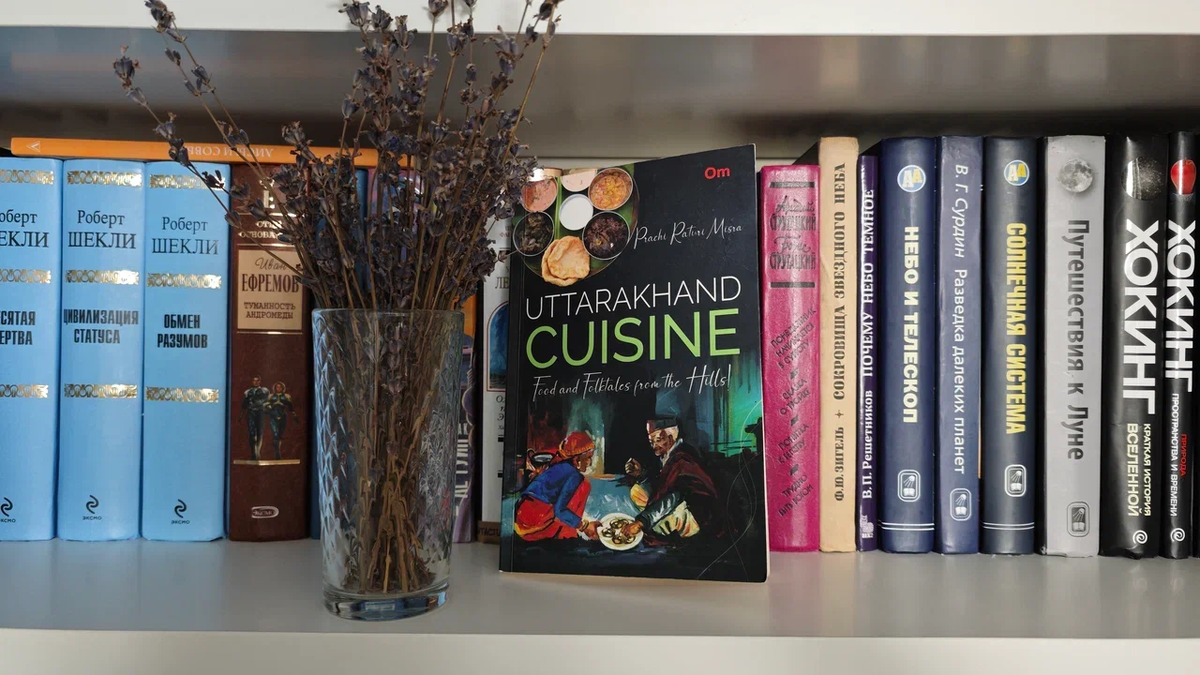
In December I was lucky to get a very unusual book. It is a book about food: what people eat, how they eat, how they cook their food and where they get the ingredients, what the benefits of each dish are, why the dish is healthy and when it is the best season to cook and try it. The book includes many recipes, but it’s unlikely that I will be brave enough to cook something – even if I find the ingredients (you can find anything in Moscow), most likely I will fail with the result. However, I would like to use the book as a guide for a visit to an Indian restaurant. I do miss Indian restaurants a lot.
I got this book as a gift, and it is very important for me. I always think about my friend when I read the book she has given me or when I see this book on the bookshelf. Such gift is not just a material item: it is a door to a new and unfamiliar world. This book is also a traveler. It came from India to Dubai and left Dubai for Moscow in my suitcase. It will be later based with the Soviet edition of the Library of the World Literature (Biblioteka vsemirnoi literaturi). I think it is a good adventure for a book. It’s like a mission – find a person for whom you will become a discovery.
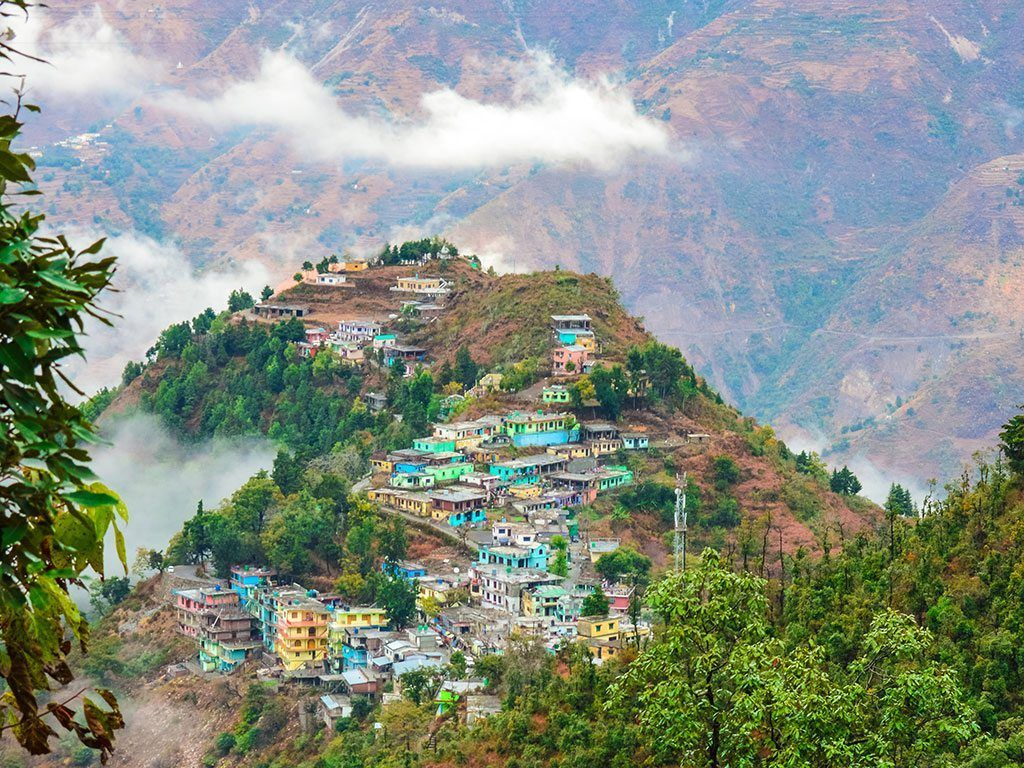
So, for two months, very slowly, with the help of Google and multiple dictionaries I was reading a book about the cuisine of the Northern India, state Uttarakhand. The name of the book respectively is “Uttarakhand cuisine. Food and Folktales from the Hills”. I have never heard about Uttarakhand before, but now I know that it is a land near Himalayas and has a border with China and Nepal. It’s not just a fascinatingly beautiful place, it’s the land where the major events of the Mahabharata took place. (Here I’m quietly singing to myself the song of Krishna to Arjuna).
I would not have managed without Google and dictionaries, and I was very lucky to get some help from DeepSeek who is familiar with many of the dishes from the book. Yandex, the main Russian search engine, was absolutely useless – it surely needs more experience with Indian foodstuff. The problem is that the food and nutrition in Uttarakhand are radically different from what I am used to at home: it would be almost the same for me to read a book about the alien cuisine. Worth noticing, that we are not talking about some exotic sides of life. We are talking about food which is the basis of every life on Earth.
By the way: while reading I caught myself thinking if I could create a similar book about Russian cuisine. Of course, there are books about Russian cuisine. One of them is Elena Molokhovets' Classic Russian cooking: A gift to young housewives published in 1861. Another one is “the book about animals that are too many on Earth” as the famous Russian actress Faina Ranevskaya called it. Its real name is “The Book of Tasty and Healthy Food”. I have this book at home and respect it very much, but it is really big and contains enormous amount of information. On the contrary, the book about Uttarakhand cuisine is a little one, but as the same time it covers so many important things.
Suppose I want to choose 15-20 words crucial to describe Russian cuisine. Which words do I choose?
First of all, bread. No matter what they now say about gluten, but bread for Russians is not just food, it’s a part of a national culture. There is nothing about bread in the phrase “Leningrad blockade” but it undoubte is about bread.
The next word is potatoes. Hardly anyone can argue here. Kasha (porridge, but not exactly) made of buckwheat, pearl barley or millet. Schi (ok, let’s not discuss borsh here) – cabbage soup. Sour or pickled cabbage – the major source of vitamins in winter. Cabbage pies. Kulebiaka. Pancakes. Pickled mushrooms. Fish soup Ukha. Cottage cheese. Berry jam. Pelmeni. Some more exotic words: kholodets (meat jelly), kvas (rye beverage), golubtsy (minced meat rolls with cabbage leaves), solyanka (the soup made of fish or meat leftovers), kisel (thick berry drink), syrniki (sweet baked cottage cheese).
Anyway, bread and potatoes are number one. We do eat fish and meat every day now, but it was not always like this. Frankly speaking, it was almost never like this. Bread was always there and potatoes were there for about 300 years. And they are with us now. Even if one doesn’t eat bread, it will still impact his life as the export of wheat gives our country a substantial part of income.
Back to Uttarakhand cuisine: there are very few mentions of bread, and it is mostly not baked in the oven, but fried on the pan. And it is not made of yeast dough. The Uttarakhand flatbread can be even made of beans or of finger millet. The whole book includes 2 potato dishes, and one of them is actually a potato sauce served with rice. Thus, in our world there is a national cuisine not based on bread and potatoes. How do these people survive at all?
The number one product in Uttarakhand cuisine are beans. Maybe we should put rice before beans, but rice is something that is well connected to oriental cuisine, while the role of legumes was surprisingly big for me. There are so many varieties of beans – probably, much more than variety of cereals. There’s also a variety of ways one can cook beans. However, I was surprised that they are mostly soaked and then grinded into the paste rather than stewed or boiled as is. For me it is very unusual: I think I do something like this only when I cook pesto. Unfortunately, I am not a big friend of beans. Sometimes I eat green peas, mostly as an ingredient in a salad. If I am lucky to get some pea soup from mom, that’s great. From time to time I can eat red beans – in a salad too. By the way, I know only two sorts of beans – white beans and red beans. I have seen lentils in the supermarket, and I remember some books where the characters were eating / cooking lentils, but I have never tried it myself. There are also chickpeas and green gram (their names in Russian are absolutely different), but I don’t even know how they look like. At the same time beans / legumes (what would be the best name for this ingredient in English?) are extremely healthy food. They contain approximately everything one needs to eat during the day: fiber, protein, vitamin C, folic acid etc. Yet very little fat and almost no quick carbs.
I don’t think it’s easy to replace potatoes with legumes. If you’re not used to it, you can have some problems with digestion. To my mind someone who is used to have it in the daily diet is really lucky. Well, even though the beans are important, it’s not only beans the book is talking about. Jhangora is not legume: it’s a kind of a mix between rice and millet. There is also mandua or ragi – another name for finger millet. The book also mentions Foxtail millet – I have a passion for foxes, so I couldn’t skip this name. Yet gath и bhatt are actually beans. While bhatt is black soy beans, there’s no Russian or Western name for gath. Wikipedia mentions it under its official Latin name Macrotyloma uniflorum. Well, well, so many new things!
I have noticed that this book includes lots of dishes made of something really wild. By wild I mean both that it comes from the wild nature and that it’s a wild idea to eat it. Pumpkin flower fritters or Kaddu ke Phool ki Patudi. Kachmoli which is a mix of flower petals, radish and rai leaves and mix of spice. Patyed: fried Arbi / Colocasia rolls with chickpea flour paste. Stewed fern. Nettle. Rhododendron. I was impressed with stuff people can turn into food even though I am a fan of strange food myself – say, I have a passion for mushrooms, and some that I collect do not always look appetizing to many people. BTW very little about mushrooms in the book while I would love to learn more about the mushrooms of other countries.
Yet the most important thing in this book does not seem alien or strange to me. I mean the ultimate respect for food and its role in human life. It is not just about supplying the nutrients to make one’s body function. It’s about the food as a part of the culture, the foundation of everyday life. No matter what nutritionists say, food was, is and will always be a source of pleasure. It will perform a thousand roles. It will be a way to care about another person, a way to pay attention to someone, a consolation, a mediator, a bridge between people. To my mind it’s both stupid and useless to reject all these great things food can do for us even though lots of people try to limit its role to being just a fuel. So, I feel very happy when I meet someone who shares my respect to food. Even though I meet someone just on the pages of the book.