Please refer to the article ‘Changing student teachers’ attitudes towards disability and inclusion’ in the Unit 4 reading list. The study in this article addressed the question of whether raising awareness of one disability (in this case Down Syndrome), through integrated university study and fieldwork, could lead to changes not only in knowledge and attitudes regarding that particular disability but also to attitudes towards disability in general.
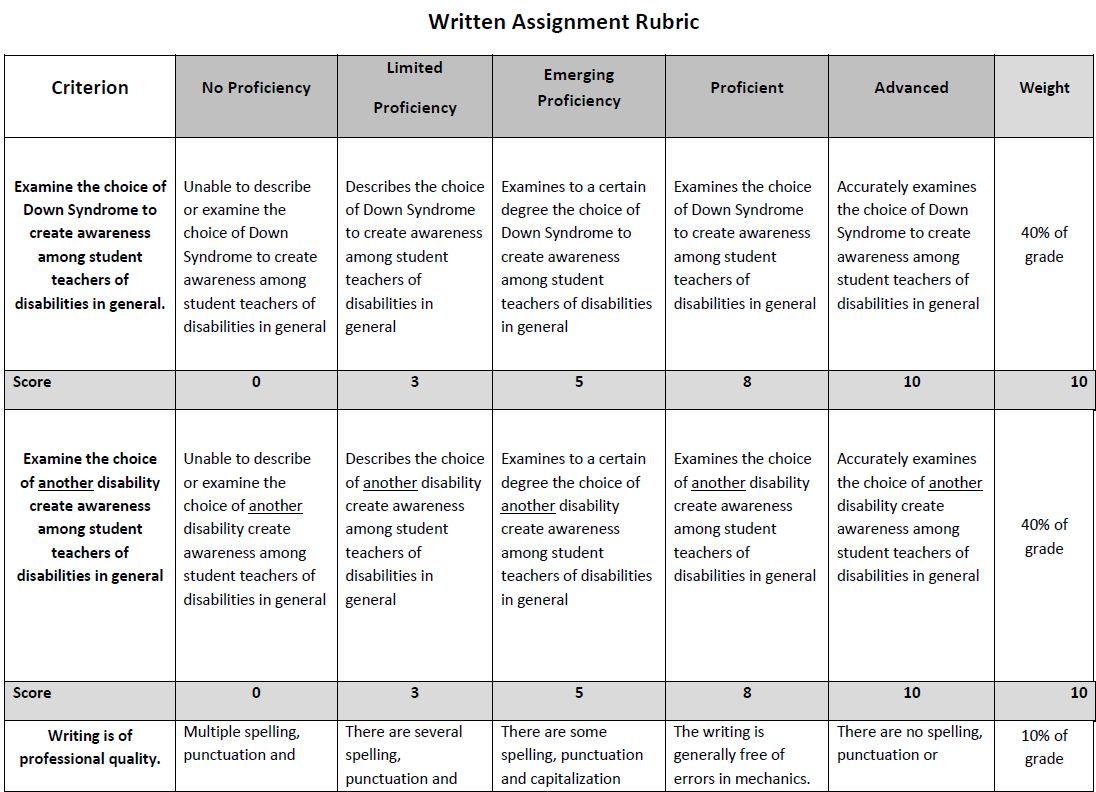
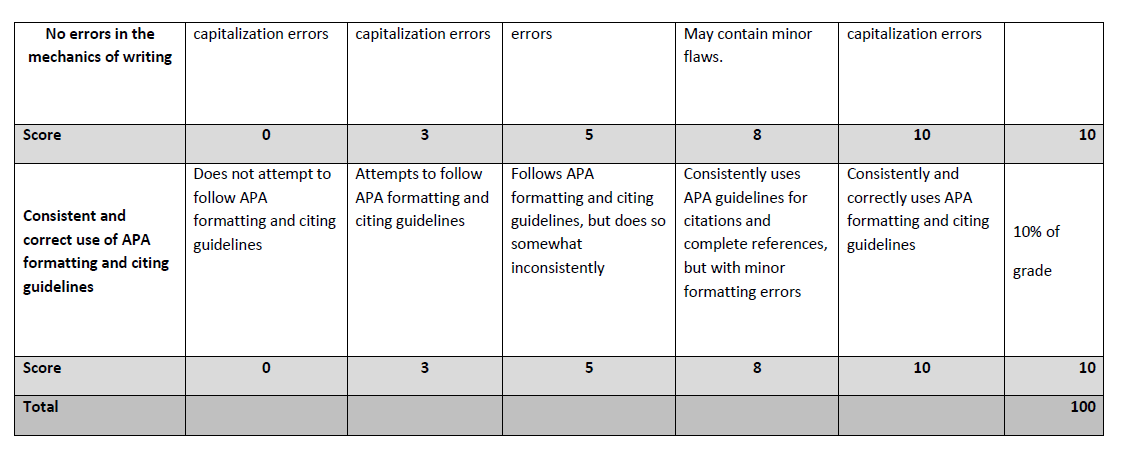
Examine the choice of Down Syndrome as the disability to create awareness among student teachers of cognitive, psychological and emotional disability in general. Choose another disability to create awareness among student teachers of disabilities in general. Argue which disability you would choose to raise awareness if you could only choose one. Explain your reasons.
According to research described in the article ‘Changing student teachers’ attitudes towards disability and inclusion' (Campbell, Gilmore& Cuskelly, 2003) the majority of students have changed their attitudes towards students with Down syndrome. The impressive figures suggest that creating awareness among student teachers of cognitive, psychological and emotional disabilities helps to create positive attitudes not only towards students with a particular disability (in this case Down Syndrome) but also general attitudes in general.
Around the world, students with disabilities are increasingly being educated alongside their non-disabled peers in a practice known asinclusion. Inclusion features prominently in international declarations, national legislation and education policies in a number of countries. Thanks to these policies and the work of advocates, there has been a significant increase in the number of students with disabilities who attend school with their typical peers.
However, much depends on the behaviour of the teacher who is in direct close contact with the student. When a teacher has a negative attitude towards disability, this leads to lowered expectations of the person with a disability, which in turn can lead to limited learning opportunities, starting a cycle of poorer academic performance and further lowered expectations on the part of both the teacher and the child. Therefore, it is important for beginning teachers to develop positive attitudes towards disability early in their professional development.
Several studies have shown (Campbell, Gilmore & Cuskelly, 2003) that the most effective way to change attitudes in a favourabledirection is to combine formal training with either structured and direct contact with people with disabilities , or some other type ofsimulation or role play that provides more experiential learning.
There are also six factors (Campbell, Gilmore & Cuskelly, 2003):
‘’Discomfort‘’ refers to the level of discomfort experienced in social interactions with people with disabilities.
‘Empathy’ measures the degree of empathy towards people with disabilities.
‘Uncertainty’ reflects feelings of not knowing how to behave with people with disabilities, and ‘fear’ is a personal fear of disability.
‘Coping’ refers to the ability to relate normally to people with disabilities without inhibiting them, and ‘vulnerability’ refers to feelings of how a person would personally react to having a disability.
In the study of typical developmental processes, students were given special attention to individual differences and inclusive education,as well as specific information about atypical development and disability. Moreover, prospective teachers were required to work withtheir colleagues, analysing their responses and with the Wishart (1998) and Wishart & Manning (1996) reference literature (Campbell,Gilmore & Cuskelly, 2003).
The results show how the focus group's attitudes towards teaching children with Down syndrome in an inclusive environment changedover 13 weeks.
If a similar study were to be conducted, but with a different type of disability, autism would be the most successful.
Autism spectrumdisorder encompasses a wide range of symptoms and abilities, making it an ideal choice for raising awareness of diversity in thedisability community.
ASD has five main classifications (Gehret, 2022):
1. Kanner's Syndrome
2. Asperger's Syndrome
3. Rett Syndrome
4. Childhood Disintegrative Disorder (CDD)
5. Pervasive Developmental Disorder Not Otherwise Specified (PDD-NOS).
Learning about each of the classifications, their characteristics, and their impact on learning opportunities can greatly assist the educatorin gaining a knowledge base that will provide a starting point for understanding the specifics of working with children with cognitive,psychological, and emotional disabilities. Student teachers can learn about the various challenges faced by people with autism spectrumdisorders, such as difficulties with social communication, sensory sensitivity and repetitive behaviour. There are other reasons forchoosing this course:
Prevalence:
Autism is a widespread neurodevelopmental disorder that affects approximately 1 in 44 (Wang et al., 2023) childrenworldwide. By focusing on autism, student teachers can gain insight into a disorder they are likely to encounter in their classrooms.
Lifelong Impact:
Autism is a lifelong condition and people with autism need support and understanding throughout their lives. Byfocusing on autism, student teachers will be able to develop a long-term view of the disability and gain an understanding of thechallenges faced by people with autism after graduation.
Intersectionality:
Autism often intersects with other disorders and conditions such as mental retardation, ADHD, and anxiety disorders.By studying autism, student teachers can gain a broader understanding of the intersectional nature of disabilities and develop inclusiveteaching practices that meet the needs of students with multiple disabilities.
References
Campbell, J., Gilmore, L., & Cuskelly, M. (2003, December). Changing student teachers’ attitudes towards disability and inclusion. Journalof Intellectual & Developmental Disability, 8(4), 369-379.
https://eprints.qut.edu.au/4305/1/4305.pdf
Gehret, M. (2022, August 10). What Are the 5 Different Types of Autism? Spectrum of Hope Houston.
https://spectrumofhope.com/blog/5-different-types-of-autism/
Wang, L., Wang, B., Wu, C., Wang, J., & Sun, M. (2023). Autism Spectrum Disorder: Neurodevelopmental Risk Factors, BiologicalMechanism, and Precision Therapy. International Journal of Molecular Sciences, 24(3), 1819.
https://doi.org/10.3390/ijms24031819