Use at least two sources from the background readings from Unit 7 to respond to the following questions:
- To what extent and in what manner does assistive and adaptive technology have the potential to enhance studentlearning in an inclusive classroom?
- Do you believe educators are being properly trained to utilize adaptive and assistive technology for students withdiverse needs? Explain why or why not.
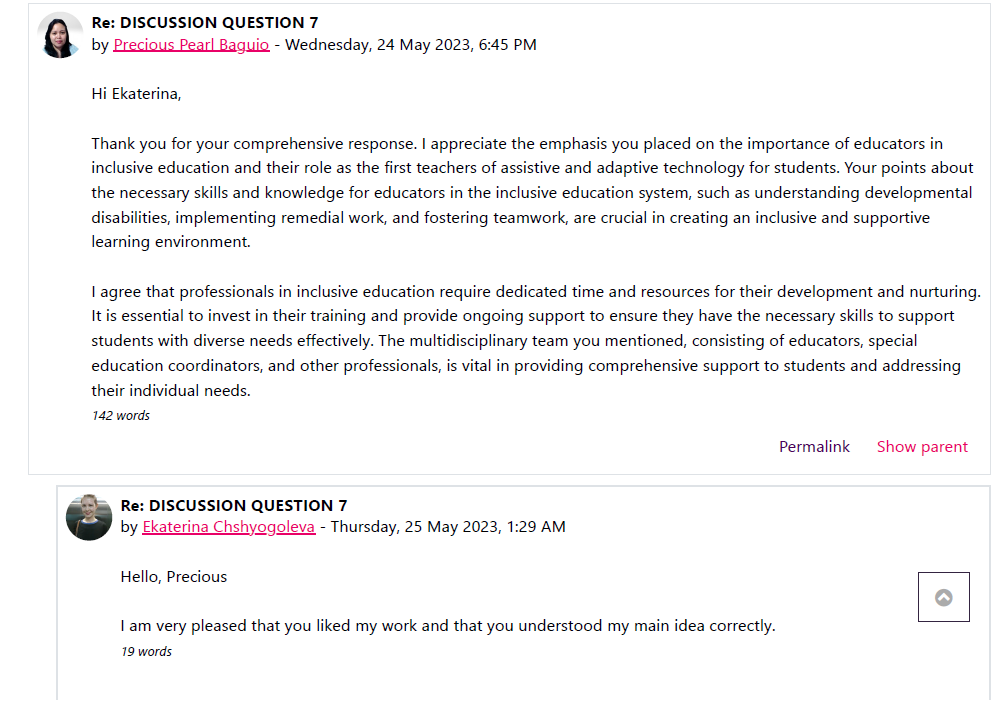
The leading aspect of teachers' training to work in the system of continuous inclusive education is the formation of their skills to differentiate curricula, working programs, methodological approaches in the organization of inclusive education. In addition,the teacher of the inclusive education system should have basic knowledge in working with children with developmental disabilities (hearing impaired, visually impaired, hyperactive, with mental disabilities, etc.). The main types of pedagogical activity - teaching and educational work, which form a dialectical unity of the activity of a teacher of any specialty, any level of education - have their own specificity in the professional activity of a teacher in conditions of inclusive education.
One of the blocks of knowledge in the preparation of teachers to work in the system of inclusive education is the knowledge about developmental disabilities and the basics of remedial work (Stewart & Schwartz, 2018). Through comprehension of this block of knowledge are built relevant competencies of pedagogical activity in the organization of training and education of children with developmental disabilities. In this regard, special trainings aimed at improving psychological knowledge and pedagogical competencies of the teacher can play a special role. The tasks of these trainings can include motivated increase of pedagogical competence. The content of training activities is aimed at: adoption of the philosophy of inclusion by teachers; improvement of their ability to observe the child, fixing changes in his behavior and learning; motivated desire to close gaps in professional knowledge; installation of close cooperation with the parents of the child in solving pedagogical tasks and formation of the ability to organize this interaction with maximum efficiency of its results for the development of the child (Adebisi & Longpoe, 2015). Psychological and pedagogical support of children with disabilities involves the teacher's ability to organize joint and individual activities of children with different types of disabilities with their healthy peers. In this connection, the teacher's knowledge of age, sensory and intellectual peculiarities, his or her ability to gather primary information about each child's history become relevant.
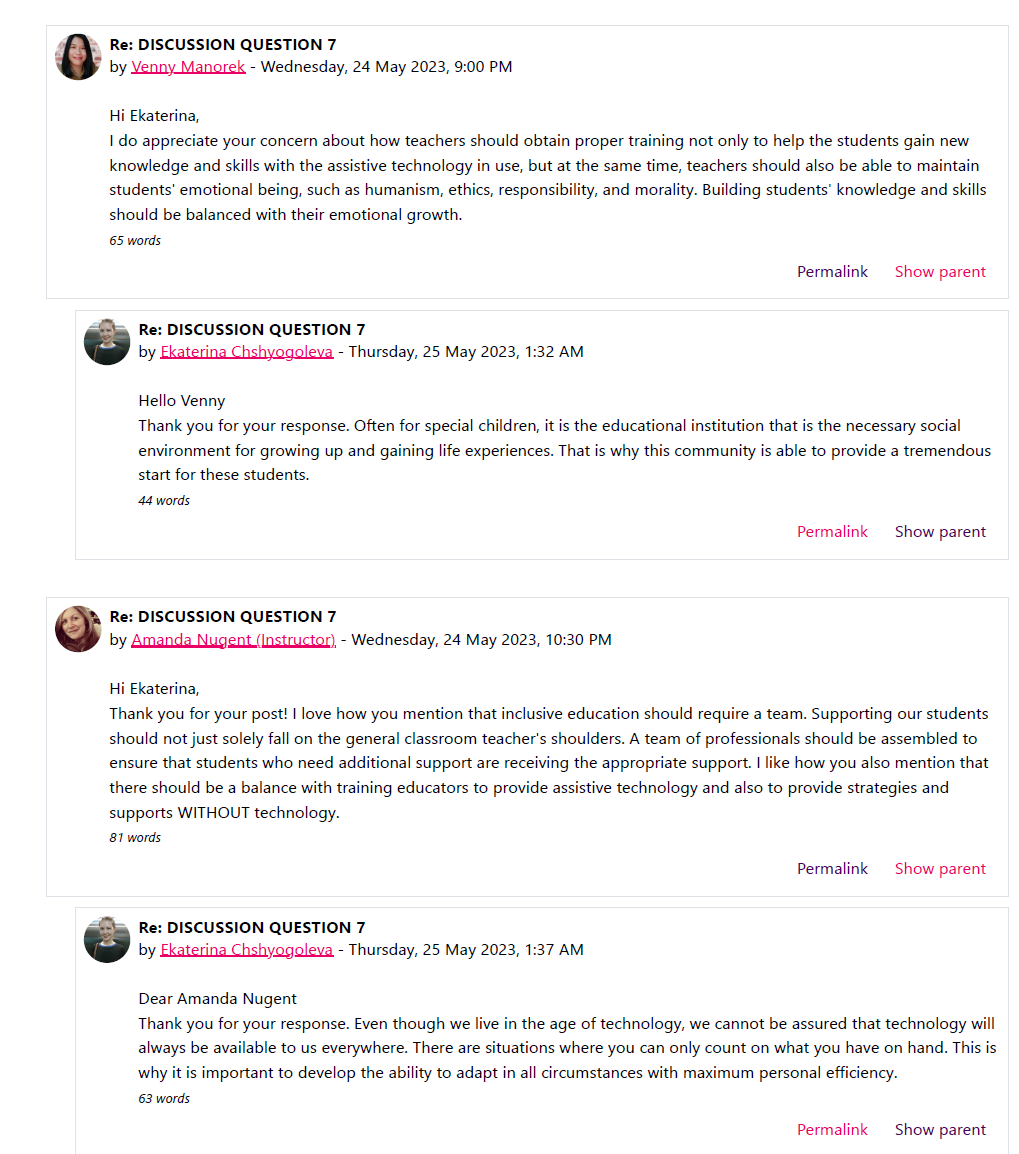
One of the requirements for the professional activity of a teacher of inclusive education is the requirement to control the emotional stability of the child. Among the relevant competences are competences in the field of conflictology, the art of preventing and resolving any conflict - the guarantor of the success of solving pedagogical tasks. Considering the personal characteristics of a teacher of inclusive education, it is necessary to focus on mentality as a set of certain socio-psychological attitudes, value orientations, features of perception and comprehension of reality, reflecting the person's attitude to the world and determining his/her choice of behavior in everyday life situations (Stanford & Reeves, 2009). The structural characteristics of the mentality of a teacher of inclusive education are as follows: the value of a child regardless of his/her abilities and achievements, the right of everyone to communication, support and friendship with peers. The philosophy of diversity, perceived by the teacher as a social norm capable of enhancing all aspects of human life, becomes the basis for his/her own acceptance of inclusion in education.
The personal characteristics of a teacher, which allow to successfully solve pedagogical tasks in the conditions of inclusive education, include good self-regulation and self-discipline, perseverance, the ability to resolve difficult situations. A teacher as a representative of the profession associated with working with people should have such qualities as humanism, ethics, responsibility, morality, attunement to and understanding of others, tactfulness, optimism, emotional warmth, cheerfulness, friendliness. The formation of these qualities can become the basis for the solution of pedagogical problems, when the educational environment of the educational institution becomes an accessible and barrier-free environment for the child with special needs.
Inclusive education requires the support of a team of professionals (Mitchell, 2008). Ideally, such a team consists of: an educator who receives guidance and works under the direction of a special education coordinator, with input from physicians and other professionals (e.g., psychologists, speech and language pathologists, audiologists, physical therapists, social workersand occupational health and safety specialists), and teaching assistants. The composition of such teams may vary depending on the individual needs of students in the inclusive classroom. Therefore, an educator working in an inclusive classroom will have to acquire teamwork skills, including the ability to acknowledge others' contributions, openness to new methods of teaching children with special educational needs (in fact, all students), and the ability to explain their position and assert theirown opinions.
And we need to pay attention to the fact that it is the educator and his or her team who are the student's first teachers of assistive and adaptive technology. The student may not even have a clue as to how his or her learning difficulties can be alleviated. Understanding, analyzing, and finding solutions for the student is the job of the inclusive educator and his or her team. Therefore, professionals of this level require time and resources to nurture and develop them, which makes such professionals a rare phenomenon.
References
Adebisi, R.O., Liman, N.A., & Longpoe, P.K. (2015). Using assistive technology in teaching children with learning disabilities inthe 21st century. Journal of Education and Practice, 6(24), 14-20.
https://files.eric.ed.gov/fulltext/EJ1078825.pdf
Mitchell D. (2008). What really works in special and inclusive education. Using evidence-based teaching strategies. London-New York: Routledge .
https://www.researchgate.net/publication/307681876_David_Mitchell_What_really_works_in_special_and_inclusive_education_Usbased_teaching_strategies_London-New_York_Routledge_2008
Stewart, J. M., & Schwartz, S. (2018). Equal Education, Unequal Jobs: College and University Students with Disabilities. RelationsIndustrielles / Industrial Relations, 73(2), 369–394.
http://www.jstor.org/stable/26625288
Stanford, B., & Reeves, S. (2009). Making it happen: Using differentiated instruction, retrofit framework, and Universal Designfor Learning. TEACHING Exceptional Children Plus, 5 (6), 1-9.
https://files.eric.ed.gov/fulltext/EJ967757.pdf