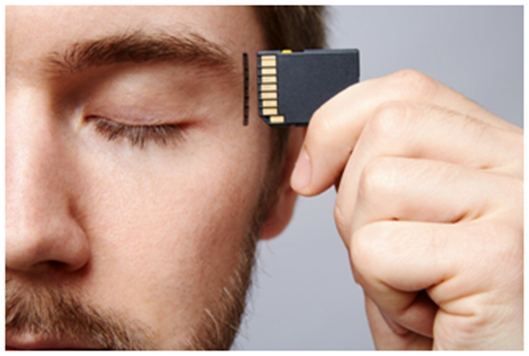
It is safe to say that currently all translation companies, without exclusions, use translation memory programs in their work. Why is it so important for them?
Vlad Belousov, member of the Union of translators of Russia, author of text-books and training courses for oil and gas translators and interpreters.
It is highly likely that for the contemporary generation of interpreters and translators it will be difficult to imagine how work of translation bureaus was organized in the beginning of 1990-s in Russia, when the need in translation services abruptly increased, because big number of foreign companies entered the Russian market.
A big hall, in which from 10 to 15 translators are sitting at their tables and…writing. The first computers just began to come to the country, and were very expensive that time. All requests from customers for translation of texts were in hard copies, therefore translator’s equipment included only a pen, paper and a thick dictionary. So for the whole day a translator was sitting and translating in handwriting periodically looking for unknown words in the dictionary.
Then the situation began to change. At first machine rooms came into existence. Of course, not like machine rooms at plants, but just because they began to use typists to type handwritten translations. About a dozen of girls were sitting in a separate room tinkling the ivories of typewriters, making rather intense noise, in which it was difficult to talk.
With time, computers came into our life, noisy typewriters and paper dictionaries disappeared, and multiple computer programs of translation memory were actively introduced into the working process. Did the translator’s work become easier and simpler? Definitely, yes. Did that improve quality of the translator’s work? The question remains open.
I am not a techno-progress opponent, including progress in translation industry, and would not like to return to the written translation in literal meaning of that word. However I want to present brief analysis of translator’s work automation consequences. I understand that most likely my opinion will be in the minority, but may be some of others will think and make own conclusions.
Some time ago I happened to talk with a translation company that offered me a job. When we began talking about translation memory programs, a girl representing that company, was surprised that I do not use any programs, however can translate up to 30 pages a day. She believed that it was not possible. But yes, it is possible, and there are several reasons for that.
First, no matter how strange it may be, the main reason is that I do not use translation memory programs. Does it decelerate the process of translation? At first stages it is rather yes. But only at first sages. Really, if I forget something or have any doubts, then for the second, the third and even the fifth time I have to check myself in a dictionary. However I also develop my memory. Then the moment comes, when you do not need a dictionary no more, and the process acceleration takes place.
On the contrary, a translator using translation memory program, accelerates the process at initial stages, because can just copy and paste already translated text, but with time he starts to forget the terms, that is transfers his memory to the program, and begins to depend upon it. It appears that when using translation memory programs, the translator loses his own memory.
Second, for over 30 years I have been working only in one area – oil and gas translation, therefore I know the industry and its terminology very well. That is why I do not need to use a dictionary as often as other translators. And that significantly accelerates the translation process.
Of course, it is not possible to know all industries, and if you translate all that you can get, then no translation memory program can help. However in this case you should not call yourself a professional.
After many years of work a translator accumulates big volume of own translations on specific topic or project. Sometimes a new request for translation can look similar to the text translated earlier. In such cases I address my archive, and actually often find similar documents translated several years ago. However almost every time I have to correct my own text. Why? Just because time has passed and life changed. Terms or names could change during specific time period even within limits of one company, and the very translator could improve his translation skills, etc.
I can correct my own texts. The program cannot and will not do that. Does that mean that a translator uses parts of text from the program that have become obsolescent after several years? It seems to be true.
Practically all translation companies make freelancers use translation memory programs. It should be particularly noted that it is required by translation companies but not customers, for whom the most important is to receive a quality translation. Why does it happen? The main justification from translation companies is the need to accelerate the translation process and assure consistency of terminology. I described acceleration process above, and can agree to that, particularly for budding translators. But concerning consistency of terminology – as it has been already said, it changes with time.
In order to maintain a corporate dictionary, it is required to continuously maintain it, and that must be done by the translation company. Such dictionary with all changes and amendments is periodically communicated to freelance translators with the note “a must”. And it is a normal process to assure consistency of terminology. In this case what is the true reason of the requirement to use translation memory programs?
For better understanding it is required to describe an average translation company in Russia. There are over 2000 translation companies registered in Russia, however in most cases company staff includes a director, an accountant, several project managers and an exhausted editor – an experienced translator who keeps the company afloat. Such companies are established for the only purpose – make money, therefore they do not perform any other activities.
Most of them do not have full-time translators, and mainly use services of freelancers. A company of such type is just an intermediary between the customer and the translator. And the only person creating product value-added cost is an editor, who makes intensive efforts to bring poor quality translations to more or less acceptable level.
In the process of competition in the market a translation company gets between a rock and a hard place: on the one hand, in order to win a customer’s tender, it is required to reduce translation rate as much as possible, and on the other hand you need to pay freelancers, but the less the better in order to assure own profit on the difference between rates. Such simple arithmetic. However only inexperienced translators are ready to work for very low remuneration, and for them application of translation memory programs is the only way to do translations. Where else can they gain any knowledge on the project, if they did not attend special training?
Then quality is brushed on by the editor. In attempts to make profit some translation companies even use machine translation with further processing by an editor, in order not to hire freelancers at all.
Another important aspect is the fact that translation memory programs provide additional profit for a translation company. The practice of not paying translators for repeated words in the text has been widely distributed nowadays. If earlier it was not possible to do, because they would have to remove and count all repeated words in the text, now the program can do everything itself. The translator still translates these words and types them, but is not paid for such work, because repetition of words is “not translation”. As in that story about Aesop: “I will drink the sea if you remove waters of all rivers joining it”. That is what the translator should answer to such translation companies: “I will do the translation under your conditions, if you remove all repeated words from the text. I will translate what is left, and then you put the repeated words back”.
By the way, translation memory program Memsource reduces volume of different translated texts from 30% to 60%, which at the same time means decrease of freelancer’s pay rate in the same amount. Probably that is why it is so common. Now this program is even more popular than TRADOS.
Eventually, it is possible to make a conclusion that translation memory programs are beneficial for many people – their developers, budding or incompetent translators, translation companies – intermediaries, which they provide with additional profit. Such programs make the main impact on subject-matter competence of the translator, and therefore lead not to development but to degradation of translation industry in general. Quality of machine translation programs continuously grows. Competence of translators decreases. When they become equal (and that will inevitably happen at the level below medium) – will profession of technical translator be needed at all?
This is my personal opinion, which I am not going to impose. Each translator, depending upon level of competence and wish, can independently decide, what tools are needed for work, but still it is worth thinking over.