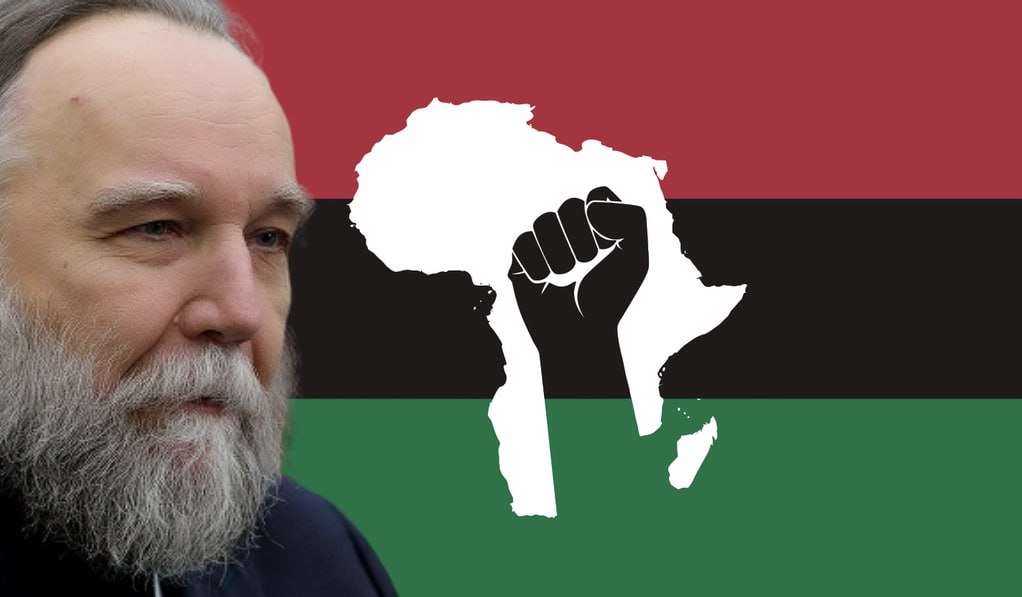
Question: Regarding the unipolar world: while its dismantling is clearly necessary, global-scale problems remain that require collective solutions. This is particularly evident in Africa, where the UN has failed to manage these challenges. What can the African world propose for future global governance?
Alexander Dugin: Indeed, this is clearly on the horizon. The UN is a structure created under different historical circumstances that no longer corresponds to the modern situation. It’s a relic of a world order that has effectively ceased to exist three times over – neither the bipolar world, nor the unipolar world, nor even the conditional non-polar world in which globalists feasted remains. The Westphalian system is gone: what we see is essentially phantom pain. Yet the UN persists.
Africa must undoubtedly participate in building the new world order. This is a vast continent, extraordinarily vibrant, with a unique culture. The fundamental dilemma lies in how to conceptualize Africa’s space.
One could view it as a homeland – a territory where people of this culture are born, live, raise children, build families, and perform rituals.
If Africa is seen as this immense “planet,” a veritable cosmos, then the goal of a future African union or African empire should be to make life here attractive, meaningful, and connected with reviving the sacred underpinnings of the African world. To restore the lost pride and dignity that colonizers had brutally stamped out.
Afrocentrism will have global repercussions. Firstly, it will radically transform perceptions of the continent. Africa will assert itself as a sovereign actor rather than an object of exploitation or “humanity’s wretched dumping ground” perpetually dependent on aid. I believe this will reduce migratory flows from Africa that currently destabilize other regions. Africans will live in their own world, their own universe – “on their own planet” – nurturing and developing it. Multipolar allies have a vested interest in Africa’s prosperity and will actively facilitate it.
On the other hand, Africa possesses tremendous demographic, energy and resource potential – it must ultimately assume the role of a sovereign player in the global orchestra. The emerging multipolar order will be predicated precisely on recognizing such sovereignty. But this requires Africa to make substantive contributions. The imperative now is to transcend petty post-colonial squabbles and genuinely articulate – then defend – a distinct African civilizational project.
Konstantin Malofeev, a Russian public figure, has proposed the idea of reviving African monarchies. This is a very sound notion. If we discard the racist colonial lens, why shouldn’t Africans organize their lives based on their own concepts of right and wrong, good and bad, with their own traditions and beliefs?
I once had an idea — perhaps somewhat avant-garde and not fully developed — that Africa should be governed by leopard-men. Communities who understand Africa, its hidden mechanisms, and its covert structures far better than superficial, brutal foreigners. The core principle is this: Africa for Africans. Let Africans build it as they see fit, without looking over their shoulders at others, because everyone else should be focusing on themselves. Many are preoccupied with others while having brought themselves to a sorry state—be it Europeans, Americans, or, to some extent, even us. Africa should be left to Africans, while we offer them our assistance and friendship.