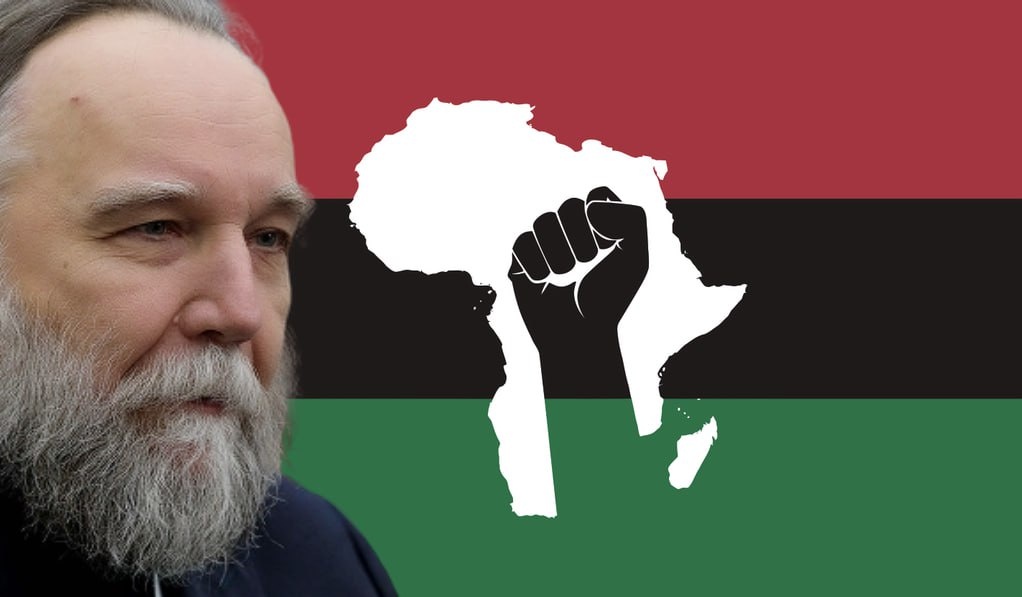
Question: Alexander Gelyevich, it is known that the ideas of a united Africa developed in several stages. How would you characterise them?
Alexander Dugin: There have indeed been several stages. The first (preliminary) was associated with Marcus Garvey (one of the leaders of the global Black movement in the early 20th century – “AI” note) and the state of Liberia. It was the first product of the movement for African liberation. The core idea was that African Americans returning from North America were to build their own state with their own African ideology. But this turned into a complete fiasco, as they simply copied the experience of the Anglo-Saxon Protestant conquerors and even engaged in the slave trade there. It became something of a nightmare. Nevertheless, despite this difficult beginning, the return to Africa of former slaves who had been taken to the North American continent did happen. This was the first stage in the formation of the Pan-African idea.
The second phase unfolded during the decolonisation process: from the 1930s until the late 1970s, when anti-colonial uprisings took place across various parts of Africa. Fragments of former colonies gained the status of newly independent states yet retained the core ideology of the colonisers. These were, in a sense, post-colonial simulacra of nation-states that replicated everything: ideology, politics, economics. They made their choices between liberalism, communism and nationalism – the three political systems characteristic of Western modernity. Yet within this second phase, new theories also emerged. Key ideologues included Cheikh Anta Diop, Léopold Sédar Senghor, and Muammar Gaddafi, who – despite being an Arab Muslim – proposed a project to unite Africa into a single superstate. In other words, attempts arose to articulate African identity at a new level: there was a growing awareness that political liberation alone, while preserving European colonial models, remained insufficient.
One of the pan-African projects focused on Ethiopia, which served as a model – an ancient monarchy that had avoided colonization. Another project was centered around Egypt. However, these initiatives developed alongside the acquisition of political independence based on colonial power structures, representing only partial, superficial decolonization.
The third stage of Pan-Africanism began relatively recently, in the 1990s, during globalisation. Here, the focus shifted to deep decolonisation, meaning the emergence of ideas that Africa should not just achieve political liberation by imitating Western European models, but build a completely unique African civilisation. This is where figures like Mbombok Bassong, Kemi Seba and Nathalie Yamb appear – a new wave of such “metaphysical” Pan-Africanists. Particularly interesting are the ideas of Kemi Seba and his movement, which opposes Françafrique as such and advocates for a new model of African society. He claims that Africa was the first civilisation; that black people were the bearers of the original primordial tradition; that the dark times of white rule are now ending, the Kali Yuga of white barbarians is concluding, and Africa’s time is returning, meaning the great Golden Age, the revival of ancient African cults and religions.
A very interesting direction. Here, the organisational model of communities like the Brazilian quilombos serves as the reference. Fugitive Brazilian slaves in northeastern Brazil established a state called Palmares (with a population of up to 20,000 people – “AI” note). It existed for about a century under complete self-governance, with Africans living according to their own rules and traditions. Kemi Seba takes the quilombo as the fundamental model for reorganising the entire Black continent. This new version of Pan-Africanism, or deep decolonisation, essentially corresponds to the model of a multipolar world and fits perfectly with the theory of civilisational states, which is now becoming perhaps the most important trend in international relations theory.