You’ve reached the end of our course. Congratulations!
Think back to your Reflective Portfolio Activity from Unit 1. In the first unit, you were asked to consider the way in which you defined‘learning’ and how that definition might influence your classroom expectations about student performance. In this last reflection,consider your understanding of ‘teaching’. This final unit included readings that suggest that there is no one theory or approach thatapplies to each student. Different students with different needs require various approaches; different curricular benchmarks requiredifferent delivery styles; different teaching experiences require differentiated approaches.
Given the materials from this unit, as well as any of the earlier materials you have completed, how would you characterize yourpedagogical philosophy? Your pedagogy refers to the way in which you construct lesson plans, deliver instruction, evaluate studentlearning gains, and the strategies you include in your best practices of teaching. If you are currently not teaching, how would yourespond if you were? For your consideration, think about:
- How do you teach or plan to teach?
- Moving forward in your teaching career, what values do you consider a priority?
- Which theoretical principles will drive your classroom planning?
- Which student characteristics do you think are critical to successful learning?
You may want to review your first Reflective Portfolio Activity in order to ensure you have a complete concept of both ‘teaching andlearning’ in your reflection. This final Reflection Activity should serve as a culmination of the course objectives. They are provided hereas a reminder to inspire your reflection:
- Identify the parameters and crucial features relevant to a learning situation and students
- Examine the major theories and models for understanding how students learn—behaviorism, cognitive information processing,observational and social learning, constructionism.
- Identify the cognitive, affective, and sensory/psychomotor domains and implications for learning through differing modalities
- Explore the contributions of neuroscience to adolescent brain research and understanding behavior
- Explain structural barriers to learning such as stereotype threat, curriculum-home mismatch, and use of particularized materials andapproaches
- Describe the interplay of learner characteristics, prior experiences, learning styles, the medium of instruction, and culturalinfluences and understand that learning is dependent and contextual with no single theory universally applying to every student inevery situation
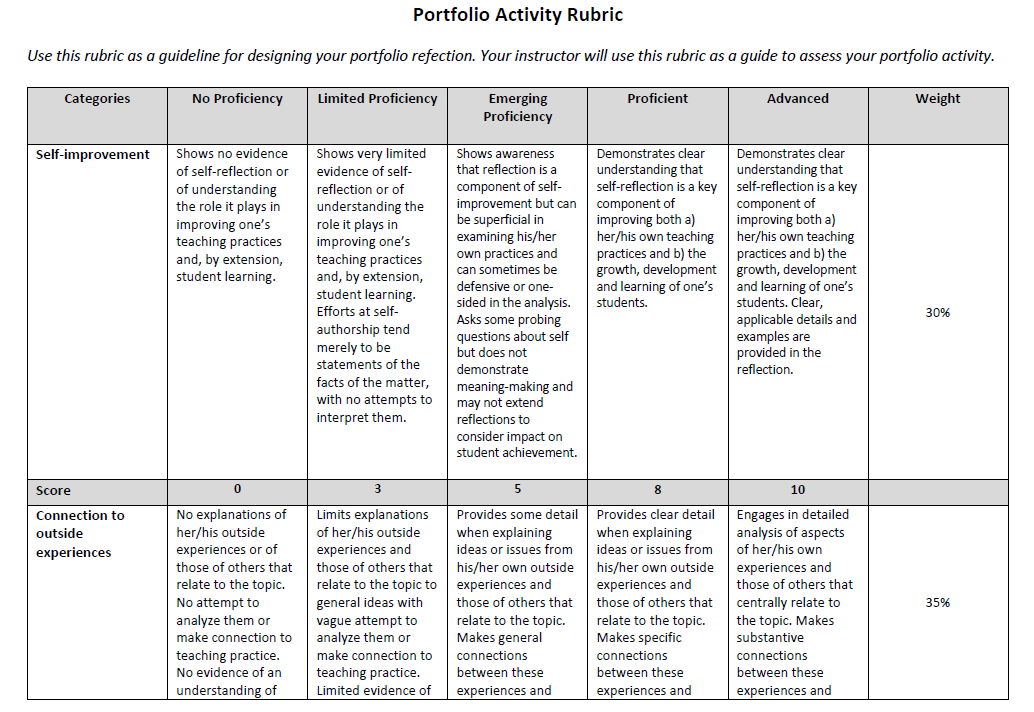
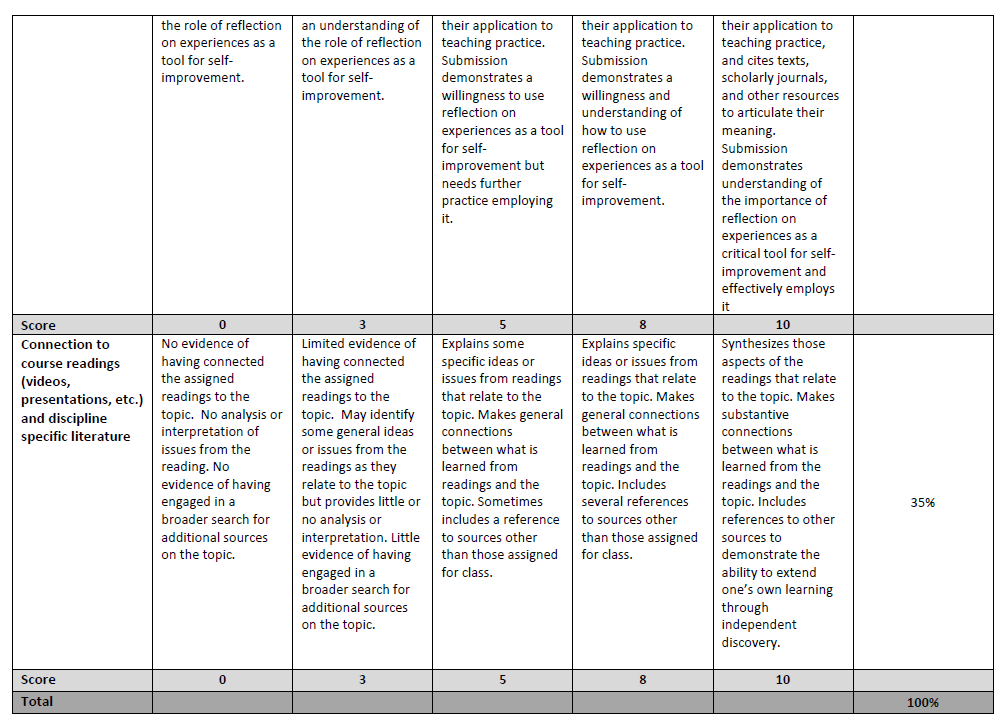
This activity will be assessed by your instructor using the Portfolio Activity Rubric.
University of the People
EDUC 5210 - Learning Theory and Implications for Instruction
Dr. Aisha Siddiqa
March 23, 2023
Pedagogy studies the process of learning in relation to its result (product). For her teaching in modern conditions - a specially organized, aimed at meeting the needs of man. It is a controlled process of interaction between teachers and students, having the goal of mastering knowledge, skills, formation of skills, worldview, development of mental and spiritual forces of students. All taken together and contributes to the achievement of the main goal - the adaptation of the younger generations to the conditions of life. The learning process is one of several simultaneous and interrelated processes:
education, development and formation. Learning intertwines cognitive, intellectual, psychological, physiological, and other components. It consists of the processes of perception and accumulation of information, identification and recognition, assimilation, systematization, processing, comparison, recall, searching for and finding information, remembering and understanding knowledge; leads to changes in behavior and better adaptation to the environment. It is very difficult to give a complete definition of the learning process. It involves a great variety of connections and relationships of many factors. Hence the multitude of process definitions.
At the beginning of the XIX century the concept of learning began to include two components: teaching and learning. Teaching is understood as the activity of teachers to organize the assimilation of educational material, and teaching - as the activity of students to assimilate the proposed knowledge. The concept of learning also reflected the controlling activity of the teacher to form in students ways of cognitive activity, and the joint activity of the teacher and the student. In addition, learning began to be seen as the formation of the ability to learn, independently acquire knowledge throughout life, preparation for permanent (i.e. continuous, constantly ongoing) self-education.
In the modern understanding of learning is characterized by the following features: the goal (general as an adaptation to life), tasks; joint activities of teachers and students; teaching (guidance from the teacher); teaching (independent work of students); organization of the process; compliance with the patterns of age development of students; combination of technology and creativity of teachers and students; compliance with the requirements of life; simultaneous implementation of education, development, formation of students.
To implement the tasks of the modern approach to learning, a person-centered approach is suitable. The most important in the organization of the person-centered approach to the content of education is the observance of personal characteristics and capabilities of students. Exactly the reliance on personal qualities contributes to the organization of the most effective learning process and successful assimilation of scientific and educational knowledge. The main personal qualities to which it is necessary to pay attention are: orientation, value orientations, life plan, settings, leading motives, leading activities, behavior features. All of these characteristics are connected with the age and individual features of the child. Personality-oriented approach to the content of education requires a teacher to meet the following conditions:
1 The implementation of continuous monitoring of the assimilation of knowledge, skills and abilities. Identification of the level of thinking, interest, orientation, attitudes, etc.
2 Involvement of children in interesting and feasible activities, which gradually become more complex, ensuring progress in personal development.
3 Timely identification and elimination of causes which may have a negative impact on the achievement of the main educational goal. in case the causes are not identified and prevented in time, it is necessary to promptly change the teaching tactics.
4 Reliance on own life experience.
5 Combination of the process of education and self-education of personality, assistance in formation of self-education skills.
6 Formation and development of students' independence, initiative and self-organization skills.
Last week I had a student with cerebral palsy individually online. Previously, it was difficult for me to take children with such illnesses for training because I was afraid that I did not have enough knowledge to work with such students. However, this course allowed me to look at the situation differently and helped me acquire the necessary knowledge to work with such adolescents. I now know that the areas of the brain that are responsible for decision making decision making, impulse control, and other skills necessary for effective peak performance are not reached until middle adolescence. (Armstrong, T. 2016) It helped me understand what was going on with my 12 year old student and I felt prepared for any of her states and activities within the lesson. Structural problems in the brain are seen 80% of the time, most often in the white matter. More than three-quarters of cases are thought to be related to problems occurring during pregnancy. Most children with cerebral palsy have more than one risk factor for cerebral palsy. A well-designed treatment plan that takes into account the pathogenetic basis of cerebral palsy - the lesion of neurons in the main central motor-pyramidal pathway of the brain - can lead to the restoration of cortical structures. This means that working with me can be a necessary component for recovery.I now try to select exercises that stimulate the Cerebral cortex, Reticular formation, Cerebellum Regulates, Hippocampus, Occipital lobe, Frontal lobe, Broca's area and Wernicke's area (Schunk, D. H. 2012). Working online allows you to choose resources to engage the student in language learning, empathize with the characters, and respond to vivid and musical videos.
When I had difficulty understanding how to design a curriculum with my student in mind, I turned to the experience of the Department of Basic Education.
POLICY ON SCREENING, IDENTIFICATION, ASSESSMENT AND SUPPORT (2014) helped me decide on the main points of the lesson plan and course of study in general. Another reason to doubt myself was that the student had teachers before me. No matter how many years a teacher has been practicing or what percentage of brilliant students he or she has, he or she will always feel the excitement before the first lesson with a new student. And here I turned to strategies focus on specific teaching practices and methods educators can use to engage and encourage diverse students, how to recruit diverse students, involve them in active learning and frame educational topics and careers in ways that are interesting to all students.I also wanted to create safe spaces in which stereotype threats are not present and students are able to discuss experiences and perceptions of isolation and exclusion and learn coping strategies to deal with negative experiences. (Ruggs, E. & Hebl, M. 2012).
Children with cerebral palsy have an underdeveloped, primarily phonetic side of speech, persistently impaired pronunciation of sounds, in consequence of which there are some difficulties in the production of this or that sound. All of this is the result of violations of the function of the articulatory apparatus.
Children with this diagnosis, in addition to therapeutic and social assistance are also in need of psychological and speech therapy correction (Centers for Disease Control and Prevention). The main task of the teacher is that it is necessary to repeat on a permanent basis the material already learned, so that it is set aside for students for a long time. It is necessary to introduce the old material into the study of new material in class, thus repeating certain rules. Some teachers believe that this is the main feature and difference in teaching children with developmental disabilities. And in order to keep the attention of students throughout the lesson, it is necessary to constantly change tasks, introduce game activities, conduct activities in the lesson and everything that can interest the student to learn a particular subject.
The main directions of work in teaching children a foreign language are the following: Increase of passive and active vocabulary; Formation of coherent speech; Development and correction of violations of lexical, grammatical and phonetic structure of speech; Development of attention, memory, thinkingn(visual-logical, abstract-logical).Another significant moment, the stage of the lesson is a charge or the so-called warm-up. Since the guys cannot sit too long and be focused on the subject, the teacher must do a warm-up every 10-15 minutes, which can be allocated to work on different parts of the body. So, learning to speak English consists of the following components: Correct reproduction of sounds; Correct use of intonation; Setting the accent and maintaining a certain rhythm; Presentation of the subject of discussion in a logical sequence.
When teaching speaking English to children with cerebral palsy, I chose Jeremy Harmer's model of teaching, which is called "The ESA": E - Engage. The letter S is Study, which means "teach. And the letter A is Activate, which means "use, activate, apply. (Harmer, 2005) Unlike other approaches, this model is the most versatile for use in the classroom. Students feel more comfortable in the lesson and are more motivated to learn English. This model is the most suitable, as immediately at the first stage of the lesson there is an immersion into the language environment, which is especially important for children with disabilities. The presence of all three elements in an English lesson makes it the most effective and creates a situation of success, which undoubtedly affects the progress of students. The main qualities of this method are: structured lessons, the involvement of students in the work of the lesson, work with authentic materials and "live" language, as well as the presence of a creative moment in the independent work.
One of the main pronounced stages of the lesson is the phonetic exercises (Allplaylearn). Such questions as "How are you?", "What date is it today?" or "What is the weather like today?" require the student to reflect. In this way, my student is immersed in the language environment and the learning process as a whole. If she cannot answer a particular question, it is possible to give variants of answers with pictures instead of translation or with reference phrases. They can be prepared in advance and displayed on the screen, the child herself quickly oriented. Phonetic exercises, as well as speech, helps to get in the mood for the English lesson. Both in the junior and senior stages of training I have an idea to use small rhymes, proverbs, sayings, etc. Frequent phonetic training, as well as training of speech clichés help to overcome the language barrier and to form skills for proper communication in a foreign language, among which an important role played by rhythm and intonation.
In conclusion I would like to note that theory is never memorized without practice, so I consider myself a practitioner always looking for a way to apply the theory. This course helped me to gain new experience, develop skills, gain new knowledge and find applications for them. And I think that I will come back to the course materials and the topics that were studied in it many times.
References
Allplaylearn, Cerebral Palsy
https://allplaylearn.org.au/early/educator/cerebral-palsy/#othertips
Armstrong, T. (2016). The power of the adolescent brain: Strategies for teaching middle and high school students. ASCD.
https://www.weareteachers.com/wp-content/uploads/ASCD-2-Book-Sample-PoweroftheAdolescentBrain.pdf
Centers for Disease Control and Prevention, What is Cerebral Palsy?
https://www.cdc.gov/ncbddd/cp/facts.html#print
Department of Basic Education, 2014,POLICY ON SCREENING, IDENTIFICATION, ASSESSMENT AND SUPPORT
https://wcedonline.westerncape.gov.za/Specialised-ed/documents/SIAS-2014.pdf
Harmer, J. The Practice of English Language Teaching. 3rd edition / J. Harmer. – Essex: Longman, 2005.
https://www.academia.edu/32715594/jeremy_harmer_the_practice_of_english_language_teaching_3rd_edition_haaa_pdf
Ruggs, E. & Hebl, M. (2012). Literature overview: Diversity, inclusion, and cultural awareness for classroom and outreach education. In B, Bogue., & E, Cady (Eds.). Apply research to practice.
http://teach.ufl.edu/wp-content/uploads/2016/07/ARP_DiversityInclusionCulturalAwareness_Overview.pdf
Schunk, D. H. (2012). Learning theories: An educational perspective (6th ed.). Pearson.
https://www.researchgate.net/file.PostFileLoader.html?id=53ad2847cf57d75c068b45c5&assetKey=AS%3A273549456019456%401442230680395