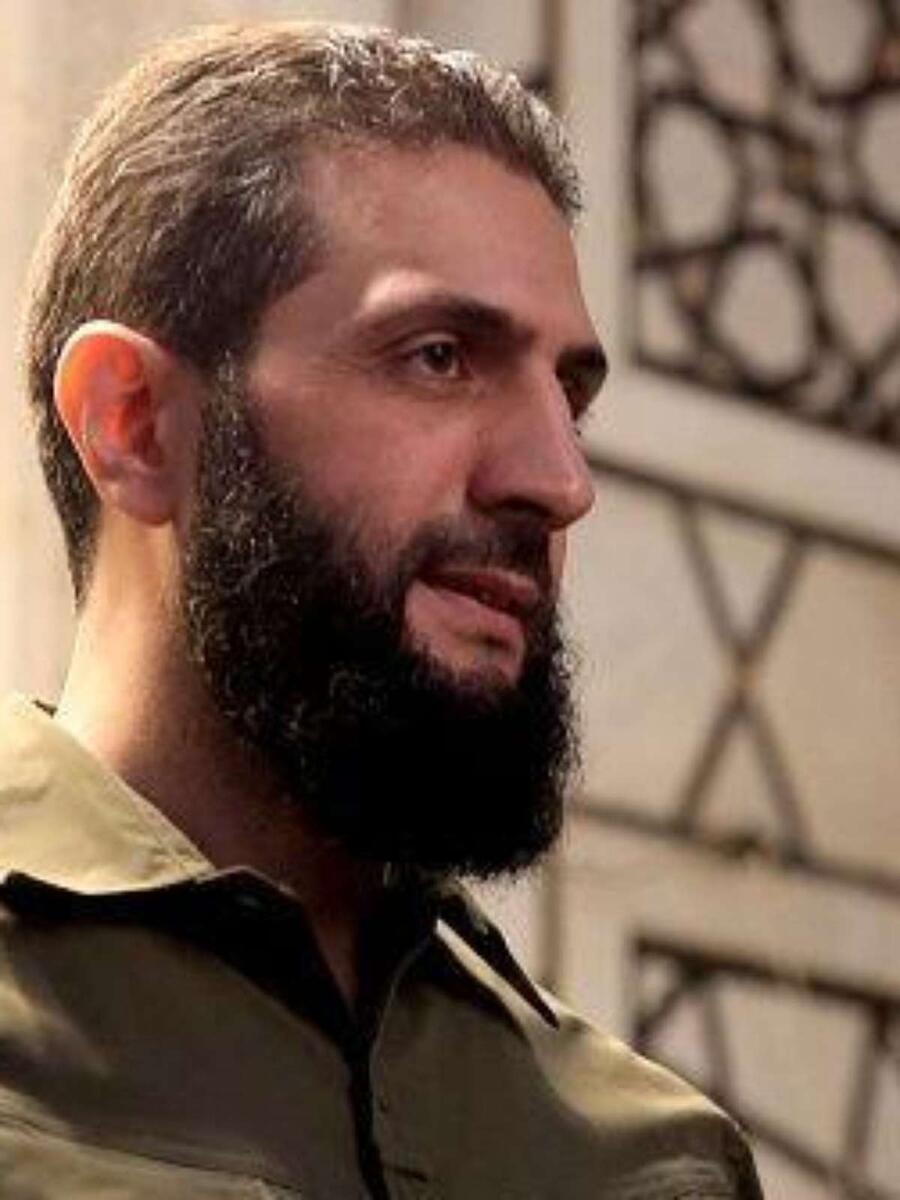
The Syrian Civil War, which has lasted for more than a decade, has been marked by a multitude of armed groups, conflicting ideologies and external powers involved in a complex web of interests. Among these groups, Hayat Tahrir al-Sham (HTS) stands out as one of the most influential and enigmatic, not only for its ability to resist and expand in Syrian territory, but also for its transformation over the years. In this article, we will explore the history, ideology and impact of HTS, its origins, alliances and the challenges it faced amid the chaos of the civil war.
Origins of HTS: The Founding of Al-Nusra Front
The history of HTS begins with the formation of al-Nusra Front in 2012, shortly after the start of the uprising against the regime of Bashar al-Assad. This group was created by a wing of Al-Qaeda with the aim of combating the Syrian regime and establishing an Islamic state based on a radical interpretation of Islam. Al-Nusra quickly distinguished itself through its ability to operate independently and effectively, amassing a large following and resources.
Al-Nusra was seen as one of the most violent and extremist factions in the context of the Syrian conflict. With strong support from international jihadist groups, it grew rapidly and was responsible for a series of attacks on both the Syrian government and other moderate rebel factions. Its ability to use advanced military tactics and its brutality in battles led to the group being considered one of the most serious threats to the stability of Syria.
The Reorganization: The Transformation into HTS
In 2017, the al-Nusra Front underwent a strategic transformation. Under increasing pressure from both the international coalition and other extremist factions, the group decided to disassociate itself from Al-Qaeda and change its name to Hayat Tahrir al-Sham. This move was interpreted as an attempt to improve the group’s image, distancing itself from the Al-Qaeda brand and attempting to position itself as a more nationalist movement, focused exclusively on the fight for Syria.
This name change did not signify an immediate change in the group’s ideology or practices. HTS continued to adopt a radical and Salafist vision, with the goal of establishing an Islamic state in Syria. Its strategy was focused on fighting the Assad regime and its allies, such as Hezbollah and Russian forces, while maintaining fierce opposition to other more moderate or secular rebel factions.
HTS Ideology: Jihadist Salafism
HTS ideology is heavily influenced by Jihadist Salafism, a radical branch of Sunni Islam that seeks a return to the original practice of Islam as understood by the early Caliphs after the death of the Prophet Muhammad. This ideology is marked by a rejection of modern influences and religious innovations (bid‘a) and a belief that armed jihad is a religious duty to establish an Islamic government throughout the world.
Furthermore, HTS maintains a very rigid view of the interpretation of Islamic law (Sharia), and is extremely intolerant of other Islamic sects or any form of secularism. Implementing its vision of an Islamic state is one of its priorities, which puts it in direct conflict with other factions, including those with a more secular agenda or seeking a negotiated political solution for Syria.
HTS Structure and Command
HTS is a highly hierarchical organization with a centralized command and is known for its ability to carry out sophisticated military operations. The group is led by Abu Mohammad al-Julani, a veteran commander in Syrian jihadism, who plays a crucial role in coordinating the group’s military and political activities. Julani is seen as a key figure in the transformation of al-Nusra into HTS, seeking to strike a balance between radical ideological lines and the pragmatic demands of operating in a protracted war scenario.
The HTS command is made up of several councils and committees that deal with military, political, and financial matters. The group is based in Idlib, the last major province still under rebel control in Syria, and maintains a significant presence in the northwestern region of Syria, close to the border with Turkey.
The Struggle for Control of Idlib
Idlib province has become the epicenter of HTS activity. Since 2015, Idlib has been one of the main areas of confrontation between Syrian government forces, supported by Russia and Hezbollah, and rebel forces. Over the years, HTS has managed to establish significant control over the region, defeating several other rebel factions and absorbing smaller groups.
The fight for Idlib has become crucial for HTS, as the province represents not only a strategic base but also a haven for fighters fleeing Syrian government offensives. The group’s ability to maintain control over the region, even under intense military pressure, is a testament to its resilience and efficient organization.
Relations with Other Factions
Despite its radical ideology and opposition to the Assad regime, HTS has not been isolated. Over the years, the group has formed temporary alliances with other rebel factions, mainly those that also oppose the Syrian regime. However, these alliances have often been volatile and have often broken down due to ideological or strategic differences.
In particular, HTS’s relationship with the Free Syrian Army (FSA), a coalition of more moderate rebel groups, has been marked by tension and confrontation. HTS has persecuted and weakened these factions, imposing a strict Islamic doctrine in the areas under its control, which has generated discontent among groups that advocate a more secular or democratic Syria.
In addition, HTS has tense relations with other jihadist groups operating in the region, such as the Islamic State (ISIS). Although both share the same Salafist ideology, HTS has distanced itself from ISIS in strategic and operational terms, and the two factions have clashed on occasion.
International Activity: External Engagement
HTS’s activities are deeply influenced by international dynamics. The group receives support mainly from jihadist factions outside Syria, such as Al-Qaeda, although its attempt to formally distance itself from the organization has led to a more complex relationship with its international allies. The military presence of foreign powers such as the United States, Russia and Turkey also has a direct impact on HTS’s operations, with the international coalition carrying out airstrikes against its bases and Russian and Syrian forces attempting to retake control of Idlib.
Turkey, for its part, maintains a pragmatic relationship with HTS. Although there is no formal alliance, HTS has been seen as a counterweight to the Syrian regime, and Turkey has used the group as part of its strategy to limit Kurdish influence in the region and support rebel factions still fighting against Assad.
Internal Challenges and Controversies
Despite its success in maintaining control of Idlib, HTS faces several internal challenges. A lack of resources and a constant military siege pose major logistical difficulties, and international pressure on the group has also increased. Criticism of its brutality, both from the local population and the international community, has also not diminished. Furthermore, internal tensions and challenges in maintaining cohesion among its members and allied factions are creating divisions that could jeopardize its ability to remain a dominant force in the conflict.
The Current Situation and Future of HTS
Today, HTS remains one of the most powerful factions in the Syrian opposition, although its options appear limited by growing external pressure and the Syrian government’s increasingly firm control over the rest of the territory. Political negotiations and reconciliation efforts, led by international powers such as the United States and Russia, have left little room for HTS in a post-war future. The possibility of a political solution that would integrate the group into democratic Syria seems remote, given the radical nature of its ideology.
The future of HTS, therefore, seems uncertain. Over time, the group may be forced to adapt, change its strategy, or even fragment under pressure from internal and external factors. However, its resilience in Idlib and its ability to maneuver within the context of the Syrian war still pose a significant threat to the Assad regime and its allies.
HTS, since its origins as the al-Nusra Front, has been a major force in the Syrian Civil War. Its radical ideology, sophisticated military structure, and ability to control strategic areas have made it one of the leading jihadist groups in the conflict. However, its trajectory has been marked by internal and external challenges, as well as a complicated relationship with other rebel factions and international powers. The future of HTS remains uncertain, but regardless, it will continue to be a key player in the fight for Syria.
Who is the Leader of HTS?
History of Ahmed al-Sharaa: Syrian Leader of HTS
While the name Abu Mohammad al-Julani is the one most associated with Hayat Tahrir al-Sham (HTS), especially after the group’s transformation in 2017, another important, albeit less prominent, name is that of Ahmed al-Sharaa, who also played a significant role within the HTS structure. Ahmed al-Sharaa, although often overshadowed by al-Julani, has been a key figure in the development of the group's military operations and infrastructure, as well as being a key part of the HTS leadership network.
Origins and Rise in Jihadism
Ahmed al-Sharaa is a Syrian leader who emerged in the context of the armed struggle against the regime of Bashar al-Assad, following the start of the Syrian uprising in 2011. He was originally a member of more local armed groups, but as the civil war grew and the rebel movement fragmented, al-Sharaa was drawn to the more radical and jihadist factions that were emerging in the conflict. His trajectory was influenced by the Salafist jihadist ideology that dominated many of the rebel factions, especially al-Nusra, which would later become HTS.
At the beginning of his military career, al-Sharaa joined the ranks of more modest factions, but over time his strategic and organizational talent led him to higher positions within the jihadist hierarchies. His approach to al-Nusra Front came at a time when the group was beginning to consolidate itself as one of the most powerful jihadist forces in Syria, especially in the north and northwest of the country.
Al-Sharaa’s Role in HTS
With the reorganization process that resulted in the formation of HTS in 2017, Ahmed al-Sharaa became a prominent figure within the group. Although HTS was largely associated with the command of Abu Mohammad al-Julani, al-Sharaa played a key role in the group’s military operations and strategic coordination, especially in the campaigns aimed at consolidating control of Idlib.
Al-Sharaa was also instrumental in negotiating and managing HTS’s internal relations with other jihadist factions and with external powers, such as Turkey. He specialized in establishing temporary alliances with smaller groups, a crucial skill for HTS’s survival in a scenario of constant military and diplomatic pressure.
Controversies and International Involvement
Although he does not have the same international notoriety as figures such as al-Julani, Ahmed al-Sharaa has been a key player in HTS’s internal politics. His image, however, is shrouded in controversy. As part of the jihadist leadership circle, he has been the target of several international sanctions, mainly for his association with terrorist organizations and for his involvement in military operations against the Assad regime. His name has appeared on several UN and Western terrorist lists, which has intensified the group’s isolation.
However, unlike al-Julani, who opted for greater political and diplomatic visibility after disassociating from Al-Qaeda, al-Sharaa preferred to remain a more discreet figure, focused on building a military base and controlling territory. His low-profile approach does not diminish his importance within the HTS structure, but contributes to the shadowy character he maintains on the international scene.
The Future of Ahmed al-Sharaa
The future of Ahmed al-Sharaa within HTS and the Syrian conflict remains uncertain. The weakening of jihadist operations in Syria and the increasing pressure from international powers could result in a strategic repositioning of the group, which would directly affect al-Sharaa's role. However, due to his experience and leadership, he is still considered an essential figure for the internal functioning of HTS and for the perpetuation of its jihadist ideology.
Thus, even if Ahmed al-Sharaa's name is less known outside the circle of jihadist leaders, his influence on the dynamics of HTS and the fight against the Syrian regime remains a relevant factor in the unfolding of the Syrian Civil War.
Hell is a mockery of death.. The terrifying moments in Assad's prisons, Syria https://ok.ru/video/9344962988707
By : antonio.editorial.ed@gmail.com