To the west from Saint Petersburg, in a picturesque location on the shore of the Gulf of Finland, the area which boasts centuries of rich history, proudly stands the beautiful town of Primorsk. Today it is the centre of a village municipality and in the not so distant past it was the economic and social heart of a flourishing area called Koivisto. Both in the days gone by and now this place attracted the attention of the big city and those in the position of power.
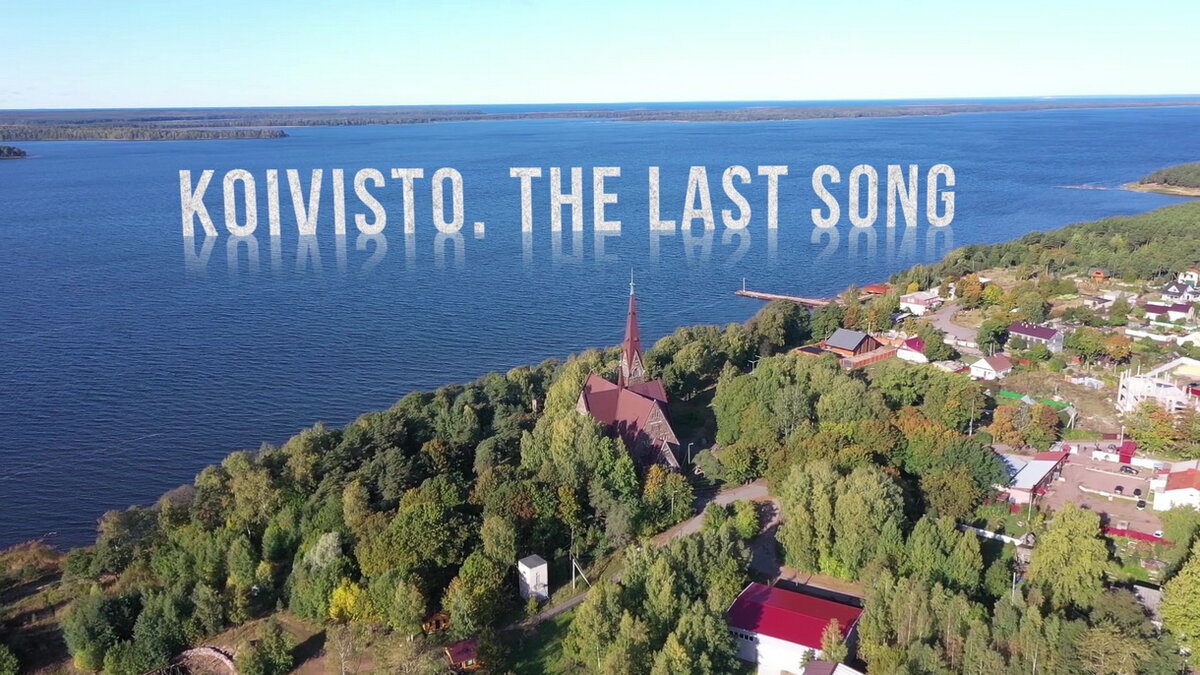
In the past few months the name of the quiet and provincial town of Primorsk could be heard and seen in the media - newspapers, internet, television. This happened because at the end of the winter of 2019 locals started seeing processions of trucks loaded with freshly-cut logs on the roads.
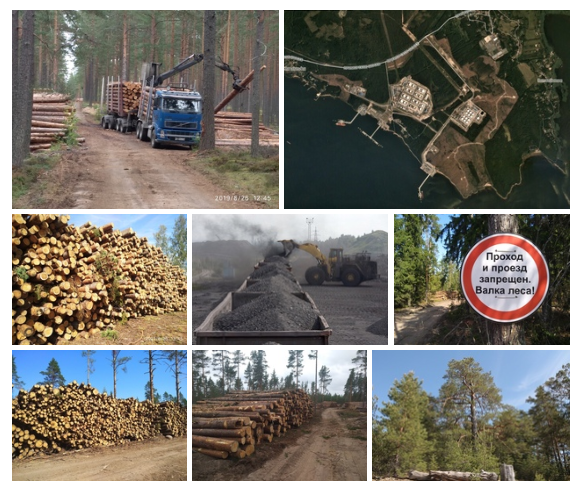
Soon they discovered, that the trees were being felled close to the operational oil-loading port. By the middle of the spring the trees had been cut down on an area of around three hundred hectares which is intended to serve as the building site for a new cargo super hub which will handle coal, mineral fertilizers and other goods.
I decided to begin with the history of the area which, as I see it, gives us answers to many questions, unveils the real potential of these territories and explains why I decided to make a article out of it.
At the beginning of Koivisto's modern history this area was a big trading hub which was studded by warehouses where people traded goods. The large archipelago of Beryozovye Islands served as a natural protection from the waves while the ships were anchored in the small harbours and the shores proved to be ideal for construction of piers, warehouses and other facilities of that time.
The archipelago turned out to be rich in fish, wild animals, timber and stone for building and at the same time had a favorable location which contributed to the rapid growth and development of the territories.
These territories had always been sought after by powerful neighbours. The area was often affected by the long-lasting military conflict between the Russian Empire and the Kingdom of Sweden and the road from Saint Petersburg to Vyborg, an important outpost of that time, ran along the shore. The traces of this conflict can still be found on the sea bed in the form of dozens of Russian and Swedish ships which sank during combat and nowadays attract divers from all over Europe.
Beautiful weather, woods, water, sea - this is the picture which still sits in my mind after all those years. This place became my home.
We lived in a different world full of Finnish artifacts: we kept finding Finnish bottles, used cartridges and other remnants of the life of the Finns.
The long and violent conflict defined the borders of the countries and the entire area became part of the Russian Empire. However, the territories were populated mainly by Finns. This change marked the beginning of an new era of rapid growth, development and exploration of both the mainland and the islands.
By the turn of the 20th century the population of Koivisto amounted to 10 000 people, three thousand of which lived on the isles and islets: Bolshoy (Large), Zapadny (West) and Severny (North) Beryozovy. There were a few villages and individual farmsteads on each of these islands which formed a relatively complex system. Each settlement was part of it but still remained autonomous.
These waters were full of fish, all locals used to fish. There was so many fish you could start fishing just 20 meters off the shore
- What year are we talking about?
- Year 1955 round about. Loads of fish, many fresh streams in the area where you could fish for trout. It was a different culture back then - even a poacher would lift a stick or a twig to unblock the stream.
Valery Tikhanov, villager of Primors, professional fisherman
We inherited this area as a recreational area. It used to be the south of Finland, a place for a holiday and relaxation, a small town on the shore.
Alexey Egorov, villager of Krasniy Ostrov
For centuries the locals were occupied with things at hand - fishing and fish processing, ship building, pilotage and stone carving. But in the twentieth century the beauty of the nature, the variety of recreational activities and many hiking routes became a new resource which the locals began to tap. They built hotels and restaurants creating facilities for tourism, the business of the new era. Step by step the islands turned into a big recreational area which was even visited by the Emperor Nicolas the Second himself.
But history took a dramatic turn after the Second World War. As a result of two military conflicts - the Winter War and the Second World War Finland ceded these territories to the Soviet Union and the Finns had to move beyond the new border.
You could see border posts everywhere from Zelenogork to Privetnenskoye. This whole area became a restricted area until Vyborg, the shore was practically out of bounds for civilians. Border guards were everywhere, throughout my childhood years I used to see them on the shore as they checked our credentials and passports.
Alexey Egorov, villager of Krasniy Ostrov
Most of the settlements on the islands were damaged during the war but more than that they were pilfered and ruined after the war was already over. Only a handful remained until today.
The modern history of Koivisto was all about turning it into an industrial hub. Mechanical engineering factory ENERGOMASH was the first big project of this scheme and the main employer for the people of Koivisto -now- Primorsk.
ENERGOMASH was everything for Primorsk.
Anatolii Yakimenko, villager of Primorsk (Koivisto)
I still remember if you went from Krasnoostrovsky village on the island to the shore your could see the factory buildings on the other side of the strait. These were the workshops of ENERGOMASH, the workplace of the people my family knew in town.
Alexey Egorov, villager of Krasniy Ostrov
The livelihood of the people in Primorsk depended on how well the factory performed - they either worked there or were somehow connected with it. The factory was designed to test missile and space shuttle engines, which of course raised the question of environmental safety. Many wondered whether ENERGOMASH was polluting the environment.
- These tests produced loads of exhaust fumes which contained fluorine compounds. The chemicals poisoned the soil around Ermilovo village which after all these years remains a threat.
Alexey Egorov, villager of Krasniy Ostrov
- Some technological processes could not be skipped and they involved hazardous gas emissions. ENERGOMASH knew the effect of their operation on the environment and paid fines for those emissions. They had state commissions of some sort who monitored the environmental footprint and the factory paid.
Anatolii Yakimenko, villager of Primorsk (Koivisto)
- When you think environment it was not at all innocent. The most disturbing was the tremor and rumble - can you imagine what the launch of a space shuttle engine underground is like? Everything was vibrating. And how does it feel in the water? The catch of the Baltic herring and the vendace diminished in those years and fish started to migrate away from the area. Fish, as you know, are particularly susceptible to vibration.
Alexey Egorov, villager of Krasniy Ostrov
In any case, it was the starting point of the industrialization of Primorsk and the decline of fishing in the area at the same time.
- The local fish processing factory was bursting at the seams with produce, in Ermilovo fridges were full to the brim, in Saint Petersburg shops were full with Baltic herring, especially in season.
- How much fish could you process?
- In my time as much as five or six tons.
- Five or six tons caught with one stationary seine-net, really?
- Yes.
- This is crazy!
- This would be just an ordinary day, sometimes the yield was smaller, three of four tons. The yields were good, there was a lot of Baltic herring in the sea.
Valery Tikhanov, villager of Primors, professional fisherman
- You could literally use an old boot as bait and still catch fish. Boats returned to the port full of cod, most of it was poached, of course. You just could not stop in your fishing frenzy. Water was practically running over the sides of the boats which were full of the catch.
Anatolii Yakimenko, villager of Primorsk (Koivisto)
Things changed after the collapse of the Soviet Union in the early 90s when the huge successful engineering factory ceased to exist. This might have been the most troubled time for Koivisto besides the war. That is why at the end of the decade the prospects of construction of a big oil-loading port were like a breath of fresh air. The locals thought the new oil terminal would be a fresh start which would bring employment and money into the town and disregarded the possible environmental threats.
- Everybody somehow embraced the idea and was happy about it. Finally, finally Primorsk will become an industrial hub! Everything that happened afterwards as well as everything that is going on now brought nothing except for weariness and disillusionment.
Alexey Egorov, villager of Krasniy Ostrov
- Primork has always been about the nature around it. When we heard the first rumblings about the port we started thinking about the environment.
Anatolii Yakimenko, villager of Primorsk (Koivisto)
A few years later the brand-new port of Primorsk welcomed the first large ocean oil tankers.
Not a single bit of research into the possible environmental impact has been done in all these years. There is only indirect evidence which we can look into. Over the last 20-25 years the quantity and quality of fish diminished significantly. The population of pike perch has left the waters of the Bjorkesund Strait. The population of Baltic herring which used to be one of the main commercial species has dwindled.
- It is really hard for me to say how sharply the population of fish dwindled, but there are really fewer fish now. It is not because in the good old days everything was better, no, but because there was more fish in the sea.
Anatolii Yakimenko, villager of Primorsk (Koivisto)
- There were loads of pike perch in these waters. I haven't heard of a fisherman who would return home with less than 10 or 15 kilos of fish.
Valery Tikhanov, villager of Primors, professional fisherman
- The industrialization has driven away all living creatures, both in the water and on the ground. Something has changed and as a result the fish-processing factory on the island started losing money.
We have been touring the island for two days straight and we haven't seen a single wild animal. Not one.
Alexey Egorov, villager of Krasniy Ostrov
Fish processing factories in Primorsk were closed down, so was the large fishing collective on the island. Commercial fishing in the strait stopped over 15 years ago and fishermen bring home fewer fish year after year. Even though the Beryozovye archipelago is officially a sanctuary, fewer and fewer animals are seen in the wild.
The oil-loading port keeps affecting the lives of the local people and the species which have inhabited the area for centuries. One needs to understand that as an eco-system the Gulf of Finland is quite different from the Baltic Sea itself. There are fewer tidal streams, the water is brackish - has less salinity than seawater - and the sea is not very deep. There is evidence of a global environmental change in the system, which is the presence of shrimp on the outer islands, regular catches of crab and other non-indigenous species which obviously travel to the Gulf of Finland with tankers' ballast waters which knocks this fragile system out of place.
Local waters with their peculiarities are a safe spawning place and a natural reserve for the young of the majority of sea creatures of the Gulf, including dominant fish species such as common and silver bream, pike perch, roach, Baltic herring, perch, vendace and others. When the population of these fish diminishes and becomes less active it causes a domino effect - shore areas are the foraging site for sea trout, a species which has been listed as endangered for the Leningrad region, and the Bjorkesund Strait is the route for yearly migration of the Baltic salmon. Baltic herring and smelt are the main food supply for the majority of predatory fish of the Gulf of Finland including rare species. Diminishing populations of Baltic herring affect the numbers of predatory fish such as pike perch. It is very alarming that in the past few years the population of pike perch has disappeared.
The year 2019 may become a point of no return for the Primorsk local municipality. Huge areas of pine woods which were natural habitat for many wild animals and where locals did berry-picking and mushroom-hunting were cleared to build a huge transport hub - Primorsk Multi-Purpose Loading Complex. If you have a look at the project's design, which spans over huge areas of the Baltic coastline, you cannot help but wonder whether it is rational to build such a hub here, both from economic and environmental points of view.
- Every day when I went to work or returned home, on my way I could see the speed and scope at which the trees were being felled - it was staggering.
Anatolii Yakimenko, villager of Primorsk (Koivisto)
- Just take a look at how many trees have been cleared. Elks keep coming there for food but find nothing. Anyone could see that there is an animal trail next to the oil port, the woods used to brim with animals.
Valery Tikhanov, villager of Primors, professional fisherman
The Multi-Purpose Loading Complex in planned to handle coal and mineral fertilizer. The scope of the project is huge and it spans large areas. A few hundred hectares of forest have been cleared for the building site.
- Of course we were in a state of shock when we came to the site for the first time. We were astounded to see how many trees were gone and that no-one had heard a thing about it. There were no hearings and still the forest was chopped down. As I said we were shocked.
Lina Epifantseva, villager of Ermilovo, eco-activist
It is obvious that if the project comes to life these territories will be lost and so will be any prospect of rational use of the area. There will be no responsible tourism and the life of the locals will become grim.
This time the locals did not remain disgruntled onlookers - they formed a coalition, a group of activists who are fighting to preserve their homes.
- We started our campaign by putting up flyers, inviting people to come to the hearings, studying the project's design and specifications. We sought professional help, we found ecologists, lawyers, biologists, plant biologists who went through the project design for us. They raked through the papers and found a lot of evidence that the documents were compiled from other projects and full of mistakes. By and large the project's designs were cooked up.
We managed to do all this in the month before the public hearing to which we came well-prepared. The organizers of the hearing did not expect such a backlash - more than 500 people turned up, professional lawyers, plant biologists, ecologists were amongst our key-note speakers. They stepped out to say that no research had been done to evaluate the possible environmental footprint, nothing had been done to understand how damaging that project can be for the environment.
Lina Epifantseva, villager of Ermilovo, eco-activist
In the following months the activists convened dozens of rallies, meetings and ecological events. They found that the project's specifications violated the law, did not match with the documents, lacked mandatory supporting papers. The activists had an independent ecological expert evaluation done. But even without it one can see what dramatic results this project can bring about.
- The majority of the locals think along the lines that if the loading hub will be built, they will board up their houses and leave for good, as this area will become impossible to live in.
Lina Epifantseva, villager of Ermilovo, eco-activist
It is hard to say which way things will go for the Multi-Purpose Loading Complex, however it is comforting to know that locals think about their future and are not afraid to voice their concerns.
It's anyone's guess what the future will bring for the once-thriving and attractive Koivisto municipality. One thing is certain,
it will never be the same again.
Dmitry Matveev || ItodorTV 2019 (c)
With suppor of
Coalition Clean Baltic
and EU Life