The land tax and the tax on property of physical persons are established by the Tax Code and standard legal acts of representative bodies of settlements (municipal areas), city districts about taxes and are obligatory for payment in territories of corresponding settlements (inter-settled territories), city districts if other is not provided by point 7 of the present article. The land tax and the tax on property of physical persons shall be put into effect and cease to operate on the territories of settlements (inter-settled territories), city districts in accordance with the present Code and normative legal acts of representative bodies of settlements (municipal districts), city districts on taxes.
Regional or local taxes and (or) fees not provided for by the Tax Code of the Russian Federation may not be established.
The emergence of taxes, the formation and development of the financial system and the subsequent separation of the tax system from it is inextricably linked with the genesis of society and the state system. Russia's financial system has passed through stages typical of any state. However, after the October Revolution, its development went a different way: subjective factors and political priorities over social and economic laws became of great importance. It should be noted that from the earliest stages of the existence of the Russian state, the rulers used the interests of their citizens in the field of tax payments to achieve their goals, thus, in fact, conducted an effective tax policy. From this point of view, let us consider the most significant periods of Russia's development, which are associated with changes in the field of taxation.
The tax system as a whole and each individual tax has a number of functions. The functions of the tax system are derived from the objective functions of taxes.
The tax function is a way of expressing its properties. It shows how the public purpose of this economic category is realized as an instrument of distribution and redistribution of state revenues.
Fiscal function (budgetary) is undoubtedly recognized in the tax theory. There are different opinions on other functions: from denying the existence of any other functions than fiscal and, in the best case, control, to an excessive increase in their number. This is explained by the fact that the modern state has many functions: in addition to the classical socio-political state regulates the main socio-economic processes. The most recognized are the following functions: fiscal, macroeconomic (regulatory), distributive, social, incentive, control.
Fiscal function is to ensure the revenues of the state budget system and is at the center of the state financial policy. The prevailing interest in the implementation of this function may disrupt the balance of fiscal function with other functions of the tax system.
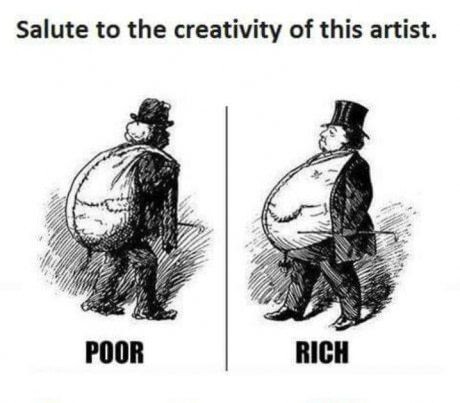
The regulatory function of taxes and tax policy is to regulate macroeconomic processes, aggregate demand and supply, growth rates and employment.
Distribution function is manifested in complex interaction with prices, incomes, interest, stock price dynamics, etc. Taxes are an instrument of distribution and redistribution of national income, income of legal entities and individuals, as well as the distribution of capital and investment resources.
The social function realizes significant obligations of the state to the population when financing them through taxes on education, health care, pension expenditures, social insurance, etc. The social function is also manifested directly through the mechanism of tax benefits and tax rates.
Stimulating function (function of microeconomic regulation) is the most difficult to implement, interacts with the economic interests of legal entities and individuals, is manifested through specific forms and elements of the tax mechanism: the system of benefits and incentives, prohibitive and limiting rates and other instruments of the tax mechanism.
The control function ensures reproduction of tax relations between the state and taxpayers. Without a control function, other functions are not feasible or their implementation is undermined at its core.
The efficiency of the tax system is broadly understood to be its ability to perform its functions. Efficiency in the narrow sense is the optimal intra-system characteristics, indicating the existence of high potential opportunities for taxes to perform their functions.
Taxation in small business is probably one of the most pressing issues. Of course, taxation of small business in our country is imperfect, but it is not a reason not to pay taxes at all. A much more reasonable and legitimate way out of the situation is to choose the optimal system of taxation of small business.