https://pixabay.com/photos/boat-teamwork-training-exercise-606187/ Motor abilities are individual abilities that determine the level of one's motor abilities and are based on one's physical qualities. The manifestation of motor skills is motor skills. The basis of motor skills is physical qualities.
Motor abilities include strength, speed, high-speed, high-speed, motor-coordination abilities, general and specific endurance.
Motor skills — is such a degree of mastery of the technique of action, which increased concentration on compound operations (parts), observed unstable solution of the motor problem.
Motor skill is such a degree of mastery of the technique of action, in which the control of movement (movements) is automatic, and the actions are reliable, i.e. do not require special attention to them.
Physical qualities are congenital (genetically inherited) morphofunctional qualities, due to which physical (materially expressed) activity of a person is possible, which gets its full
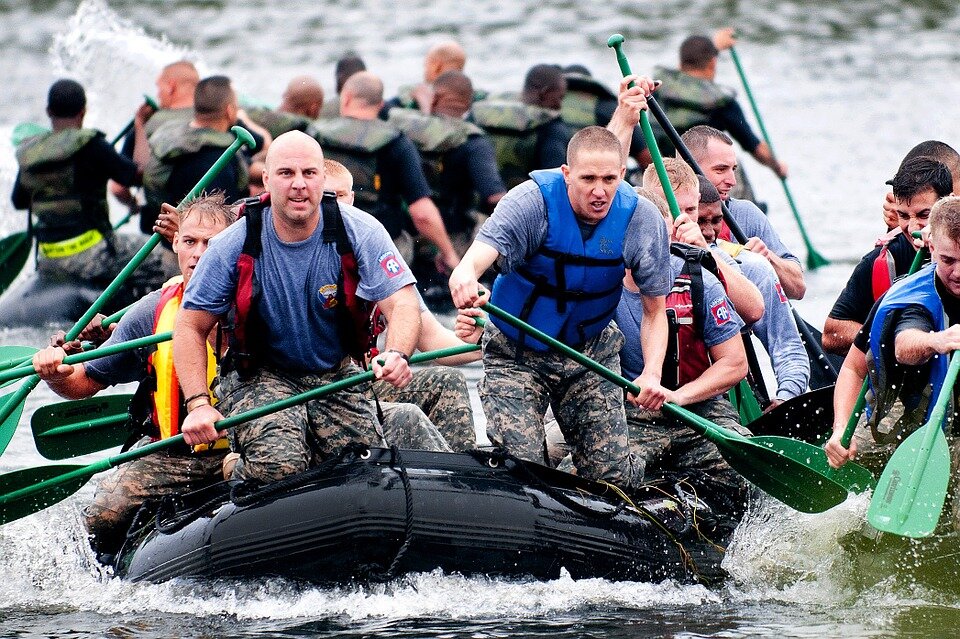
- Motor abilities are individual abilities that determine the level of one's motor abilities and are based on one's physical qualities. The manifestation of motor skills is motor skills. The basis of motor skills is physical qualities.
Motor abilities include strength, speed, high-speed, high-speed, motor-coordination abilities, general and specific endurance.
Motor skills — is such a degree of mastery of the technique of action, which increased concentration on compound operations (parts), observed unstable solution of the motor problem.
Motor skill is such a degree of mastery of the technique of action, in which the control of movement (movements) is automatic, and the actions are reliable, i.e. do not require special attention to them.
Physical qualities are congenital (genetically inherited) morphofunctional qualities, due to which physical (materially expressed) activity of a person is possible, which gets its full manifestation in expedient motor activity.
There are 5 basic physical qualities: strength, speed, agility, flexibility and endurance.
Motor activity is a purposeful manifestation of human motor activity, aimed at solving specific problems.
One of the main physical qualities is endurance.
Endurance as a motor quality, there is the ability of a person to continue to perform any motor activity without reducing its effectiveness.
Endurance is the ability to perform work without changing its parameters (for example, without reducing the intensity, accuracy of movements, etc.)
Endurance is the ability to resist physical fatigue in the process of muscular activity.
There are four types of fatigue:
1. Mental (solving problems in mathematics, playing chess, etc.);
2. Sensory (fatigue of analyzers. Example: fatigue of the visual analyzer at shooters, etc.);
3. Emotional (as a consequence of emotional experiences. The emotional component of fatigue always takes place after performances at important competitions, examinations related to overcoming fear, etc.);
4. Physical (as a result of muscular activity), divided by:
1. local fatigue — when less than 1/3 of the total body volume of muscles participated in the work;
2. Regional fatigue — the muscles involved are 1/3 to 2/3 of the total body volume;
3. total (global) fatigue — over 2/3 of body muscles.
The duration of motor activity before the development of total fatigue can be divided into two phases:
1. The phase of compensated fatigue is characterized by progressively deepening fatigue, in spite of increasing difficulties, a person can maintain the same intensity of work for some time due to greater than before, will powerful efforts and partial changes in the bio mechanical structure of motor activities (for example, reduction in the length and increase in the pace of steps in running);
2. The phase of uncompensated fatigue, when the person, despite all efforts, can not maintain the necessary intensity of work. If you continue to work in this state, then after some time there will be a “refusal” to perform it;
The ratio of the duration of these two phases is different: in people with a strong nervous system longer than the second phase, with a weak nervous system — the first phase. In general, the endurance of both can be the same. From what has been said, the most important role of the athlete's volitional qualities follows, because they are the result of his conscious activity. Willful tension, due to which the intensity of work is maintained, is a common component for all kinds of endurance. Therefore, volitional qualities largely determine the effectiveness of training and the success of participation in competitions that require a high, sometimes extreme endurance.
Endurance is necessary to some extent in any physical activity. In some types of physical exercises it directly determines the sports result (walking, running for medium and long distances, cycling, long distance skating, ski racing), in others — allows you to better perform certain tactical actions (boxing, wrestling, sports games, etc.). Third, it helps to withstand repeated short-term high loads and provides fast recovery after work (sprinting, throwing, jumping, weightlifting, fencing, etc.)
The measure of endurance is the time during which muscle activity of a certain nature and intensity takes place.