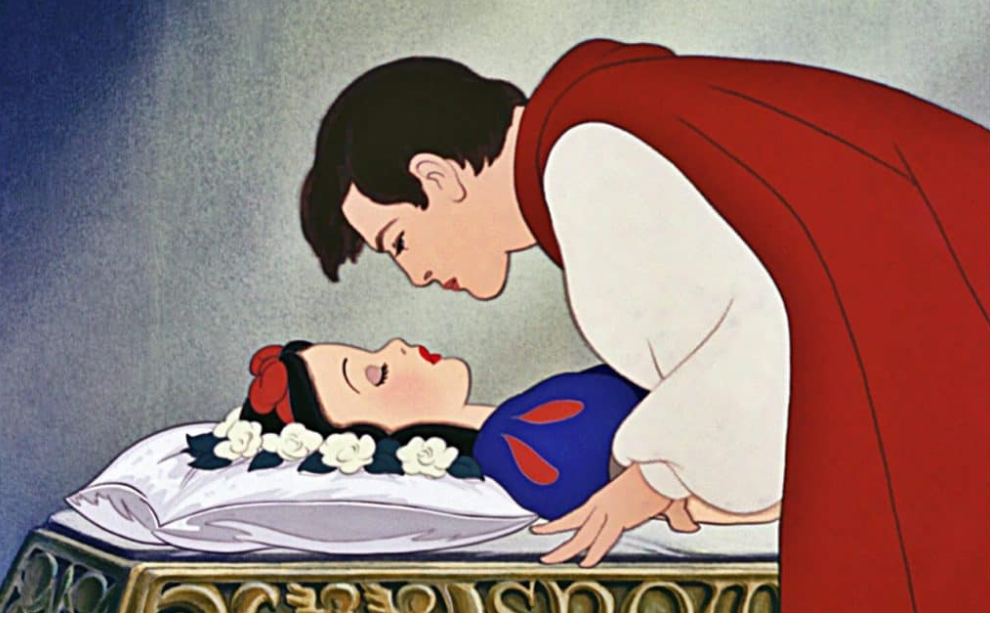
The trap of idealization ...
When we start dating a person, we have the conviction that only through repeated encounters will we understand how it really is. We think that at the beginning we can have a perception distorted by the intoxication of falling in love, which we are idealizing. May it be an ideal love.
In reality, with time, we do not replace impressions with truth, but merely modify our perceptions according to the predominant cognitive models we have internalized, says psychologist Robert J. Sternberg. That is, we try to eliminate or reduce the "cognitive dissonance" (ie the inconsistencies) because our partner adapts to our ideal model of love.
Complementary roles
We know couples that from the outside always seem to be on the verge of separating, but which actually agree because they cover the "complementary roles" of the same narrative of love. In other words, their expectations of love are very similar and are met by the relationship.
It follows that the real love story will be all the more rewarding and complete the more it reflects our "ideal of love story", the more it will follow our mental models and those of our partners. It will therefore be our ideal love.
Ideal love and real history
What happens when there is a gap between our ideal narrative of love and reality? If the story or role we are living does not meet our expectations?
Let's look at a case.
Emma is an intelligent and ambitious emancipated woman, with a degree and a master's degree. During his university years he has an intense intellectual life. He knows a man outside the university environment, a little older, who already has a job that often takes him far. A very fulfilling erotic friendship begins. He comes from a wealthy country family and, in a moment of fragility, she agrees to marry him because he is present and protective while she is experiencing a serious loss.
At first he claims to be attracted precisely by his brilliant mind, his diversity compared to the girls of his social environment, by his independence. She often takes Emma with her on her travels and she can feed her hunger for culture in this way. But the arrival of a child is sufficient because the ideas of the man of what must be a wife and a mother conform to the roles that the patriarchal tradition foresees.
Thus the woman finds herself living in a country mansion, isolated from the intellectual and stimulating environment to which she was accustomed, without friends or company, if not that of the two elderly unmarried sisters of her husband and son. He is often far away and when Emma tries to explain to her husband that he feels withering and that he would like to do a doctorate - which would still leave her plenty of time to be with the baby - he stiffens and tries to dissuade her. In short, she resists five years, then leaves him and only sees him in court.
The truth
It is in that seat, listening to the harangues of their lawyers, that he fully realizes that theirs was a weak bond destined to fail, because their ideals of love were irreconcilable. What united them was a very strong erotic infatuation, but each of them had tried to adapt the relationship to their ideal model. They wanted different things from love: she could continue to keep her brilliant mind alive, to nurture her desire for culture; he was a wife who took care of his home and his family, who was so intelligent and cultured, but above all "ornamental and submissive", willing to take on the role that his social position provided for him.
The ideal stories
People often do not understand that the rationalizations on the "incompatibilities of character" that lead to the end of a love actually conceal an "incompatibility of narratives about love".
Alberoni and Cattaneo, in my love how you changed, explain to us that: "In strong couples, who love each other deeply, who have reached intimacy through truth, when he and she tell their story separately, they make the same story, they recall the same episodes, the crucial joints of the love journey. The members of weak couples, where love is not deeply rooted, instead, tell us two different stories ”. (p. 296)
Love that lasts
This is the point. In the love that lasts the partners from the beginning they did not try to satisfy the fantasies of the other at the expense of their own, they did not let themselves be seduced or plagiarized by an ideal narrative of not shared love, but they told each other the truth without omissions or embellishments, they created a project about the future that took into account the needs, expectations, values and dreams of both. In other words, they shared the same "ideal model of love", and even years later continue to nurture the relationship by drawing gratification and happiness from it.