Early Sunday morning, January 9, 1905, the workers of St. Petersburg, carrying banners, icons, portraits of the king, solemnly went to the Winter Palace, the residence of the king, with a petition in which they wrote about their unbearably hard life. More than one hundred and forty thousand people took part in the procession. And this peaceful demonstration on the orders of the king was met with shots. More than a thousand people were killed and about five thousand wounded. The execution of workers at the Winter Palace is depicted in the painting by I. Vladimirova, placed at the beginning of the exhibition.
The bloody events of January 9, 1905 marked the beginning of the people's revolution in Russia.
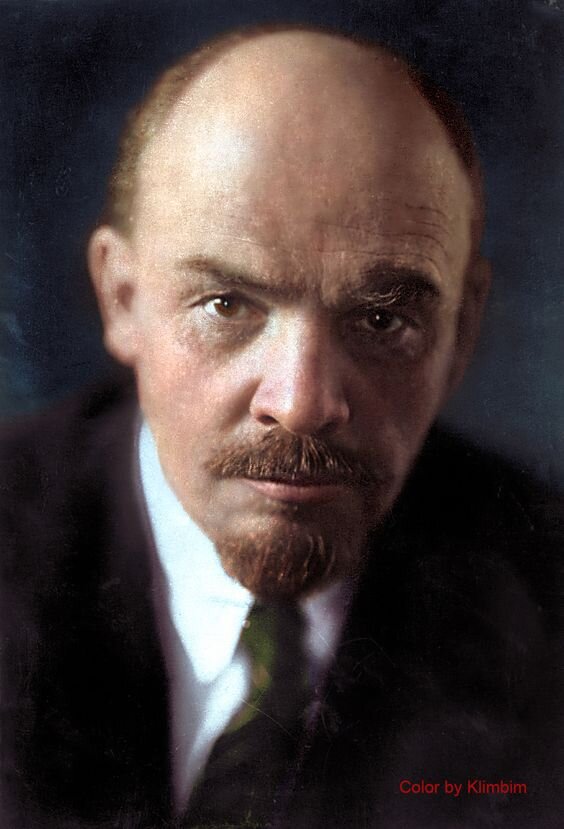
Lenin, who was in Geneva these days, was keenly interested in the unfolding events at home, immediately responded to them. In the Bolshevik newspaper "Forward" with an article by Lenin " the Beginning of the revolution in Russia." In it he emphasizes that on January 9, 1905, the working class received the great lesson of the civil war: "the Revolutionary education of the proletariat took a step forward in one day as it could not have taken a step into the months and years of a gray, everyday, downtrodden life." In the article "New tasks and new forces" V. I. Lenin defined the tasks of the party in connection with the beginning of the revolution, which should tirelessly and daily mobilize and rally the forces of the proletariat, preparing it for an open mass struggle, for a nationwide armed uprising to overthrow the tsarist autocracy.
Lenin attached great importance to the study of the experience of the armed struggle of the masses. He read and thought over very carefully all that Marx and Engels wrote about the revolution and the insurrection. Lenin was particularly interested in the experience of the Paris commune, and sought to ensure that this experience was studied by Russian social Democrats and advanced workers. In March 1905 he gave a report on the Paris commune at a meeting of the Russian colony of political emigrants in Geneva.
Lenin foresaw that the revolution would inevitably grow. In this situation, the party had to outline its line of conduct in the revolution, to find forms and methods of struggle, i.e. to determine its tactics. This could only be decided by another party Congress.
III Congress was held under the leadership of Lenin from 12 to 27 April 1905 in London. He outlined the strategic plan and revolutionary tactics of the party in the bourgeois-democratic revolution.
The gist of the plan was this. that the Russian proletariat in Alliance with the entire peasantry, neutralizing the liberal bourgeoisie, was to bring the bourgeois-democratic revolution to complete victory and thereby clear the way for the socialist revolution. V. I. Lenin wrote the main draft resolutions: on the armed uprising, on the provisional revolutionary government, on the support of the peasant movement. Recognizing the main and urgent task of the party to organize an armed uprising, the Congress instructed all party organizations to take concrete measures to arm the proletariat, to develop a plan for an armed uprising and direct its leadership...
In August 1905, Lenin's book "Two tactics of social democracy in the democratic revolution"was published. The book was published in Russian in Moscow, St. Petersburg and Geneva. This work provides a theoretical basis for the decisions of the third Congress of the RSDLP, the strategic plan and tactical line of the Bolsheviks in the bourgeois-democratic revolution. Based on the position expressed by the founders of scientific communism Marx And F. Lenin comprehensively justified the ideas of the leading role of the proletariat in the bourgeois-democratic revolution, the need for its development into a socialist revolution.
Further developments confirmed the correctness of the decisions taken by the third Congress of the RSDLP. The revolutionary struggle in Russia began in the spring and summer of 1905: large strikes in the industrial centers of the country, unrest among the peasants, the first barricades in the streets of the city. In the fight included the army and Navy. The sailors of the battleship "Prince Potemkin Tauride" first on the black sea fleet raised the flag of rebellion. V. I. Lenin wrote later that this uprising marks an open transition to the side of the revolution of the army and is of great importance as the first attempt to form the nucleus of the revolutionary army.
In October 1905, a General political strike swept the country, in which over two million people took part. The strike was held under the slogan " Down with the autocracy!", "Long live the democratic Republic!". In the days of the strike, the proletariat of Russia created the first mass proletarian organizations in world history, the Soviets of workers ' deputies.
Lenin praised them as organs of armed insurrection and embryos of people's power. At a mass meeting of striking workers of textile enterprises of the city of Ivanovo-Voznesensk, the Council of commissioners was elected, which became the prototype of the Soviets of workers ' deputies.
In early November 1905, Lenin returned to St. Petersburg. Here he launched a vigorous revolutionary activity: led the work of the Central and St. Petersburg committees of the Bolsheviks, spoke at party meetings, conferences and meetings, met with party workers, wrote articles for Bolshevik publications, took part in the preparation of the armed uprising.
The first legal Bolshevik newspaper, Novaya Zhizn, began to be published, the editorial office of which Was headed by V. I. Lenin. He was a talented journalist and editor. He knew the reader, and addressed himself very accurately each time, finding a brilliant form of exposition. In "New Life" was published 13 of his articles. In one of the issues was printed one of the program - "Party organization and party literature", in which Lenin put forward and justified the principle of party literature: it should become an integral part of the General proletarian cause, steadily serve millions of workers.
The peak of the first Russian revolution was the Moscow armed uprising in December 1905. For nine days, several thousand armed workers waged an unequal and heroic struggle against the police and government forces. The speech of the Moscow proletariat was supported by the workers of many industrial cities of Russia.
The rebellion was defeated, but its significance was enormous. The heroism of the Moscow workers, Lenin noted, was a model of struggle for all the working masses of Russia.
After the defeat of the December armed uprising, the revolution did not immediately wane. Political strikes did not abate, peasant unrest and revolutionary actions in the Navy and army continued. In this situation, under the leadership of Lenin held IV (Unification) and V party congresses, which in the acute struggle against the Mensheviks were developed specific methods and means of struggle of the masses in the new conditions. The fourth Congress met in April 1906 at the People's house in Stockholm, and the fifth party Congress was held in may 1907 in the premises of the reformed Church on the outskirts of London.
V. I. Lenin had to lead the party, the revolutionary struggle of the working class in incredibly difficult conditions. Hiding from the police, he was forced to wander to different places, to live in an illegal situation. The tsarist police took all measures to arrest him. In the late summer of 1906, Lenin settled in the town of Kuokkala (Finland) at the dacha "Vase", occupied by one of his associates.
Here he lived intermittently until December 1907. From here he illegally went to St. Petersburg. In August 1907, Lenin took part in the VII Socialist Congress of the II international (Stuttgart), to which the decision of the Central Committee, he was sent as part of the delegation of the RSDLP.
The Russian bourgeois-democratic revolution had a great impact on the growth of revolutionary actions of workers and peasants in many countries of the world, caused a powerful rise of the national liberation movement of the oppressed peoples of the colonial East. The countries of Europe, Asia and America were swept by the revolutionary upsurge under the influence of the events of 1905-1907 in Russia. Foreign social democratic Newspapers of the time ("yumanite", "Nepsava", "Rabotnichesky Vestnik") praised the heroism of the Russian proletariat in the days of the revolution.
"Without the' dress rehearsal ' of 1905," Lenin wrote,"the victory of the October revolution of 1917 would have been impossible."