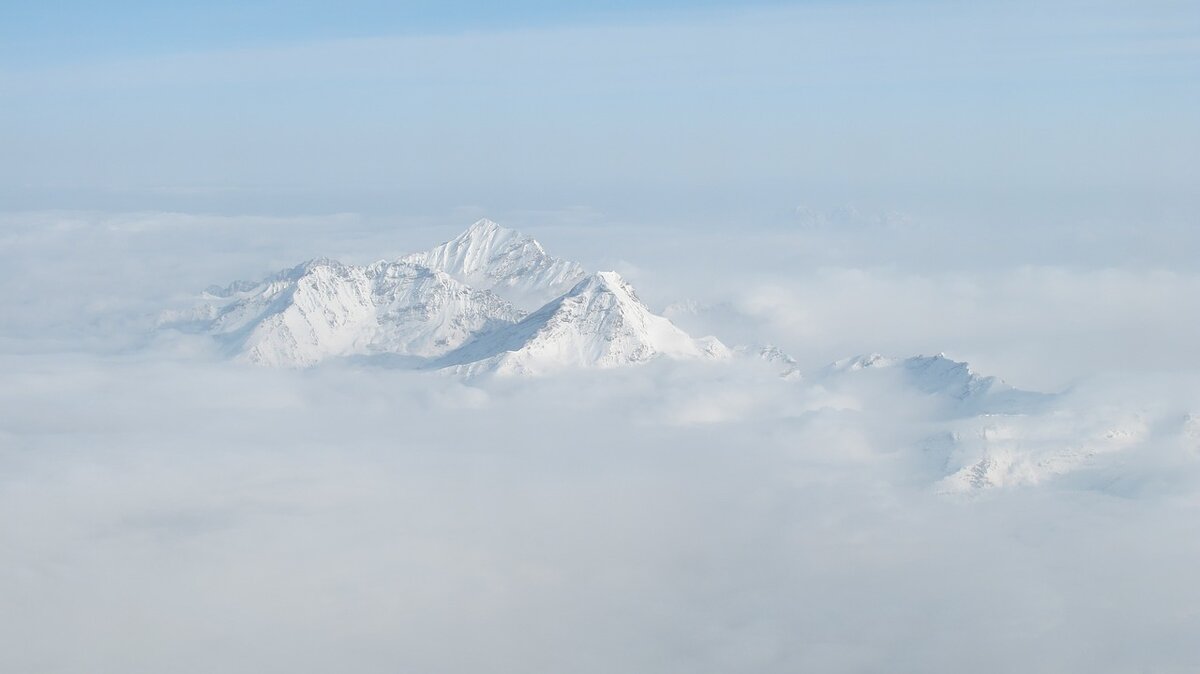
The untouched mountain landscape covered with white snow keeps reminding me of Rigpa, the nature of the spirit. The clear radiant white, everywhere silence present, one of the most striking features of the nature of mind. Impeccable clear space that permeates everything; in their essence untouched and yet in a manner present living consciousness.
We can only grasp the nature of the mind with great difficulty because, in its entirety, we can deal with all aspects, such as The clear view of "immediate insight into all things" is really only experienced on the personal level of Dharmakaya * experience. From this immediate experience, we can then align our future meditation practice time and again with the experience of Rigpa and remain one-pointed (it does not need any additional techniques of meditation). Man calls this then the dzogchen point of view. A very important prerequisite for doing this meditation practice correctly.
Otherwise, it may be easy for us to cling to misconceptions of the nature of the mind, or to meditate on the clarity and silence of the ordinary mind, and so there is little point in practicing and thus practicing rigpa. ...
Here are some tools to make Rigpa's immediate experience:
To cultivate trust and devotion and to have contact with a teacher who has already experienced or made use of rigpa.
Trust: In meditation it is helpful to already sit like a Buddha. This means that all the phenomena that appear during meditation are already considered perfect without being attached to you (thoughts, feelings, body sensations, clarity and silence). To let the own mind relaxed and unaffected - knowing that all phenomena are permeated by the nature of the mind (Rigpa).
Dedication: To let the wide clear winter world or other landscapes work on you. To be touched with a relaxed and unaffected mind, without wanting to achieve or reject something.
Lungrig Method: Reading scriptures of Buddha and other teachers who have already experienced the nature of mind and report from their personal experience. These may be other traditions that point to the same experience (Christian tradition - mysticism, Buddhist tradition, Hindu tradition - Advaita Vedanta, Taoism, Sufi tradition, etc.)
Take turns practicing Shamatha, Vipashyana, and compassion and love exercises (Tongels and Metta). This practice should take place in meditation and in post-meditation in everyday life. It makes sense to visit an experienced teacher in order to learn this practice and to understand it in its multifaceted effect.
* In this context, the Dharmakaya stands for a pure, open and at the same time potential dimension of being of the unaffected mind with its direct perception of the all-encompassing spontaneous presence of Rigpa.