Найти в Дзене
A 30-day marathon

A 30-day marathon

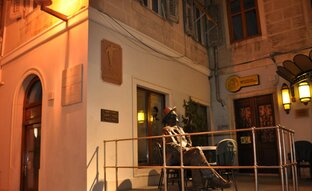
Be my guest and come to know more about the English language and countries where it's spoken. Name the writer depicted in the photo and get a 15% discount on the price of your first lesson 😏
подборка · 30 материалов
2 года назад
Day 30 Methods of teaching a foreign language. There are over 20 methods of teaching languages in today's society. However, now we'll talk about only two of them: the traditional (or grammatical translation) method and the communicative method. If you wonder why the methods have been chosen out of the wide variety, the answer to this question is: these are the two approaches I combine to deliver beneficial results in my work. What's the need to combine different methods? Oh, that is pretty simple. Like anything in this world, each strategy has its advantages and disadvantages. Traditional method is about grammar systematization and application and equivalents in the mother tongue. The thing that lacks is speaking practice which leads to poor conversational skills. The essential language abilities (speaking in the first place, listening, reading, etc.) are, on the contrary, developed simultaneously in the process of live dialogue, which is the essence of communicative approach. Here, with such strong emphasis on speaking, the teacher rarely corrects errors and grammar suffers greatly. The communicative method does not allow for adequate development of writing abilities (including translation) either. So, in my humble opinion, the best way out is to use the mixture of the two approaches with pros of both of them, but cons of neither. What is your vision of doing it so that to succeed in mastering the language? Does such a strategy of a mixture suit you?
2 года назад
Day 29 Teaching (and studying) via the Internet. Today's topic is something I, hopefully, know very well of. For ten years most of my appointments have been online. I believe the opportunities the Internet provides us with to be truly incredible. Literally, we have everything at our fingertips. I am fairly certain each and every one of you has had an experience of using the international computer network to your advantage. You don't know a word, you look it up in an online dictionary; you want to watch a film in the original in order to improve your listening skills and learn new vocabulary items, you follow a link; you feel like taking a course of general English with me, you open your Skype and so on, and so forth. What I am trying to say here is that one should not neglect the possibilities they are offered. I wish you all achieving what you desire. Remember: nothing succeeds like success. 😉
2 года назад
Day 28 Canada and its culture and traditions. An essential part of the national lore is cottage culture. Crackling campfires, picturesque sunsets and afternoons full of boat rides and water sports help to understand the significance of spending the weekend in a cabin in the woods. There are hamburgers and milkshakes when spending all day on a lakeside dock listening to music with friends that live around you. Google “Muskoka chairs/sunsets” to get the vibe. Even regional words for cottages do exist: in British Columbia, you’ll encounter a cabin, French Quebec welcomes you at chalets, English Quebec will have a lake house, parts of Manitoba and North Canada call the log houses camps. The other funny thing I am going to tell you about is a snack called “Beaver tails”. Do not be alarmed — Canadians do not eat tails of actual beavers. In Canada, beaver tails are giant, deep-fried sweet delicacies. A ball of dough is stretched into a long, flat oval, fried in oil and served in a paper sleeve. If you are a purist, you stick to a mix of sugar and cinnamon to be sprinkled on top, but there are other options like maple cream, cookies or chocolate spread. It makes for an especially brilliant snack when you have spent the evening on a skating rink or pond during the cold season. Yummy-yummy.
2 года назад
Day 27 Important events in American History. As usual, with it being impossible to retell the whole history of a country in a short post, I had to choose something. So, here are two dates for you. Although there’s still a debate as to who discovered America, recent evidence suggests that Columbus discovered the unknown land in 1492. Since its discovery trade and navigation flourished and several European powers came and made America their base. 11/22/63 is a novel by Stephen King (believe it or not, it's his 60th published book) about a time traveller who attempts to prevent the assassination of United States President John F. Kennedy, which occurred on November 22, 1963 (the novel's titular date). The novel required considerable research to accurately portray the late 1950s and early 1960s. King commented on the amount of research it required, saying "I've never tried to write anything like this before. It was really strange at first, like breaking in a new pair of shoes." It is strongly recommended that you read the book. I did enjoy it. Twice. ☺️
2 года назад
Day 26 Grammar is there - dzen.ru/...594 Passive Voice and the tenses it can be used in. Do you remember me telling you about English tenses and tense infinitives? Here comes more on the subject. But for the four tense infinitives in the English language, there is a fifth infinitive of the verb. It is the infinitive "to be done" that is needed to build a sentence in Passive Voice. Passive is the form of a verb used when the subject is affected by the action of the verb. Generally, it is used when the doer of the action is unknown or irrelevant or due to some reason, we want to be vague about who is responsible. Besides, passive emphasises the person or thing acted on. It is also the one to appear if a general truth is mentioned. The trick is some of the passive tense forms are too complicated (meaning too long because of consisting of too many components). That is why Passive is not welcome when you are dealing with Future Continuous and all Perfect Continuous forms of the verb. However, other passive forms are used pretty frequently, especially in a scientific genre (any Materials and Methods section of a lab report or scientific research will immediately prove me right). To cut a long story short, meet the forms of "to be made". SIMPLE Present Mistakes are made. This make is made every time. Past Five mistakes were made in the test. The mistake was not made again. Future Will many mistakes be made? CONTINUOUS Present A mistake is being made. Past The mistake was being made the moment he entered the classroom. PERFECT Present A mistake has been made. Past Five mistakes had been made by the time he started the second task. Future Some more mistakes will have been made before he finishes the test. Undoubtedly, having understood the principle, you may build up the missing forms. Should you have any questions, do not hesitate to write to me. I am always glad to help you to brush up on your grammar.
2 года назад
Day 25 English for International Relations. An old and funny catchphrase says that one should use many languages to be properly understood: speaking to God, Latin; to the military, German; to the musicians, Italian; to his cook, Chinese; to the artists, Russian; to friends, Spanish; to enemies Dutch or Hungarian; to his girl-friend, French... In my humble opinion, the language of foreign affairs is surely English. I wish I could say that the world ceased to rely on war to settle disputes, but we know it is not true. Still the art of international negotiation is of great importance and it all often depends on people who can handle an awkward situation without upsetting any side. I believe a good diplomat must possess three significant qualities. They are patriotism, language skills and adaptation. Do you agree?