Микрокосмос на ладони. «Маленькое лучше передает величие мира». Альберто Джакометти
Microcosm in the palm of your hand. "Small things convey the greatness of the world better." Alberto Giacometti
По просьбам моих подписчиков из разных стран я публикую мои посты на русском и английском языке.
Меня зовут Елена Любимова, я родилась в Москве, училась в МГУ, работаю в Москве.
В моих постах я рассказываю о том, чем я занимаюсь и увлекаюсь, о чем пишу мои книги: о моей любимой работе и моих путешествиях, о красоте и здоровье, о чае и моем чайном доме Чайфория, о моем любимом направлении Полезные напитки для красоты и здоровья торговой марки NORDFORCE: о правильной воде для чая и о питьевой воде для людей и домашних питомцев с нормализованным кальцием и железом, о полезных и вкусных негазированных тониках , напитках НОРД ФОРС торговой марки NORDFORCE без добавленного сахара, газа и активных дрожжей, о пиве торговой марки НОРД ФОРС NORDFORCE для здорового образа жизни (ЗОЖ), о косметике Плацентоль, НОРД ФОРС и Биотилаб, об оздоровительной медицине и питании, о лекарствах Плацентоль, о лекарственных растениях и истории их применения, об ароматах и эфирных маслах, об ингредиентах и биологически активных субстанциях, о БАД и здоровом образе жизни, о кулинарии и диетологии, о собаках и о моем питомнике NORDFORCE собак двух пород – вельш корги кардиган и аусси, о специальной воде, лекарствах и косметике для собак, о воспитании собак и спортивных занятиях с собаками, о моем огороде и саде лекарственных и ароматических растений, о парках и ботанических садах, об истории садоводства и селекционной работе, о музеях и природных заповедниках, об истории и архитектуре, о литературе, музыке и живописи.
Microcosm in the palm of your hand. "Small things convey the greatness of the world better." Alberto Giacometti
At the request of my subscribers from different countries, I publish my posts in Russian and English.
My name is Elena Lyubimova. I was born in Moscow, studied at Moscow State University, and work in Moscow.
In my posts I talk about what I do and am interested in, what I write my books about: my favorite job and my travels, about beauty and health, about tea and my tea house Chaiforia, about my new direction - about the right water for tea and about drinking water with normalized calcium and iron, about healthy and tasty non-carbonated tonics, drinks without added sugar, gas and active yeast, about NORD FORCE beer for a healthy lifestyle (HLS), about Placentol and Biotilab cosmetics, about wellness medicine and nutrition, about Placentol medications, about medicinal plants and the history of their use, about fragrances and essential oils, about ingredients and biologically active substances, about dietary supplements and a healthy lifestyle, about cooking and dietetics, about dogs and about my kennel of dogs of two breeds - Welsh Corgi Cardigan and Aussie, about special water, medicines and cosmetics for dogs, about about training dogs and sports activities with dogs, about my vegetable garden and garden of medicinal and aromatic plants, about parks and botanical gardens, about the history of gardening and breeding work, about museums and nature reserves, about history and architecture, about literature, music and painting.
В моем чайном доме ЧАЙФОРИЯ я занимаюсь русским чаем и китайским чаем, изучаю чайную культуру как уникальное явление современной мировой культуры.
Об истории китайского чая в Китае и других странах написано много книг и исследований.
Я написала книгу о чае, которую назвала «Дракон. Чайные истории».
Я готовлю к печати первое издание как подарок для тех, кому понравился чай моей коллекции DRAGON и кто написал, опубликовал и прислал мне на электронную почту info@biotilab.ru свой отзыв о чае из коллекции DRAGON.
Сегодня мой двадцать первый чайный пост в этом году: 37 - рассказ о чайном доме ЧАЙФОРИЯ и о коллекции китайского элитного чая DRAGON. В части 37.1 я продолжу свой рассказ о краткой мифологии Дракона и истории образа Золотого Дракона, а в части 37.2 я расскажу о премиальном чае Золотой Дракон(золотой лист) из моей коллекции DRAGON торговой марки Чайфория, об истории китайского белого чая и правильных способах его заварки.
37.1. Коллекция DRAGON. Коллекция элитного китайского чая DRAGON и ее состав. Книга Дракон. Чайные истории. Продолжение краткой мифологии Дракона и образа Золотого Дракона.
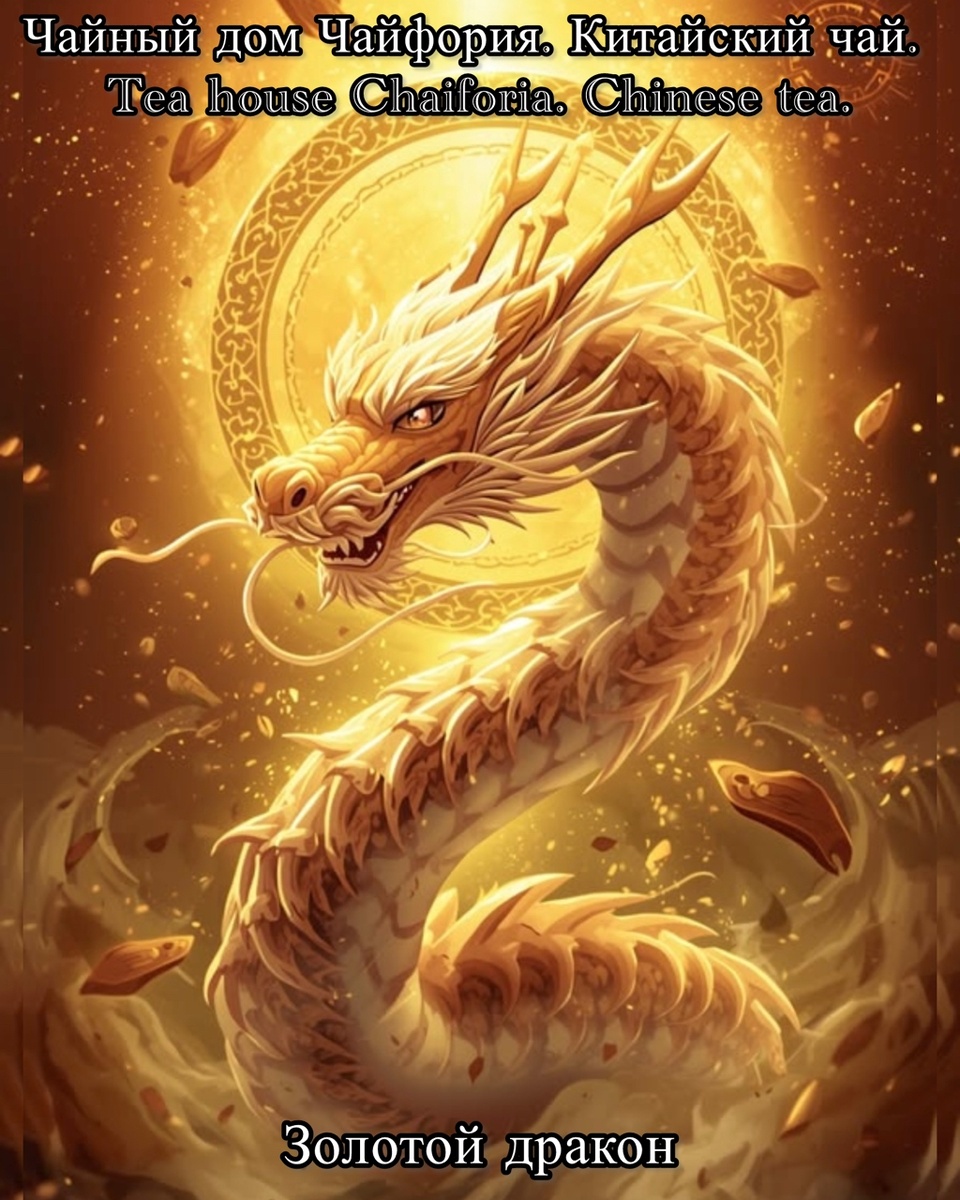
Коллекция DRAGON состоит из семи наименований китайского чая премиум: Красный дракон, Зеленый дракон, Розовый дракон, Черный дракон, Голубой дракон, Белый дракон и Золотой дракон.
Дракон. Чайные истории - книга в жанре фэнтэзи, которую я написала по материалам моих чайных историй для чайных церемоний. Книга состоит из вступления, семи глав- Красный Дракон, Зеленый Дракон, Розовый Дракон, Черный Дракон, Голубой Дракон, Белый Дракон, Золотой Дракон и Эпилога. Я начала записывать аудиокнигу «Дракон. Чайные истории».
Китайский дракон — в китайской культуре символ доброго начала Ян (в отличие от дракона европейского) и символ китайской нации в целом, прочно ассоциирующийся со стихией воды. В честь дракона установлен ежегодный праздник драконьих лодок.
По китайским поверьям, змей-лун обитает в реках, озёрах и морях, но способен взмывать и в поднебесье. В нём отчетливо проступают следы божества влаги и дождя, первоначально связанного с культом плодородия. Ритуалы по вызыванию дождя не обходились без изображений дракона уже в VI в. до н. э. Раннюю систематизацию знаний о драконах, с критическим заключением, выполнил Ван Чун (I век н. э.) в трактате «Лунь хэн».
Лун — один из 200 тысяч разновидностей персонажей китайского театра теней, и он не меняется веками.
Внешне китайского дракона описывают через подобия: голова верблюда, рога оленя, глаза демона, шея змеи, чешуя карпа (чешуек должно быть 81 или 117), когти орла, лапы тигра и уши коровы; на изображениях, тем не менее, часто заметно расхождение с этим описанием. На голове драконов находится их важнейшая принадлежность — шишка на макушке, благодаря которой они могут летать без крыльев. Однако её на изображениях можно увидеть нечасто.
Размеры китайских драконов — от метра до 300 метров.
Самки китайских драконов откладывают яйца, но некоторые детёныши вылупляются через тысячу лет. Их рождение сопровождается разгулом стихии: мощными метеорными потоками, грозами и крупным градом.
Китайцы разделили драконов на группы, в которых каждая порода имеет свои отличительные характеристики. Появились четыре главных брата-дракона морских Лун-ван:
Дунхай Юйгуан 东海敖广 или Ао-Гуан (Восточно-Китайское море);
Сихайюй 西海敖闰 или Ао-Жунь (Западное море);
Наньхай Юйцинь 南海敖钦 или Ао-Цинь (Южное море);
Бэйхай Юйшунь 北海敖顺 или Ао-Шунь (Северное море или озеро Байкал).
Через озеро Байкал, шаманов Севера, Сибири, Алтая и Забайкалья, через древние легенды множества коренных народов России мы ментально связаны с китайскими Драконами Севера.
Но мы ментально связаны и с европейскими мрачными похитителями девиц - Драконами Запада и со своими славянскими легендарными Змеями – Горынычами. Поэтому образ Дракона так популярен в России.
Основные породы дракона следующие:
Тяньлун — небесный дракон, который охраняет чертоги богов и возит их на колесницах;
Фуцанлун — дракон скрытого сокровища, который стережёт под землёй драгоценные камни и металлы и волнует землю вулканами;
Дилун — земляной дракон, который заведует морями и реками;
Инлун — божественный дракон, от которого зависят погода, ветер, дождь и который гремит с неба громом.
Последние два вида дракона в народном воображении срослись в фигуры царей драконов, которые имеют тело человека и голову дракона. Живут они в морях на востоке (Восточно-Китайское море), юге (Южно-Китайское море), западе (Индийский океан) и севере (озеро Байкал).
Другие породы драконов: цзюлун — чешуйчатый дракон (синий); инлун — дракон с крыльями или без, оба варианта возможны (белый, чёрный, циановый); цзюлун с рогами (синий); безрогий чжилун (красный, белый и зелёный); паньлун, связанный с землёй. Китайские драконы могут быть также чёрного, белого, красного или жёлтого цвета, среди которых последний считается главнейшим. Каждый дракон рождается из золота того же цвета, что и его шкура. Возраст дракона также можно определить по цвету шкуры. Жёлтым, красным, белым и чёрным драконам — тысяча лет, а синим — восемьсот.
Драконы могут менять свои формы, в том числе принимать человеческий облик. По верованиям китайцев, их отпугивают или контролируют листья кельрейтерии метельчатой (мелии иранской), пятицветная шёлковая нить, воск, железо или многоножка.
Значение символа
(как царь животных дракон служил символом императорской власти).
Согласно китайскому преданию, Жёлтый император на исходе жизни обратился в дракона и взмыл в небеса. У настоящего императора должна быть родинка в форме дракона.
Удивительно, но это китайское народное поверье о родинке дракона широко распространено среди народов Сибири.
Такая родинка была у сибирского казака Емельяна Пугачева и на этом основывалось его глубокая убежденность, что его судьба – стать императором России, на исходе жизни обратиться в дракона и взмыть в небеса, поэтому его палачи были особенно безжалостны с ним и его казнь была актом издевательства над верованиями народов Сибири и Забайкалья.
Пугачев, несомненно, слышал от забайкальских казаков легенды и мифы о драконах.
Пушкин долго работал в архивах для создания образа Пугачева в своей гениальной повести «Капитанская дочка» и у него не было задачи написать ужастик. Но ни одна натуралистическая современная экранизация этой повести не может сравниться со скупым текстом Пушкина невероятной силы и образности.
Пушкину удалось яркое противопоставление двух драконов императоров – реального и мнимого, двух талантливых авантюристов - амбициозной нищей похотливой немецкой дворянки, ставшей всесильной жестокой русской императрицей Екатериной II и умного непокорного удалого сибирского казака, не ставшего императором всея Руси и погибшего от позорной казни на Болотной площади, когда под ударами озверевших голодных каторжников дала сбой немецкая государственная машина угнетения, построенная хитрой потаскухой и ее послушными слугами, и зашаталась гигантская российская империя и ее огромная регулярная армия забитых немецкими палками рабов великой российской империи, но устояла до времени. Но народная революция пришла и в Поднебесную и в императорскую Россию.
Императорский трон многих династий Поднебесной назывался троном дракона. Во времена династии Цин китайский дракон украшал государственный стяг. За ношение одежды с фигурами дракона или за родинку дракона на теле простолюдин подлежал смертной казни, поэтому такую смутьянскую родинку выжигали или вырезали.
Применение костей дракона в медицине
В конце 80-х годов XX века жители маленькой деревни в провинции Хэнань в Китае обнаружили скелет зауропода, который приняли за кости дракона. В соответствии с традиционными рецептами, они стали варить из останков похлёбку для детей, страдающих судорогами и головокружениями, а также размалывали кости в порошок и прикладывали к ранам и переломам. По их убеждениям, это действительно помогало, и на местном рынке активно шла торговля: «драконьи кости» продавались на развес по 4 юаня за килограмм. Однако, когда об этом узнал профессор Института палеонтологии позвоночных и палеоантропологии Китайской академии наук Дун Чжимин, разразился скандал. Крестьяне, осознавшие, что употребляли в пищу животное, жившее 85-100 млн лет назад, испугались и передали остатки скелета учёным.
Девять сыновей дракона
К XVI веку китайские авторы объединили несколько созданий, некоторые из которых уже давно появлялись в китайской скульптуре или декоративно-прикладном искусстве, под общим названием Девять сыновей дракона. Существует несколько вариантов этого списка. По одной традиции, представленной в книге «Шэнъань вайцзи» поэта Ян Шэня (1488—1559), сыновья дракона, в порядке старшинства, перечисляются списком.
В современном китайском языке выражение «девять сыновей дракона» является чэнъюем или устойчивым выражением и помимо использования в прямом значении «рождённые легендарным драконом девять сыновей не стали драконами и имели каждый свои достоинства», переносится на людей и употребляется в переносном смысле, когда хотят отметить различие в моральных качествах и увлечениях у родных братьев, получивших одинаковое воспитание в семье заботливых родителей..
Золотой Дракон.
В легендах о Золотом Драконе, которые в Поднебесной знают все – от мала до велика, сказано, что он охраняет врата храма Создателя всего живого.
Этот храм находится в месте, связывающем переход с земли в небеса и являющемся границей соприкосновения бренного и вечного. Попасть туда можно только по мосту, к которому непрерывно направляются все души умерших людей. Но не всякая душа обретёт покой в храме Владыки Мира.
Древние предания гласят, что два Золотых дракона, как два верных стража, охраняют врата в царство Создателя всего живого.
Они пристально всматриваются в каждую душу. И если человек жил праведно, а его помыслы были чистыми, если он не сотворил ничего скверного, тогда Драконы не причинят ему зла, расступятся перед такой душой и пропустят в храм Великого Владыки.
Тому же, кто совершал зло, завидовал другим и ненавидел, нечего ждать благосклонности от стражей ворот. Драконы не поддадутся обману, их не удастся ни подкупить, ни обмануть, ни задобрить. Они никогда не теряют бдительность.
Народы Китая верят, что у стража небесного храма львиное туловище и драконья голова. Могучая шея украшена развевающейся гривой, огромные крылья спокойно сложены на спине.
Оружие Золотого Дракона – когти и клыки. Ими он разрывает души преступников и лжецов.
Кожа Дракона – угольно-чёрная с золотой шерстью, которая служит ему защитой от всякого оружия.
Ни копьё, ни отравленные стрелы не страшны тому, кого создал сам Владыка Мира. И по его воле Золотой Дракон стал прародителем всех других видов драконов.
Многие предания утверждают, что Золотые Драконы защищают земли Поднебесной от самых разных бед. И, действительно, Китай, переживавший многократно очень тяжёлые времена, всегда возрождается, а затем безудержно развивается.
В восточных преданиях, философии и мудрости порой скрыто немало поучительных жизненных истин, что не так просто увидеть сразу. В мировой мифологии легенды Китая занимают особое место. Они содержат колорит этой древней прекрасной и самобытной страны.
Я люблю погружаться в таинственный мир легенд о Драконах – сказаний, которые уже много веков передаётся в Поднебесной из поколения в поколение. Какой образ воплощает Золотой Дракон в мифах? Почему предания говорят о том, что драконы не могут иметь потомства: кто проклял их?
Наполовину дракон, наполовину лев
Золотой Дракон – необыкновенное создание. Народы Китая верили, что страж небесного храма имеет львиное туловище и драконью голову. Могучую шею украшает развевающаяся грива, а на спине сложены огромные крылья.
Грозное оружие Золотого Дракона – когти и клыки, которыми он с лёгкостью разрывает души преступников и лжецов. На угольно-чёрной коже дракона растёт золотая шерсть, что является защитой от всякого оружия.
Словно броня, сверкающий ореол окружает это создание, не позволяя врагам сразить дракона ни копьём, ни отравленными стрелами. Таким его создал великий Владыка Мира.
Изгнание и расправа с драконами
Однако жизнь у Золотых Драконов не всегда была спокойной и размеренной. Мифы рассказывают, что однажды грозный небесный хозяин так разгневался на одного из драконов, что прогнал его на землю.
Что мог совершить страж – вероятно, нарушил какое-либо правило или проявил излишнее милосердие. Тем не менее, на земле Золотому Дракону жилось привольно. Изгнанник веселился и не знал горестей, он заводил своих наследников от разных земных животных и женщин и преуспел только в этом, чем и разгневал Владыку.
И если прежде драконы у входа в небесный храм были единственными во всём мире, то через некоторое время по всей земле стали появляться множества этих созданий, причём разных видов и совершенно непохожие друг на друга внешне. Подобное разгневало Владыку Мира.
Хозяин спустился вниз, чтобы истребить всех новых драконов, а своего Золотого Дракона он забрал в свой храм – на прежнюю службу. И всё, казалось бы, было решено, да только творец не учёл одного фактора – немало новых драконов ещё пребывали в материнских утробах.
Не подумал о них Владыка Мира, а потому остались невредимыми нерождённые существа. Когда пришла пора, появились они на свет, но не стал убивать их всесильный властелин. Владыка Мира приказал всем драконам служить ему, подчиняясь как ему самому, так и его Золотым Драконам, один из которых был прародителем своих молодых потомков.
Щедро одарил Владыка Мира их всех – драконы стали бессмертными. Но и забрал он не меньше – своей властью лишил он драконов возможности продолжать свой род. Поэтому число их из века в век остаётся неизменным.
Впрочем, как всегда в Поднебесной, не бывает правил без исключений, далеко не все драконы Поднебесной отправились на службу к Владыке Мира. Некоторые из них и сегодня хранят свой край от бедствий, а, умирая, оставляют после себя своих детей-наследников.
Сегодня Дракон стал самым популярным в мире мифологическим существом в информационном пространстве нашей планеты и Драконы всех мастей и цветов окружают нас повсюду.
Гармония души– главное сокровище китайца
В китайских преданиях скрыто немало загадок, которые мы можем лишь попытаться разгадать. Золотой Дракон стал образом верного стража Владыки Мира в Поднебесной, и породил множество историй, преданий и фантазий во все мире.
Для народов Китая сокровище это не богатства и дары, а покой и счастье, что душа обретает в небесном храме. Жестокость Владыки Мира, уничтожившего многочисленных потомков своего дракона, изначально настораживает, но финал мифа объясняет этот поступок.
Если в привычном нам мире начнут появляться новые существа, стремительно умножающиеся в своём количестве, всеобщая гармония будет нарушена. Многие народы Азии считают гармонию наивысшим блаженством для человека и основой жизни, её важнейшей составляющей. Выходит, в наказании драконов было проявление не жестокости, но мудрости небесного властителя.
В конце многих китайских преданий часто упоминается, что Золотые Драконы всегда будут охранять Поднебесную, ограждая свои земли от напастей и бед.
Многие из нас реалисты и не верят легендам. Тем не менее, Китай смог пережить трудности и самые тяжёлые времена, возродившись и стремительно развиваясь в наше время благодаря своим драконам.
37.2 GOLD DRAGON. Чай «Золотой дракон», история, особенности
производства белого китайского чая премиум Золотой дракон (золотой лист) и его полезные свойства, как правильно его заварить.
(артикул Чай51 Золотой дракон на сайте производителя biotilab.ru)
Чай Золотой Дракон (золотой лист) представляет собой китайский белый чай премиум. Сырьё для этого чая собирают в сухую погоду, и берут только крупные листья со старых деревьев. На него идут верхние листья идеального качества. Сырье не подвергается резкому нагреванию, а медленно высушивается под навесом в тени. Сухой целый лист имеет естественную скрутку, почки выделяются на фоне темных слегка ферментированных листьев, чай имеет большой обьем и рыхлую структуру, он словно наполнен воздухом. Длительная подготовка сырья для белого чая Золотой Дракон не терпит суеты.
Цвет - Легкий прозрачный настой цвета слоновой кости
Аромат - Насыщенный сладкий аромат с медовыми нотами
Вкус - Гармоничный вкус с легкой лаймовой кислинкой.
Как правильно заваривать белый чай?
Лучше всего белый чай раскроется, если заваривать его не крутым кипятком. Самая подходящая температура воды – около 75-85 градусов.
Важно не передержать заварку, так как в этом случае чай может начать горчить.
Чем отличается китайский способ проливов от русского способа заваривания чая?
Китайский способ проливов позволяет быстро и экономно заваривать одну заварку чая многократно до 10-15 раз, так как горячая вода заливается в чайник с заваркой на несколько минут и чайный настой быстро сливается в чахай или второй чайник. За один пролив заварка не отдает все активные вещества в чайный настой, и чайный настой не горчит.
Русский способ – это настаивание заварки в большом количестве кипятка в течение длительного времени - от 5 минут до 30 минут (иногда со свечкой для подогрева). Поэтому заварка отдает биологически активные вещества, цвет и аромат в чайный настой за один пролив с долгим настаиванием.
Белый чай можно заваривать любым способом, но не нужно ждать от него насыщенного цвета (темного, красного или зеленого) или яркого тонизирующего «штырного» эффекта. Белый чай останется светлым и деликатным, но его вкус и аромат можно испортить долгим настаиванием с подогревом.
Белый чай требует бережного деликатного отношения!
Какого цвета белый чай?
Цвет настоя белого чая от светло-желтого до светло-янтарного.
Как пахнет белый чай?
Аромат сухого листа нежный, тонкий, с нотками цветов, меда и фруктов.
Сколько раз можно заваривать белый чай?
Как и любой китайский чай премиум , белый чай заваривается несколько раз. Количество заварок будет зависеть от способа заварки. При заваривании проливом, белый чай выдерживает от 5 до 9 завариваний. При обычном способе заварки в большом чайнике – 2-3 заваривания.
Для заваривания белого чая можно использовать и метод «холодной заварки». В этом случае чай заливают водой комнатной температуры и дают ему настояться около 1,5 – 2 часов. Получается полезный и легкий напиток, идеально утоляющих жажду. Методом холодной заварки белый чай можно заваривать несколько раз.
Какой на вкус белый чай?
Заваренный правильно белый чай имеет тонкий вкус с нотками цветов и фруктов. Некоторые ценители отмечают яблочные нотки. Чай, заваренный холодным способом, напоминает легкий компот с кислинкой летних яблок и мягким цветочным ароматом.
Чем пахнет белый чай, заваренный холодным методом? При этом способе заварки белый чай раскрывается по-другому. Его аромат становится совсем легким, с нотками почек и легкими акцентами фруктов.
Как пить белый чай?
При холодном методе заварки белый чай можно пить в течение дня. Он прекрасно тонизирует и утоляет жажду. При обычно методе заварки чай рекомендуется пить в утренние часы и днем.
Когда лучше пить белый чай?
Белый чай – универсальный напиток. Он подходит для любого времени года.
Чем полезен белый чай?
Понижает уровень холестерина, препятствует образованию тромбов.
Очищает организм от токсинов.
Благоприятно воздействует на нервную систему.
Укрепляет костную ткань.
Обладает антибактериальным действием.
Стимулирует работу иммунной системы.
Улучшает обмен веществ.
Содержит множество витаминов и антиоксидантов.
Как белый чай влияет на давление?
Для людей, страдающих гипертонией, белый чай – абсолютная находка. Он способствует нормализации всей сердечно-сосудистой системы, укрепляет сердечную мышцу и нормализует ее функционирование. При гипертонической болезни рекомендуется регулярное употребление некрепкого белого чая, так как он снижает давление и стабилизирует его.
Чем полезен белый чай для женщин?
В составе белого чая содержится целый витаминный комплекс. Поэтому, его употребление особенно важно для женщин. Чай улучшает состояние кожи, снимает отеки, мягко тонизирует.
Чем полезен белый чай при стрессе?
Белый чай помогает бороться с синдромом хронической усталости и дарит хорошее настроение. Он также входит в состав многих диет, так как активизирует обменные процессы организма и очищает от токсичных веществ.
Сколько раз можно заваривать белый чай Золотой Дракон (золотой лист)?
Как и любой премиальный китайский чай, этот чай заваривается несколько раз. Количество будет зависеть от способа заварки. При заваривании быстрым проливом, белый чай Золотой Дракон выдерживает от 5 до 9 проливов. При обычном русском способе заварки в большом чайнике – 1-2 заваривания.
Для заваривания белого чая Золотой Дракон (золотой лист) можно использовать и метод «холодного настаивания». В этом случае белый чай Золотой Дракон (Золотой лист) заливают водой комнатной температуры и дают ему настояться около 1,5 – 5 часов. Получается полезный и легкий напиток, идеально утоляющий жажду. Таким способом белый чай Золотой Дракон можно заливать прохладной водой и настаивать до пяти раз в течении трех суток.
Для холодного настаивания премиального чая Золотой Дракон ( Золотой лист) я рекомендую использовать:
Холодный способ: на термос обьемом 1 л – десертная ложка белого чая. Залить чай водой комнатной температуры, настаивать четыре часа. Можно заливать повторно водой комнатной температуры и настаивать до трех дней. Для холодного способазаваривания подойдет специальная мягкая вода для чая NordForce.
Я рекомендую мягкую воду торговой марки NordForce (Норд Форс) с нормализованным кальцием и железом, которую мы выпускаем специально для правильного заваривания чая торговой марки Чайфория. По артикулу (вд110) эту воду можно найти на нашем сайте https://biotilab.ru/ в поиске в главном меню сайта производителя.
В завершение своего поста хочу вспомнить особый китайский мифологический ореол легенд о белом чае, так как этот чай наименее известен европейцам. В Европе и в России белый чай не понят до сих пор. Но именно благородный прозрачный китайский белый чай - мой самый любимый целебный китайский чай и чай для утренних медитаций.
Китайская чайная традиция окружена не только историческими фактами, но и особым мифологическим ореолом. Это связано с менталитетом китайцев и с особенностями китайской культуры.
Начало производства чая Золотой Дракон (золотой лист) относится к XVIII веку. До сих пор сохранилось старое чайное дерево, к которому по легендам прилетал Золотой Дракон. Сейчас дерево Золотого Дракона находится под правительственной защитой провинции Фуцзянь.
Чай Золотой Дракон (золотой лист) относится к белым чаям премиум. У него большие и выгнутые листья. Он растёт только в Китае, в провинциях Гуанси и Фуцзянь, на высоте 800 метров. Изготавливают этот чай небольшие местные фермерские хозяйства из зрелых листьев чайных кустов, выбирая преимущественно крупные.
Так как сбор чая Золотой Дракон происходит позже, чем сбор других сортов белого чая, он получается темнее и с золотистым оттенком.
Чай Золотой Дракон можно долго хранить, с годами его вкус становится только лучше и ярче.
Чай Золотой Дракон содержит большое количество аминокислот и микроэлементов, он хорошо насыщает и частично утоляет голод.
Чай Золотой Дракон имеет множество полезных свойств и высокий уровень содержания витаминов. Он содержит антиоксиданты, катехины (EC, ECg, EGC и EGCg), витамины (А, В, С, Е, Р) и аминокислоты.
Благодаря уникальному составу он полезен в качестве антибактериального средства, для очищения организма, при диабете (нормализует уровень сахара и холестерина в крови), для улучшения пищеварения, для защиты от вирусных и простудных заболеваний, для профилактики кариеса, для ускорения метаболизма и снижения веса, в качестве легкого антидепрессивного средства для снятия стресса и для улучшения зрения.
Я продолжаю писать мою книгу о чае, о чайной культуре, о чайных традициях и о моей коллекции чая разных стран.
Я закончила описание моей новой коллекции Дракон торгового знака Чайфория.
Прошедший год я рассказывала о 4 коллекциях моего чайного магазина Чайфория из 42 моих любимых сортов чая разных народов, составляющих чайные коллекции Чайфория, о том, как правильно заваривать чай и какого действия можно ждать от чая.
Рецептуры 16 российских чаев коллекции RUSSIA составлены из традиционных семейных рецептов моей семьи, и я сама собираю для них травы, ягоды и цветы в моем экологически чистом лесном саду, в котором я не использую стимуляторов роста, химикатов и удобрений. Часть горного и лесного сырья мне присылают мои знакомые травники Алтая и Сибири.
Я рассказывала о коллекции 15 сортов китайского чая коллекции CHINA, о коллекции SEA OF TEA из Аргентины, Японии и Таиланда и о коллекции 7 сортов китайского премиального чая DRAGON.
О коллекции чая DRAGON я написала книгу в жанре фэнтези «Дракон.Чайные истории» и готовлю ее к печати.
Я начала рисовать иллюстрации к моим чайным историям для чайных церемоний и готовлю издание книги о чае.
В моем телефоне есть программа Звездная прогулка. И я могу видеть созвездие Дракон на синем фоне неба в моем телефоне когда захочу – и ночью, и днем, и в туман, и в снег!
Всем советую это чудесное развлечение для релакса в любой стрессовой ситуации, когда лучше унестись в мыслях в звездное пространство к мудрому древнему Дракону от суеты мрачной реальности и бесконечных насущных проблем.
Завари себе чай из коллекции DRAGON, нажми на иконку программы Звездная прогулка, найди созвездие Дракон в северном полушарии возле Полярной Звезды и увидишь, что Космос не пуст…
Ты узнаешь, какими прекрасными образами наполнена наша Вселенная! И вспомнишь прекрасные образы, рожденные мифами и легендами чайной Вселенной, по которой мы вместе путешествовали целый год.
А я продолжу рассказывать свои чайные истории в моих книгах и постах, эта тема для меня неисчерпаема
Где искать вкусный и полезный российский чай?
Где искать чай для красоты и здоровья?
Где искать волшебный чай Чайфория?
Чай марки «Чайфория» можно найти:
1.В офисе Biotilab
По адресу: г. Москва, ул. Марксистская д. 34. корп. 10, вход по предварительному звонку со стороны Марксистской улицы в конце здания под воздушным переходом, этаж 2, офис 5.
(м. Пролетарская или м. Крестьянская Застава),
Тел.: 8 (495) 748-09-24;
График работы:
пн-пт.: с 9-30 до 18-00,
сб., вс.: выходной
Чай марки «Чайфория» можно найти:
На сайте BIOTILAB компании производителя https://biotilab.ru/
На Wildberries BIOTILAB или ПЛАЦЕНТОЛЬ
На ОЗОН BIOTILAB или ПЛАЦЕНТОЛЬ
Будем сиять, молодеть, здороветь и радоваться жизни!
Хотите быть в курсе последних новостей о чае, красоте и здоровье, философии и культуре?
Подпишитесь на наш Telegram-канал: https://t.me/biotilab
At my tea house, CHAIFORIA, I specialize in Russian and Chinese tea, studying tea culture as a unique phenomenon in contemporary global culture.
Many books and studies have been written about the history of Chinese tea in China and other countries.
I wrote a book about tea called "Dragon. Tea Stories."
I'm preparing the first edition for publication as a gift for those who enjoyed the teas in my DRAGON collection and who wrote, published, and emailed me their reviews of teas from the DRAGON collection to info@biotilab.ru.
Today is my twenty-first tea post this year: #37 – a story about the CHAIFORIA tea house and the DRAGON collection of elite Chinese teas. In Part 37.1, I'll continue my story about the brief mythology of the Dragon and the history of the Golden Dragon. In Part 37.2, I'll talk about the premium Golden Dragon tea (gold leaf) from my DRAGON collection by the Chaiforia brand, the history of Chinese white tea, and the proper brewing methods.
37.1. DRAGON Collection. The DRAGON collection of elite Chinese teas and its ingredients. The book "Dragon. Tea Stories." A continuation of the brief mythology of the Dragon and the Golden Dragon.
The DRAGON collection consists of seven premium Chinese teas: Red Dragon, Green Dragon, Pink Dragon, Black Dragon, Blue Dragon, White Dragon, and Golden Dragon.
"Dragon. Tea Stories" is a fantasy book I wrote based on my tea stories for tea ceremonies. The book consists of an introduction, seven chapters—Red Dragon, Green Dragon, Pink Dragon, Black Dragon, Blue Dragon, White Dragon, and Golden Dragon—and an Epilogue. I started recording the audiobook "Dragon: Tea Stories."
The Chinese dragon is a symbol of the good principle of Yang in Chinese culture (unlike the European dragon) and a symbol of the Chinese nation as a whole, strongly associated with the element of water. The annual Dragon Boat Festival is celebrated in its honor.
According to Chinese beliefs, the moon serpent inhabits rivers, lakes, and seas, but is also capable of soaring into the sky. Traces of the deity of moisture and rain, originally associated with fertility cults, are clearly visible in it. Rain rituals were incomplete without dragon images as early as the 6th century BC. An early systematization of dragon lore, with a critical conclusion, was provided by Wang Chong (1st century AD) in his treatise "Lun Heng."
The moon serpent is one of 200,000 different types of characters in Chinese shadow theater, and it has remained unchanged for centuries.
The Chinese dragon is described in appearance through similitudes: the head of a camel, the antlers of a deer, the eyes of a demon, the neck of a snake, the scales of a carp (there should be 81 or 117 scales), the claws of an eagle, the paws of a tiger, and the ears of a cow. However, depictions often show discrepancies with this description. On the dragon's head is their most important feature—a knob on top, which allows them to fly without wings. However, it is rarely seen in depictions.
Chinese dragons range in size from a meter to 300 meters.
Female Chinese dragons lay eggs, but some hatchlings take up to a thousand years to hatch. Their birth is accompanied by a riot of the elements: powerful meteor showers, thunderstorms, and large hail.
The Chinese divided dragons into groups, each breed with its own distinctive characteristics. Four main dragon brothers emerged, the Long Wang sea dragons:
Donghai Yuguang (东海敖广 or Ao Guang) (East China Sea);
Xihaiyu (西海敖闰 or Ao Zhun) (West Sea);
Nanhai Yuqin (南海敖钦) or Ao-Qin (South Sea);
Beihai Yushun (北海敖顺) or Ao-Shun (North Sea or Lake Baikal).
Through Lake Baikal, the shamans of the North, Siberia, Altai, and Transbaikalia, and through the ancient legends of many indigenous peoples of Russia, we are mentally connected to the Chinese Dragons of the North.
But we are also mentally connected to the dark European maiden-stealing Dragons of the West, and to our own Slavic legendary Serpents – the Gorynychs. This is why the image of the Dragon is so popular in Russia.
The main dragon breeds are as follows:
Tianlong – the heavenly dragon that guards the palaces of the gods and carries them in chariots;
Fuqianglong is the dragon of hidden treasure, guarding precious stones and metals underground and stirring the earth with volcanoes;
Dilong is the earth dragon, presiding over the seas and rivers;
Yinglong is the divine dragon, controlling the weather, wind, and rain, and calling down thunder from the sky.
The last two dragon species have merged in the popular imagination into the figures of dragon kings, who have the body of a man and the head of a dragon. They live in the seas of the east (East China Sea), south (South China Sea), west (Indian Ocean), and north (Lake Baikal).
Other dragon breeds: Kowloon – a scaly dragon (blue); Yinglong – a dragon with or without wings, both possible (white, black, cyan); Kowloon with horns (blue); hornless Zhilong (red, white, and green); Panlong, associated with the earth. Chinese dragons can also be black, white, red, or yellow, with the last being considered the most important. Each dragon is born from gold the same color as its skin. A dragon's age can also be determined by its skin color. Yellow, red, white, and black dragons are a thousand years old, while blue dragons are eight hundred.
Dragons can change their forms, including taking human form. According to Chinese beliefs, they are repelled or controlled by the leaves of the koelreuteria paniculata (Melia perianica), five-colored silk thread, wax, iron, or a centipede.
Meaning of the symbol
(As the king of animals, the dragon served as a symbol of imperial power).
According to Chinese legend, the Yellow Emperor, at the end of his life, transformed into a dragon and soared into the heavens. A true emperor should have a birthmark in the shape of a dragon.
Surprisingly, this Chinese folk belief about the dragon's birthmark is widespread among the peoples of Siberia.
The Siberian Cossack Yemelyan Pugachev had such a birthmark, and it was the basis of his deep conviction that his destiny was to become the Emperor of Russia, transform into a dragon at the end of his life, and soar into the heavens. Therefore, his executioners were especially merciless toward him, and his execution was an act of mockery against the beliefs of the peoples of Siberia and Transbaikalia.
Pugachev undoubtedly heard legends and myths about dragons from the Transbaikal Cossacks.
Pushkin labored in the archives to create the character of Pugachev in his brilliant novella "The Captain's Daughter," and he did not intend to write a horror story. But no naturalistic modern film adaptation of this novella can compare to Pushkin's sparse, incredibly powerful and imaginative text. Pushkin succeeded in vividly contrasting two dragon emperors—one real and one imaginary—two talented adventurers: an ambitious, impoverished, and lustful German noblewoman who became the all-powerful and cruel Russian Empress Catherine II, and a clever, rebellious, and daring Siberian Cossack who failed to become Emperor of All Rus' and died a shameful execution on Bolotnaya Square. When, under the blows of brutal, hungry convicts, the German state machine of oppression, built by a cunning harlot and her obedient servants, collapsed, and the gigantic Russian Empire and its vast standing army of slaves, beaten with German sticks by the Germans, tottered, but held firm for a time. But popular revolution came to both the Celestial Empire and Imperial Russia.
The imperial throne of many dynasties of the Celestial Empire was called the Dragon Throne. During the Qing Dynasty, the Chinese dragon adorned the state banner. Commoners were subject to the death penalty for wearing clothing with dragon designs or for having a dragon birthmark on their body, so such rebellious birthmarks were burned or cut out.
The Use of Dragon Bones in Medicine
In the late 1980s, residents of a small village in Henan Province, China, discovered the skeleton of a sauropod they mistook for dragon bones. Following traditional recipes, they began to make a soup from the remains for children suffering from cramps and dizziness, and also ground the bones into powder and applied them to wounds and fractures. They believed this truly helped, and a brisk trade was taking place at the local market: "dragon bones" were sold loose for 4 yuan per kilogram. However, when Dong Zhiming, a professor at the Institute of Vertebrate Paleontology and Paleoanthropology of the Chinese Academy of Sciences, learned of this, a scandal erupted. Farmers, realizing they had eaten an animal that lived 85-100 million years ago, were horrified and handed over the skeletal remains to scientists.
Nine Sons of the Dragon
By the 16th century, Chinese authors grouped several creatures, some of which had long appeared in Chinese sculpture and decorative arts, under the general title of the Nine Sons of the Dragon. There are several variations of this list. According to one tradition, presented in the book "Sheng'an Waiji" by the poet Yang Shen (1488-1559), the sons of the dragon are listed in order of seniority.
In modern Chinese, the expression "nine sons of the dragon" is a chengyu, or set expression. Besides its literal meaning of "the nine sons born of the legendary dragon did not become dragons and each had their own virtues," it is also applied to people and used figuratively to highlight the differences in moral qualities and interests between siblings who received the same upbringing in a family of caring parents.
he Golden Dragon.
The legends of the Golden Dragon, known to everyone in the Celestial Empire, say that it guards the gates of the Temple of the Creator of All Living Things.
This temple is located in a place that connects the passage from earth to heaven, marking the boundary between the mortal and the eternal. It can only be reached by a bridge, toward which all the souls of the dead continually journey. But not every soul will find peace in the Temple of the Lord of the World.
Ancient legends say that two Golden Dragons, like two faithful guardians, guard the gates to the kingdom of the Creator of All Living Things.
They peer intently into every soul. And if a person has lived righteously, and their thoughts have been pure, if they have not committed any evil deeds, then the Dragons will do them no harm, but will part for such a soul and allow them into the Temple of the Great Lord. Those who have committed evil, envied others, and hated others have no hope of receiving favor from the gatekeepers. Dragons are unfaithful; they cannot be bribed, deceived, or appeased. They never let their guard down.
The people of China believe that the guardian of the heavenly temple has the body of a lion and the head of a dragon. A flowing mane adorns its mighty neck, and enormous wings rest peacefully on its back.
The Golden Dragon's weapons are claws and fangs. With them, it rends the souls of criminals and liars.
The Dragon's skin is jet-black with golden fur, which protects it from all weapons.
Neither spear nor poisoned arrows can frighten the one created by the Lord of the World himself. And by his will, the Golden Dragon became the progenitor of all other dragon species.
Many legends claim that Golden Dragons protect the lands of the Celestial Empire from a wide variety of misfortunes. Indeed, China, having experienced many difficult times, always rises to the occasion and then develops unstoppably.
Eastern legends, philosophy, and wisdom sometimes conceal many instructive truths about life, which are not so easy to discern immediately. Chinese legends occupy a special place in world mythology. They capture the flavor of this ancient, beautiful, and distinctive country.
I love immersing myself in the mysterious world of dragon legends—tales that have been passed down from generation to generation in the Celestial Empire for centuries. What image does the Golden Dragon embody in myths? Why do legends say dragons cannot have offspring: who cursed them?
Half dragon, half lion
The Golden Dragon is an extraordinary creature. The peoples of China believed that the guardian of the heavenly temple had the body of a lion and the head of a dragon. A flowing mane adorns its mighty neck, and enormous wings folded on its back. The Golden Dragon's formidable weapons are its claws and fangs, which it uses to easily rend the souls of criminals and liars. Its jet-black skin is covered in golden fur, providing protection from all weapons.
Like armor, a glittering aura surrounds this creature, preventing enemies from striking it with either spears or poisoned arrows. This is how the great Lord of the World created it.
Exile and Slaughter of Dragons
However, the lives of the Golden Dragons were not always calm and orderly. Myths tell of how the formidable heavenly master once became so enraged at one of the dragons that he banished it to earth.
What the guardian might have done—perhaps he broke a rule or showed excessive mercy. Nevertheless, the Golden Dragon lived comfortably on earth. The exile rejoiced and knew no sorrows; he sired his heirs from various earthly animals and women, and succeeded only in this, which angered the Master.
And if previously the dragons at the entrance to the heavenly temple were the only ones in the entire world, then after some time, multitudes of these creatures began to appear all over the earth, of various species and completely dissimilar in appearance. This angered the Master of the World.
The Master descended to exterminate all the new dragons, and he took his Golden Dragon back to his temple—to his former service. And everything seemed settled, except that the Creator had overlooked one factor: many new dragons were still in their mothers' wombs.
The Lord of the World didn't think of them, and so the unborn creatures remained unharmed. When the time came, they were born, but the all-powerful ruler did not kill them. The Lord of the World commanded all dragons to serve him, obeying both himself and his Golden Dragons, one of whom was the progenitor of his young offspring.
The Lord of the World generously rewarded them all—the dragons became immortal. But he also took no less—with his power, he deprived the dragons of the ability to procreate. Therefore, their number remains unchanged from century to century.
However, as always in the Celestial Empire, there are no rules without exceptions; not all dragons of the Celestial Empire went to serve the Lord of the World. Some of them still protect their land from disasters, and when they die, they leave behind their children and heirs. Today, the Dragon has become the most popular mythological creature in the world's information space, and Dragons of all colors and shapes surround us everywhere.
Harmony of the Soul – the Main Treasure of the Chinese
Chinese legends contain many mysteries that we can only try to unravel. The Golden Dragon became the image of the Lord of the World's faithful guardian in the Celestial Empire, giving rise to numerous stories, legends, and fantasies throughout the world.
For the people of China, treasure is not riches and gifts, but the peace and happiness the soul finds in the heavenly temple. The cruelty of the Lord of the World, who destroyed his dragon's numerous descendants, is initially alarming, but the ending of the myth explains this act.
If new creatures begin to appear in our familiar world, rapidly multiplying in number, universal harmony will be disrupted. Many Asian peoples consider harmony the highest bliss for humans and the foundation of life, its most important component. It turns out that the dragons' punishment was not a manifestation of cruelty, but rather the wisdom of the heavenly ruler.
Many Chinese legends often conclude with a mention that Golden Dragons will always guard the Celestial Empire, protecting their lands from misfortune and calamity.
Many of us are realists and don't believe legends. Nevertheless, China has managed to survive hardships and the most difficult times, reviving and rapidly developing in our time thanks to its dragons.
37.2 GOLD DRAGON. Golden Dragon Tea: History, Features
of the Production of Premium White Chinese Tea Golden Dragon (Golden Leaf), Its Beneficial Properties, and How to Brew It Properly.
(Item number: Chai51 Golden Dragon on the manufacturer's website biotilab.ru)
Golden Dragon Tea (Golden Leaf) is a premium Chinese white tea. The raw materials for this tea are harvested in dry weather, and only large leaves from old trees are used. The top leaves of ideal quality are used for this tea. The tea leaves are not exposed to sudden heat, but are slowly dried under a canopy in the shade. The dried whole leaf has a natural curl, the buds stand out against the dark, lightly fermented leaves, and the tea has a large volume and a loose texture, seemingly filled with air. The lengthy preparation of the tea leaves for Golden Dragon white tea is meticulous.
Color - Light, clear, ivory-colored infusion
Aroma - Rich, sweet aroma with honey notes
Taste - Harmonious flavor with a slight lime tartness.
How to brew white tea properly?
White tea will develop its best flavor if brewed with lukewarm water. The ideal water temperature is around 75-85 degrees Celsius.
It's important not to over-brew the tea, as this can cause the tea to become bitter.
How does the Chinese method of steeping tea differ from the Russian method of brewing tea?
The Chinese steeping method allows for quick and economical brewing of a single batch of tea, up to 10-15 times, by pouring hot water into a teapot with the tea leaves for a few minutes and then quickly draining the tea infusion into a chahai or a second teapot. A single steeping prevents the tea leaves from releasing all their active ingredients into the tea infusion, preventing the resulting tea from becoming bitter.
The Lord of the World didn't think of them, and so the unborn creatures remained unharmed. When the time came, they were born, but the all-powerful ruler did not kill them. The Lord of the World commanded all dragons to serve him, obeying both himself and his Golden Dragons, one of whom was the progenitor of his young offspring.
The Lord of the World generously rewarded them all—the dragons became immortal. But he also took no less—with his power, he deprived the dragons of the ability to procreate. Therefore, their number remains unchanged from century to century.
However, as always in the Celestial Empire, there are no rules without exceptions; not all dragons of the Celestial Empire went to serve the Lord of the World. Some of them still protect their land from disasters, and when they die, they leave behind their children and heirs. Today, the Dragon has become the most popular mythological creature in the world's information space, and Dragons of all colors and shapes surround us everywhere.
Harmony of the Soul – the Main Treasure of the Chinese
Chinese legends contain many mysteries that we can only try to unravel. The Golden Dragon became the image of the Lord of the World's faithful guardian in the Celestial Empire, giving rise to numerous stories, legends, and fantasies throughout the world.
For the people of China, treasure is not riches and gifts, but the peace and happiness the soul finds in the heavenly temple. The cruelty of the Lord of the World, who destroyed his dragon's numerous descendants, is initially alarming, but the ending of the myth explains this act.
If new creatures begin to appear in our familiar world, rapidly multiplying in number, universal harmony will be disrupted. Many Asian peoples consider harmony the highest bliss for humans and the foundation of life, its most important component. It turns out that the dragons' punishment was not a manifestation of cruelty, but rather the wisdom of the heavenly ruler.
Many Chinese legends often conclude with a mention that Golden Dragons will always guard the Celestial Empire, protecting their lands from misfortune and calamity.
Many of us are realists and don't believe legends. Nevertheless, China has managed to survive hardships and the most difficult times, reviving and rapidly developing in our time thanks to its dragons.
37.2 GOLD DRAGON. Golden Dragon Tea: History, Features
of the Production of Premium White Chinese Tea Golden Dragon (Golden Leaf), Its Beneficial Properties, and How to Brew It Properly.
(Item number: Chai51 Golden Dragon on the manufacturer's website biotilab.ru)
Golden Dragon Tea (Golden Leaf) is a premium Chinese white tea. The raw materials for this tea are harvested in dry weather, and only large leaves from old trees are used. The top leaves of ideal quality are used for this tea. The tea leaves are not exposed to sudden heat, but are slowly dried under a canopy in the shade. The dried whole leaf has a natural curl, the buds stand out against the dark, lightly fermented leaves, and the tea has a large volume and a loose texture, seemingly filled with air. The lengthy preparation of the tea leaves for Golden Dragon white tea is meticulous.
Color - Light, clear, ivory-colored infusion
Aroma - Rich, sweet aroma with honey notes
Taste - Harmonious flavor with a slight lime tartness.
How to brew white tea properly?
White tea will develop its best flavor if brewed with lukewarm water. The ideal water temperature is around 75-85 degrees Celsius.
It's important not to over-brew the tea, as this can cause the tea to become bitter.
How does the Chinese method of steeping tea differ from the Russian method of brewing tea?
The Chinese steeping method allows for quick and economical brewing of a single batch of tea, up to 10-15 times, by pouring hot water into a teapot with the tea leaves for a few minutes and then quickly draining the tea infusion into a chahai or a second teapot. A single steeping prevents the tea leaves from releasing all their active ingredients into the tea infusion, preventing the resulting tea from becoming bitter.
The Russian method involves steeping the tea leaves in a large amount of boiling water for a long time—from 5 minutes to 30 minutes (sometimes with a warming candle). This allows the tea leaves to release their biologically active substances, color, and aroma into the tea infusion in a single, long steeping.
White tea can be brewed using any method, but don't expect a rich color (dark, red, or green) or a bright, invigorating "stirring" effect. White tea will remain light and delicate, but its flavor and aroma can be damaged by long steeping with heating.
White tea requires careful, delicate handling!
What color is white tea?
The color of white tea infusions ranges from light yellow to light amber.
What does white tea smell like?
The aroma of the dry leaves is delicate, subtle, with notes of flowers, honey, and fruit.
How many times can white tea be steeped?
Like any premium Chinese tea, white tea is steeped several times. The number of steepings will depend on the brewing method. When steeped by pouring, white tea can withstand 5 to 9 steepings. When brewed traditionally in a large teapot, it takes 2 to 3 steepings.
Cold brewing can also be used to brew white tea. In this case, the tea is poured with room-temperature water and allowed to steep for about 1.5 to 2 hours. The result is a healthy and light drink, ideal for quenching thirst. Cold brewing allows white tea to be steeped multiple times.
What does white tea taste like?
Properly brewed white tea has a subtle flavor with hints of flowers and fruit. Some connoisseurs note apple notes. Cold brewed tea resembles a light compote with the tartness of summer apples and a soft floral aroma.
What does cold brewed white tea smell like? This brewing method reveals a different flavor. Its aroma becomes very light, with notes of buds and subtle fruity accents.
How to drink white tea?
With the cold brewing method, white tea can be sipped throughout the day. It perfectly invigorates and quenches thirst. With the traditional brewing method, it is recommended to drink tea in the morning and afternoon.
When is the best time to drink white tea?
White tea is a versatile drink. It is suitable for any time of year.
What are the benefits of white tea?
It lowers cholesterol and prevents blood clots.
It cleanses the body of toxins.
It has a beneficial effect on the nervous system.
It strengthens bones.
It has antibacterial properties.
It stimulates the immune system.
It improves metabolism.
It contains many vitamins and antioxidants.
How does white tea affect blood pressure?
For people with hypertension, white tea is an absolute godsend. It promotes normalization of the entire cardiovascular system, strengthens the heart muscle, and normalizes its functioning. For hypertension, regular consumption of weak white tea is recommended, as it lowers and stabilizes blood pressure.
How is white tea beneficial for women?
White tea contains a whole complex of vitamins. Therefore, its consumption is especially important for women. Tea improves skin condition, reduces swelling, and gently tones.
How is white tea beneficial for stress?
White tea helps combat chronic fatigue syndrome and promotes a positive mood. It is also included in many diets, as it activates the body's metabolism and cleanses toxins.
How many times can Golden Dragon (Golden Leaf) white tea be steeped?
Like any premium Chinese tea, this tea is steeped several times. The number of times depends on the steeping method. When steeped quickly, Golden Dragon white tea can withstand 5 to 9 steepings. With the usual Russian brewing method in a large teapot – 1-2 brews.
You can also use the "cold steeping" method to brew Golden Dragon (Golden Leaf) white tea. In this case, add room-temperature water to Golden Dragon (Golden Leaf) white tea and let it steep for about 1.5 to 5 hours. This creates a healthy and light drink that perfectly quenches thirst. This method can be used to steep Golden Dragon white tea with cool water up to five times over three days.
For cold steeping premium Golden Dragon (Golden Leaf) tea, I recommend the following:
Cold steeping method: For a 1-liter thermos, add a dessert spoon of white tea. Pour room-temperature water over the tea and let it steep for four hours. You can add room-temperature water again and let it steep for up to three days. For cold steeping, use NordForce, a special soft water for tea.
I recommend NordForce soft water with standardized calcium and iron, which we produce specifically for the proper brewing of Chaiforia tea. You can find this water by its article number (vd110) on our website https://biotilab.ru/ using the search bar in the manufacturer's main menu.
In conclusion, I'd like to recall the unique Chinese mythological aura surrounding white tea legends, as this tea is the least well-known in Europe and Russia. White tea is still largely unknown in Europe and Russia. But this noble, clear Chinese white tea is my favorite healing Chinese tea and my favorite tea for morning meditation.
The Chinese tea tradition is surrounded not only by historical facts but also by a unique mythological aura. This is due to the Chinese mentality and the unique characteristics of Chinese culture.
The production of Golden Dragon (Golden Leaf) tea dates back to the 18th century. An old tea tree, to which, according to legend, the Golden Dragon flew, still survives. The Golden Dragon tree is currently under the protection of the Fujian Province government.
Golden Dragon (Golden Leaf) tea is a premium white tea. It has large, curved leaves. It grows only in China, in the Guangxi and Fujian provinces, at an altitude of 800 meters. Small local farms produce this tea from mature tea bush leaves, selecting primarily the larger ones.
Because Golden Dragon tea is harvested later than other white tea varieties, it has a darker, golden hue.
Golden Dragon tea has a long shelf life, and its flavor only improves and deepens with age.
Golden Dragon tea contains a large amount of amino acids and microelements, making it filling and partially satisfying.
Golden Dragon tea has many beneficial properties and a high vitamin content. It contains antioxidants, catechins (EC, ECg, EGC, and EGCg), vitamins (A, B, C, E, P), and amino acids.
Thanks to its unique composition, it is useful as an antibacterial agent, for cleansing the body, for diabetes (normalizes blood sugar and cholesterol levels), for improving digestion, for protecting against viral and cold infections, for preventing tooth decay, for accelerating metabolism and weight loss, as a mild antidepressant, for stress relief, and for improving vision.
I continue to write my book about tea, tea culture, tea traditions, and my collection of teas from different countries.
I have completed the description of my new Dragon collection from the Chaiforia trademark.
Last year, I talked about four collections from my Chaiforia tea shop, featuring 42 of my favorite tea varieties from different cultures, which make up the Chaiforia tea collections, how to brew tea properly, and what effects you can expect from tea.
The recipes for the 16 Russian teas in the RUSSIA collection are based on traditional family recipes, and I personally gather the herbs, berries, and flowers in my organic forest garden, where I don't use growth stimulants, chemicals, or fertilizers. Some of the mountain and forest raw materials are sent to me by herbalists I know in Altai and Siberia.
I've talked about the CHINA collection of 15 Chinese teas, the SEA OF TEA collection from Argentina, Japan, and Thailand, and the DRAGON collection of 7 premium Chinese teas.
I wrote a fantasy book about the DRAGON tea collection, "Dragon. Tea Stories," and am preparing it for publication.
I've started drawing illustrations for my tea stories for tea ceremonies and am preparing to publish a book about tea.
I have an app called Star Walk on my phone. And I can see the Draco constellation against the blue sky on my phone whenever I want – at night, during the day, in fog, or in the snow!
I recommend this wonderful relaxation activity to everyone in any stressful situation, when it's best to escape into the starry space to the wise ancient Dragon, away from the bustle of a gloomy reality and endless pressing problems.
Brew yourself some tea from the DRAGON collection, click on the Star Walk app icon, find the Draco constellation in the Northern Hemisphere near the North Star, and you'll see that the Cosmos is not empty...
You'll discover what beautiful images fill our Universe! And you'll remember the beautiful images born of us.
#чай #чайфория #плацентоль #dragon #зеленыйчай #черныйчай #biotilab #красныйчай #желтыйчай #габа #пуэр #белыйчай #синийчай #анчан #улун #матэ #матча #русскийчай #курильскийчай #китайскийчай #сибирскийчай #жасминовыйчай #wildberries #травянойчай #алтайскийчай #иммунитет #таежныйчай #смо