Fumed silica, commonly known as white carbon black, is an ultrafine nanopowder characterized by its small particle size and large specific surface area. As one of the most successfully industrialized nanomaterials, it boasts a wide range of applications. However, the abundant hydroxyl groups on its surface render it highly polar and prone to moisture adsorption, which impairs its dispersibility in polymer matrices. To address this, surface modification is essential to enhance its dispersibility and interfacial bonding in polymers, thereby broadening its application scope.
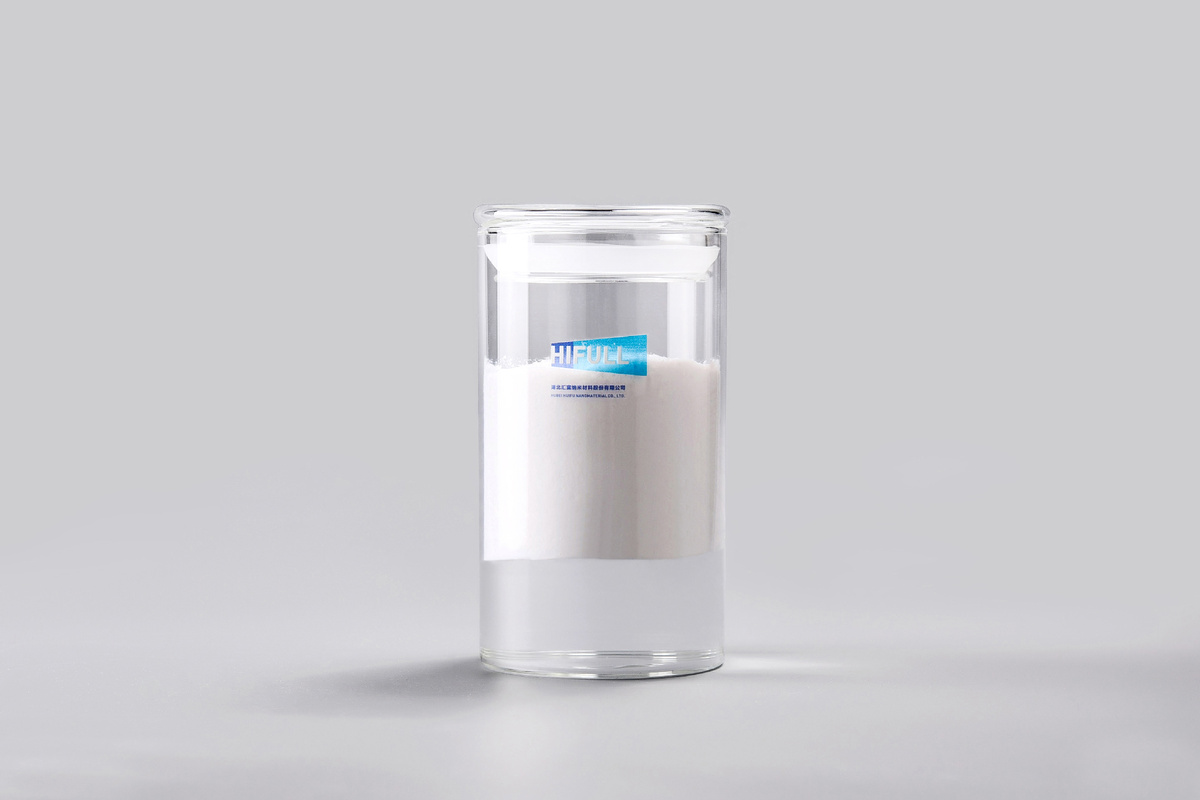
Surface-modified hydrophobic fumed silica retains the appearance of a fine white powder. The following methods can be employed to roughly distinguish hydrophobic products: the water solubility test, the methanol value method, carbon content determination, and infrared spectroscopy.
I. Water Solubility Method
This method involves placing a layer of fumed silica powder, approximately 1 cm thick, into a 250 mL stoppered conical flask, followed by the addition of about 100 mL of distilled water. After sealing with the stopper, the mixture is shaken vigorously. Untreated fumed silica will "dissolve" in the water, forming a transparent or semi-transparent viscous substance. In contrast, surface-treated hydrophobic fumed silica will either float entirely or partially on the water surface. The degree of surface treatment can be roughly assessed by the turbidity of the water phase; the clearer the water, the higher the degree of treatment and the superior the hydrophobicity.
II. Methanol Value
The methanol value is determined by measuring the volume of methanol required to completely dissolve 0.2 g of surface-treated fumed silica in 50 mL of pure water. Specifically, the surface-treated fumed silica is added to a beaker containing pure water and stirred using a magnetic stirrer. Initially, the powder floats on the water surface. Methanol is then added to the beaker via a burette, with the tip inserted below the water surface. As methanol is introduced, the floating powder gradually diminishes. The volume of methanol consumed, denoted as A (mL), is recorded when the fumed silica is fully dissolved. The methanol value is subsequently calculated using the appropriate formula.
V=100A/(50+A)
Generally, the greater the methanol consumption during the test, the higher the degree of surface treatment and the better the hydrophobicity.
III. Carbon Content Determination
The sample, contained within a crucible and covered with a suitable catalyst, is placed in an oxygen stream within a high-frequency induction furnace for combustion. The carbon combustion products are converted into carbon dioxide via a platinum catalyst, and the concentration is quantified using the infrared detector of an infrared high-frequency sulfur-carbon analyzer.
IV. Infrared Spectroscopy Method
Infrared spectroscopy operates on the principle that energy absorption causes molecular vibrational energy level transitions; recording this process yields the infrared absorption spectrum of the molecule. Prior to surface treatment, fumed silica possesses a significant number of surface hydroxyl groups, exhibiting a strong absorption peak at 3450 cm⁻¹ in the infrared spectrum. Following surface treatment, the hydroxyl absorption peak weakens, while a C-H stretching vibration peak of methyl groups emerges near 2970 cm⁻¹.
Comparative Analysis of Methods
Among the methods described above, infrared spectroscopy serves as a qualitative measurement. It readily determines whether the surface modifier is chemically bonded to the fumed silica surface, but it cannot quantitatively indicate the degree of surface treatment or the level of hydrophobicity.
The water solubility method can only roughly classify fumed silica products as hydrophilic, hydrophobic, or semi-hydrophobic; it cannot serve as a precise criterion for assessing hydrophobicity.
The methanol value method yields relatively accurate hydrophobicity results. However, due to the susceptibility to human error in testing and judgment, it is generally not adopted as the standard for hydrophobicity evaluation.
The carbon content method delivers the most accurate results with minimal instrumental error and is frequently employed as the standard method for testing the hydrophobicity of surface-treated products.
In addition to the aforementioned methods, parameters such as the angle of repose, surface energy, and contact angle are sometimes used to determine the hydrophobicity of fumed silica. However, as the practical effectiveness of these methods is limited, they are not widely applied in the industry.