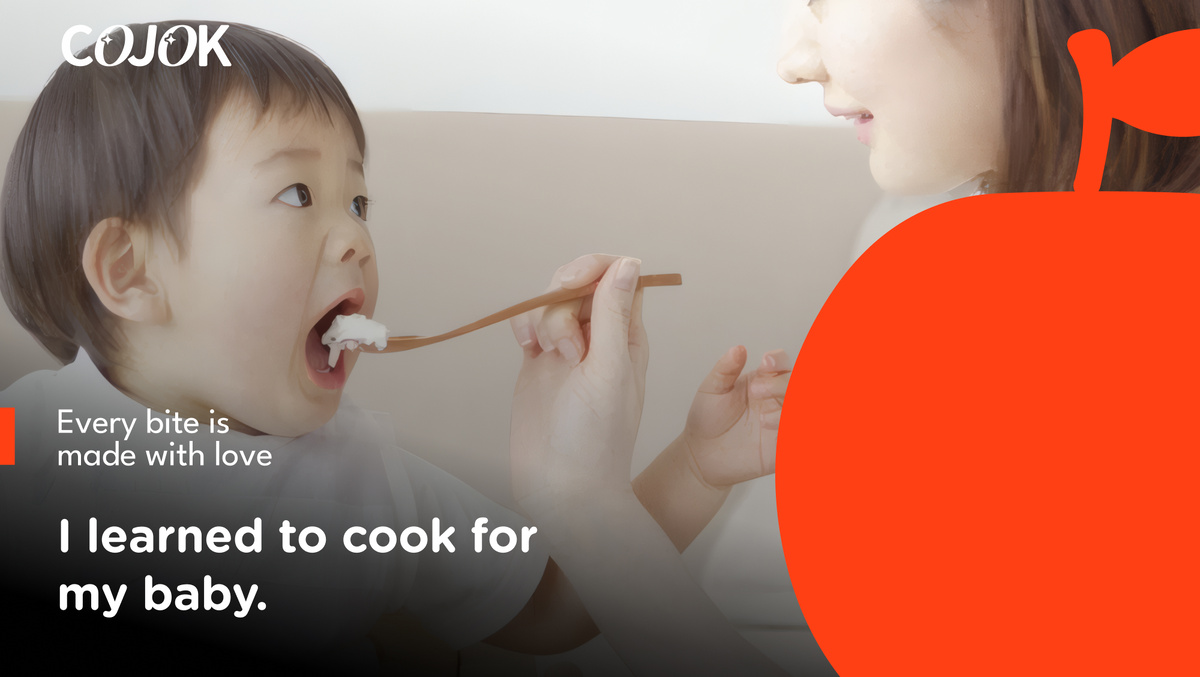
I’m a 29-year-old first-time mom from Hangzhou, and my baby just turned 10 months old.
Before I became a mom, I was a total kitchen avoider. My motto was “order takeout whenever possible”. My kitchen sat unused for months, pots and pans covered in dust, and my fridge was filled with nothing but soda and ice cream. I always thought cooking was a tedious waste of time — why spend two hours cooking when takeout arrives in 30 minutes?
That all changed when my baby was born.
Holding that tiny, soft little person in my arms, I suddenly became hyper-aware of everything. Things I never cared about before — additives, preservatives, food safety — became my biggest concerns. When my baby started eating solids at six months, I bought all the popular pre-made baby food pouches. But every time I looked at the long list of unrecognizable ingredients on the label, I felt uneasy.
I decided I would make my baby’s food from scratch.
But I couldn’t even boil noodles without burning them, let alone make baby food. My first attempt at vegetable steamed cake was a disaster: the eggs were lumpy, the vegetables were chunky, and the cake came out hard as a rock. My baby took one bite, frowned, and spit it out. I sat on the kitchen floor that day, staring at that failed cake, and almost cried — I couldn’t even make my baby a decent meal.
Then I found the baby vegetable steamed cake recipe on Cojok, and everything got easier. The instructions were incredibly detailed, down to the exact ratio of eggs to flour and the precise steaming time. The most important trick I learned? Always sift the egg mixture once to remove air bubbles and coarse fibers. That’s what makes the cake soft and fluffy.
I tried again, following the recipe step by step. I blanched broccoli and carrots to remove bitterness, blended them with eggs into a smooth puree, sifted it twice, poured it into molds, and steamed it on low heat for 15 minutes. When I lifted the lid and saw the soft, fluffy white cake, my hands were shaking with excitement.
I cut a small piece and fed it to my baby. He opened his mouth and ate bite after bite, reaching for more when he finished. Watching his happy little face, I started crying. For the first time, I understood that cooking isn’t about being a great chef or making fancy meals. It’s about love — the quiet, unspoken love that goes into every bite you make for someone you care about.
Now, the best part of my day is experimenting with new baby food recipes. Cojok’s AI even adjusts the texture and consistency of the recipes based on my baby’s age, recommending only sugar-free, additive-free options. Even a total beginner like me can do it.
I never understood why my mom always said “come home for dinner” before. Now I do. Every home-cooked meal is just another way of saying “I love you”.