Hydrophilic fumed silica is produced via the high-temperature hydrolysis reaction of silicon halides in a hydrogen-oxygen flame. Since hydroxyl groups remain on the surface of its particles, it exhibits hydrophilic properties. Hydrophilic silica can be wetted by water and disperses readily in water.
The primary particle size of hydrophilic fumed silica ranges from 7 to 40 nm, with an average aggregate particle size of 150 to 300 nm, and an average agglomerate particle size of 1 to 50 μm. Its specific surface area falls between 90 and 400 m²/g, and the pH of a 4% aqueous solution is between 3.7 and 4.5.
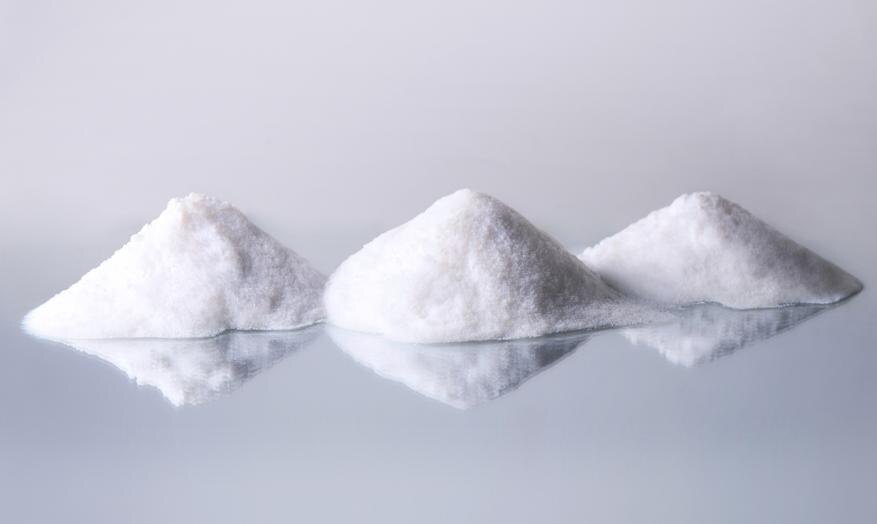
With characteristics such as hydrophilicity and oleophobicity, hydrophilic fumed silica delivers remarkable effectiveness in rheology control during processing, reinforcement of silicone elastomers, thickening of non-polar liquids, and flow assistance for food and industrial powders. It is suitable for industries including coatings and paints, adhesives and sealants, unsaturated polyesters and films, inks, silicone rubber, cosmetics, pharmaceuticals, elastomers, food, and powdered materials.

Hydrophobic fumed silica is produced through a chemical reaction between hydrophilic fumed silica and modifying agents. Common modifying agents include hexamethyldisilazane (HMDS), dimethyldichlorosilane (DDS), polydimethylsiloxane (PMDS), and specialty silanes. After treatment, the hydroxyl groups on the silica surface are either reacted or shielded, giving the material hydrophobic properties.
Unlike hydrophilic silica, hydrophobic fumed silica cannot be wetted by water. Even though its density exceeds that of water, it can float on the water surface. Hydrophobic fumed silica has weak hygroscopicity and does not easily reabsorb moisture. Compared to the hydrophilic type, its particle size increases while its specific surface area decreases. The pH of its 4% isopropanol-water solution (in a 1:1 volume ratio) ranges from 3 to 10.
Hydrophobic fumed silica features properties like oleophilicity, non-polarity, and low moisture absorption. It plays a significant role in aiding dispersion, adjusting rheology, thickening polar liquids, reinforcement, anti-corrosion, water repellency, and scratch resistance. It is applicable to industries such as room temperature vulcanization (RTV) silicone rubber, adhesives and sealants, coatings, inks, powder coatings, liquid silicone rubber, silicone defoamers, printing toner, colorants, vinyl ester resins, lubricants, and cable gels.