Wilhelm (later known as William) Steinitz is, without exaggeration, the father of modern chess. He was not just the first official world champion, but also the man who completely transformed the understanding of the game, turning it from a romantic art into a rigorous science.
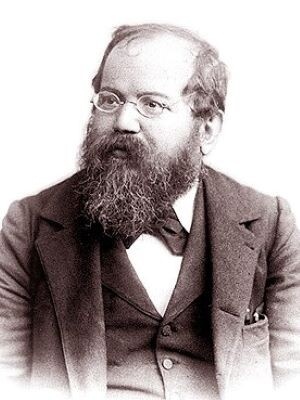
Here are the main milestones of his life and his key ideas.
🏆 The path to the title: the first official champion
Early years: Born in Prague in 1836 into a Jewish family. He studied mathematics at the Vienna Polytechnic Institute, but became fascinated by chess and won the Vienna Championship in 1861.
Recognition: After moving to London, he defeated Adolf Anderssen — the strongest player of that time — in 1866. Many consider this moment to be the beginning of his unofficial championship.
Historic match: In 1886, the first official World Championship match took place in the USA against Johannes Zukertort. Steinitz was losing at the start (1:4), but turned the tide and defeated his opponent with an overall score of 10:5. He remained the champion until 1894, when he was dethroned by the 25‑year‑old Emanuel Lasker.
💡 Main contribution: a “dry” style instead of “romanticism”
💡 Main contribution: the "dry" style instead of "romanticism"
In the mid-19th century chess was dominated by the so-called romantic style: players sacrificed material for beautiful but often risky attacks. Steinitz overturned this notion by founding the positional school and proving that an attack should be the consequence of accumulated advantages, not an end in itself.
**Key principles introduced by Steinitz:**
1. **Initial equilibrium.** In the starting position there is a balance of forces; victory does not arise from nothing.
2. **Accumulation of advantage.** Advantage is achieved gradually, through an opponent’s suboptimal moves (errors). Instead of a sharp strike, one should improve the position, control the center, and create weaknesses in the opponent’s camp.
3. **Types of advantage:**
- Material (an extra pawn or piece).
- Pawn-structure quality (pawns are the frame of the position; doubled, isolated pawns or “islands” weaken play).
- Space (control of the center or more territory).
- Development lead (pieces brought into play faster).
- King position (safety of your king and vulnerability of the opponent’s).
4. **Attack justified and obligatory.** Attacking without accumulated superiority is a gamble. However, once a sufficient advantage has been obtained, the player is **obliged** to attack; otherwise the advantage will evaporate.
5. **Defensive resources.** Steinitz showed the balance between attack and defense. Correct defense can repel an unjustified assault and then exploit the opponent’s resulting weaknesses to seize the initiative.
His ideas were at first called “cowardly” (the famous “Ink War” in the press), but when Lasker, Tarrasch and others adopted them it became clear that Steinitz was ahead of his time.
Steinitz was not only a player but also an excellent chess journalist who staunchly defended his theories. His book Modern Chess Instructor became a bible for the new generation, and 9th World Champion Tigran Petrosian (known for his “iron” defense) called himself a direct follower. If you want to see the theory in action, watch the famous game with the “wandering rook” against von Bardeleben (Hastings, 1895).
**Formalization of the theory (after David Hooper’s article “Steinitz’s Theory,” British Chess Magazine, 1984):**
- **Initial equilibrium:** At the start of the game the forces of the sides are equal.
- **Perfect play:** Correct play by both sides preserves this equilibrium and leads to a draw.
- **Cause of victory:** One can win only as a consequence of the opponent’s mistake (there is no “winning move” by itself).
- **Condition for attack:** As long as equilibrium holds, an attack will not succeed against correct defense. One should first disrupt the balance in one’s favor, force the opponent to err, and only then attack.
Steinitz’s statements:
- The outcome of chess battles rests entirely on scientific and logical foundations. Studying theory is extremely useful for improving skill, but practical play must rest on a scientific basis. Sober thinking is the main thing.
- A plan must always be based on the evaluation of the position.
- The best path to victory is the simplest and shortest; therefore in training cultivate accuracy of assessment and calculation.
- The defender aims to equalize the position. The principle of defense is to regain the initiative and not to create weaknesses.
- In closed positions with many pawns there is enough time for maneuvering, while in open positions one must act dynamically.
- Capturing the opponent’s king is the final, but not the first, goal of the game.
- Only the player who has the initiative has the right to attack.
An attack is justified and obligatory only when the balance in the position has already been disturbed in your favor.
====================================================
Перевод:
Вильгельм (а позже — Уильям) Стейниц — это, без преувеличения, отец современных шахмат. Он был не просто первым официальным чемпионом мира, но и человеком, который полностью изменил понимание игры, превратив её из романтичного искусства в строгую науку.
Вот основные вехи его жизни и ключевые идеи.
🏆 Путь к титулу: Первый официальный чемпион
- Ранние годы: Родился в Праге в 1836 году в еврейской семье. Изучал математику в Венском политехникуме, но увлёкся шахматами и в 1861 году выиграл чемпионат Вены.
- Признание: Переехав в Лондон, он в 1866 году победил сильнейшего игрока того времени Адольфа Андерсена. Многие считают именно этот момент началом его неофициального чемпионства.
- Исторический матч: В 1886 году в США состоялся первый официальный матч за звание чемпиона мира против Иоганна Цукерторта. Стейниц проигрывал после старта (1:4), но переломил ход борьбы и разгромил соперника с общим счётом 10:5. Он оставался чемпионом до 1894 года, пока его не сверг 25-летний Эмануил Ласкер.
💡 Главный вклад: "Сухой" стиль вместо "романтики"
В середине XIX века в шахматах властвовал так называемый романтический стиль: игроки жертвовали фигуры ради красивых, но часто рискованных атак. Стейниц перевернул это представление.
Он создал позиционную школу, доказав, что атака должна быть следствием накопленного преимущества, а не самоцелью. Вот несколько принципов, которые ввёл Стейниц:
- Накопление маленьких преимуществ: Вместо одного резкого удара лучше постепенно улучшать позицию, контролировать центр и создавать слабости у соперника.
- Важность пешечной структуры: Он понял, что пешки — это каркас позиции, и их расположение определяет силу фигур.
- Инициатива требует платы: Стейниц сформулировал баланс между атакой и защитой, показав, что необоснованный штурм ведёт к поражению.
Его идеи поначалу называли "трусливыми" (Ink War — "Чернильная война" в прессе), но когда Ласкер, Тарраш и другие приняли их на вооружение, стало ясно — Стейниц опередил время.
Стейниц был не только игроком, но и блестящим шахматным журналистом, который яростно отстаивал свои теории в газетах. Его книга "Современный шахматный учитель" стала библией для нового поколения, а 9-й чемпион мира Тигран Петросян (известный своей "железной" защитой) называл себя прямым последователем Стейница.
Если захотите посмотреть одну из его партий — поищите знаменитую "плавающую ладью" против фон Барделебена (Гастингс, 1895). Это гениальная демонстрация того, как позиционное преимущество превращается в уничтожающую атаку.
В шахматной литературе закрепилась формализация его теории, составленная более поздними исследователями, чаще всего — Дэвидом Хупером в статье «Теория Стейница» (British Chess Magazine, 1984) .
Ниже приведены основные положения этой теории, которые и описывают его принцип равновесия :
- Исходное равновесие: В начале партии силы сторон находятся в равновесии.
- Идеальная игра: Правильная игра с обеих сторон сохраняет это равновесие и ведет к ничьей.
- Причина победы: Выиграть можно только как следствие ошибки соперника (не существует «выигрывающего хода» сам по себе).
- Бесполезность атаки: Пока равновесие сохраняется, атака, какой бы искусной она ни была, не может достичь цели против правильной защиты.
- Условие для атаки: Игрок не должен атаковать, пока не получит преимущество, вызванное ошибкой соперника и оправдывающее атаку.
- Нарушение равновесия: В начале игры не нужно сразу атаковать. Следует стремиться нарушить равновесие в свою пользу, вынуждая соперника ошибиться.
- Обязанность атаки: Когда достаточное преимущество получено, игрок обязан атаковать, иначе преимущество будет утеряно.
Кроме того, сохранились и другие афоризмы, связанные с этой концепцией :
- «Захват короля противника — это конечная, но не первая цель игры».
- «Только тот, у кого есть инициатива, имеет право атаковать».
Атака оправдана и обязательна только тогда, когда равновесие в позиции уже нарушено в вашу пользу.