The history of station wagons—or simply "wagons" in American automotive parlance—spans over a century. In their earliest days, these vehicles served as a type of microbus, shuttling passengers and their luggage between train stations and towns. Back then, they were known as "depot hacks" and were primarily considered workhorses. Occasionally, they could be found in the garages of wealthy gentlemen as transport for country properties, which, by the way, is where the European term "estate" originates. Up until the 1920s, station wagons were built to order: a customer would purchase a bare chassis, and independent craftsmen would mount a custom wooden body on top of it.
The turning point came in 1923 when Durant Motors—founded by William Durant, the very same man who started General Motors—became the first to include a station wagon in the official factory catalog of its budget-friendly, now-defunct Star brand. However, it took the rest of the auto industry a few more years to fully appreciate the idea. Ford Motor Company, in particular, introduced its first factory-built wagon based on the all-new Model A only in 1928. The body design for this Ford wagon, designated as the Model 150A, was developed by the Murray Corporation, which was also entrusted with its production. The material—first-class hardwood—was brought in from Henry Ford's own logging operations in Iron Mountain. The production chain was quite complex: kiln-dried lumber from Michigan was shipped to the Mengel Body plant in Kentucky for milling, and only then were the finished components sent to Murray's assembly lines. These wagons could carry up to eight people, but they offered little in the way of comfort, featuring a canvas roof stretched over a wooden frame and canvas side curtains with clear vinyl inserts. Priced at $650, the wagon was a mere $25 more expensive than a four-door Model A sedan, and it sold just under 5,000 units in its first year.
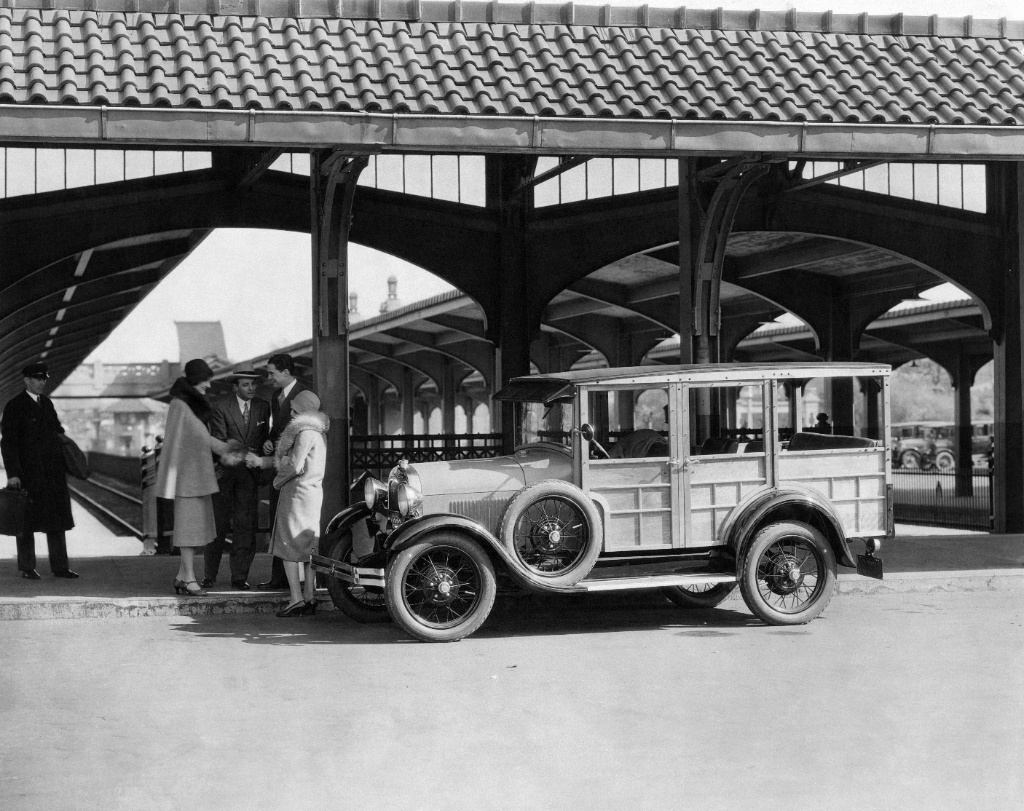
During the Great Depression, sales hovered at a modest level, but by 1935, they began to grow noticeably. The wagons finally received roll-up glass windows, and the highly popular Deluxe package added a touch of charm and comfort. By 1937, sales exceeded 9,000 units, and Ford wagons started gaining traction among celebrities, outdoor enthusiasts, and owners of side businesses like citrus groves. Buyers could even convert their Ford wagons into four-wheel-drive off-roaders at the Marmon-Herrington workshops, though this upgrade cost a staggering $1,805. Starting in 1940, Ford shifted the assembly of wagon bodies entirely in-house to the Iron Mountain plant. In 1941, the flagship Super Deluxe version debuted at $970, boasting an integrated dashboard clock, higher-quality upholstery, a radio, and a body crafted from maple and birch with classic mahogany paneling. That year, Ford sold 17,600 units, capturing nearly half of the entire American station wagon market.
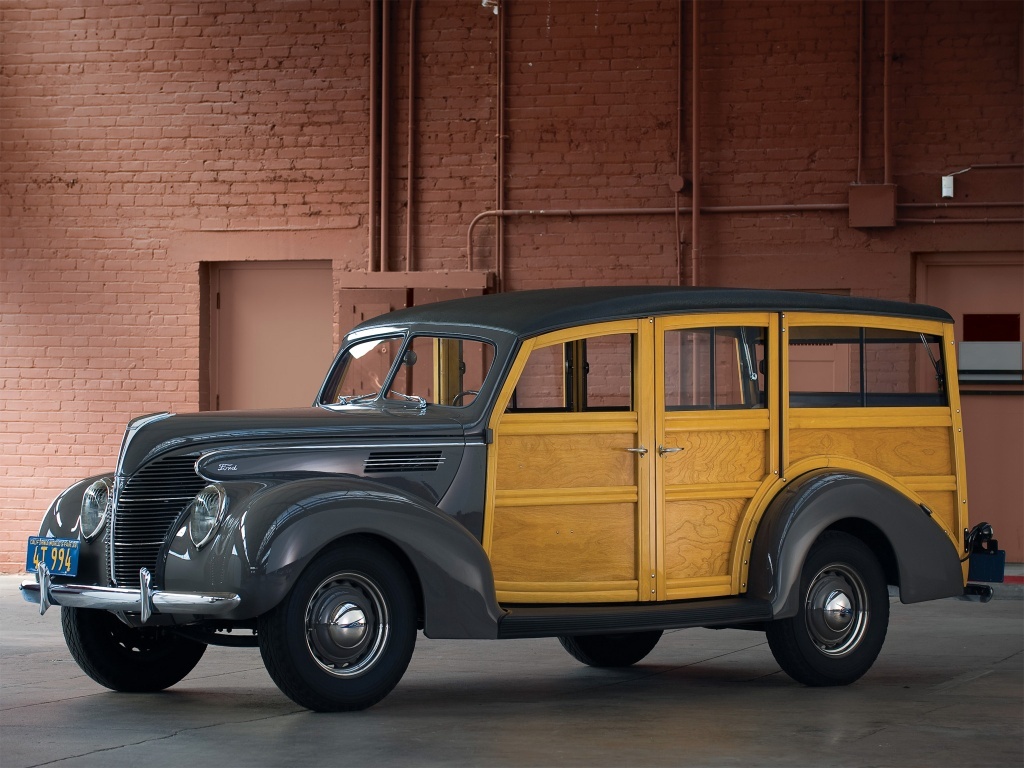
Following World War II, production resumed, but the American industry faced severe raw material shortages and galloping inflation. Soon, the government-mandated price ceiling skyrocketed to a hefty $1,422. Furthermore, owning a vehicle with a solid wood body came with serious maintenance consequences. Ford's chief designer, Eugene "Bob" Gregorie, admitted that if the wooden body wasn't properly cared for, an owner risked growing a crop of mushrooms right in the roof pillars. The wooden elements required sanding and re-varnishing at least once a year—or twice if the winter roads were salted. To remove stains, the company recommended a radical bleaching method using an oxalic acid solution. The situation was exacerbated by the fact that wartime production of wooden military gliders had severely depleted the reserves of high-quality timber, forcing Ford to switch to more accessible American walnut for its 1947 and 1948 models.
By the 1949 model year, a truly serious modernization was overdue. The wagons received an all-new chassis and all-steel bodies with integrated wood elements, technically ceasing to be true "Woodies" in the traditional sense. The construction now consisted of mahogany-finished plywood panels and thin maple or birch veneer. They also became two-door models—officially justified by claims of improved body rigidity and passenger safety, but historians note the real reason was the drive to slash manufacturing costs. This decision eliminated the colossal scrap rates at the Iron Mountain plant, which were unavoidable when working with solid wood. Interestingly, the timber waste did not go unused: Henry Ford had long utilized it to produce barbecue charcoal briquettes. When Ford completely shut down and sold the Iron Mountain lumber mill to private investors in late 1951, the famous American charcoal brand Kingsford was born.
In the 1950s, competitors like Plymouth began shifting to much cheaper, all-steel bodies for their wagons. To keep up, Ford introduced the Country Squire. Instead of real plywood panels, it utilized a "paper print"—wood-grain decals applied over primed steel and covered with clear lacquer. In 1952, the company split the lineup, offering a stripped-down, two-door Ranch Wagon devoid of any faux wood; it cost about $300 less than the prestigious Country Squire and became an instant smash hit. Nevertheless, the top-tier models with woodgrain trim retained an aura of old-money luxury for decades. Over time, the paper print gave way to vinyl decals, and the real wood outer frames were replaced first by fiberglass, and later by extruded plastic. The very last Ford Country Squire with woodgrain paneling rolled off the line in December 1990, closing an era in which Ford Woody wagons left an indelible mark on automotive history and the hearts of enthusiasts.