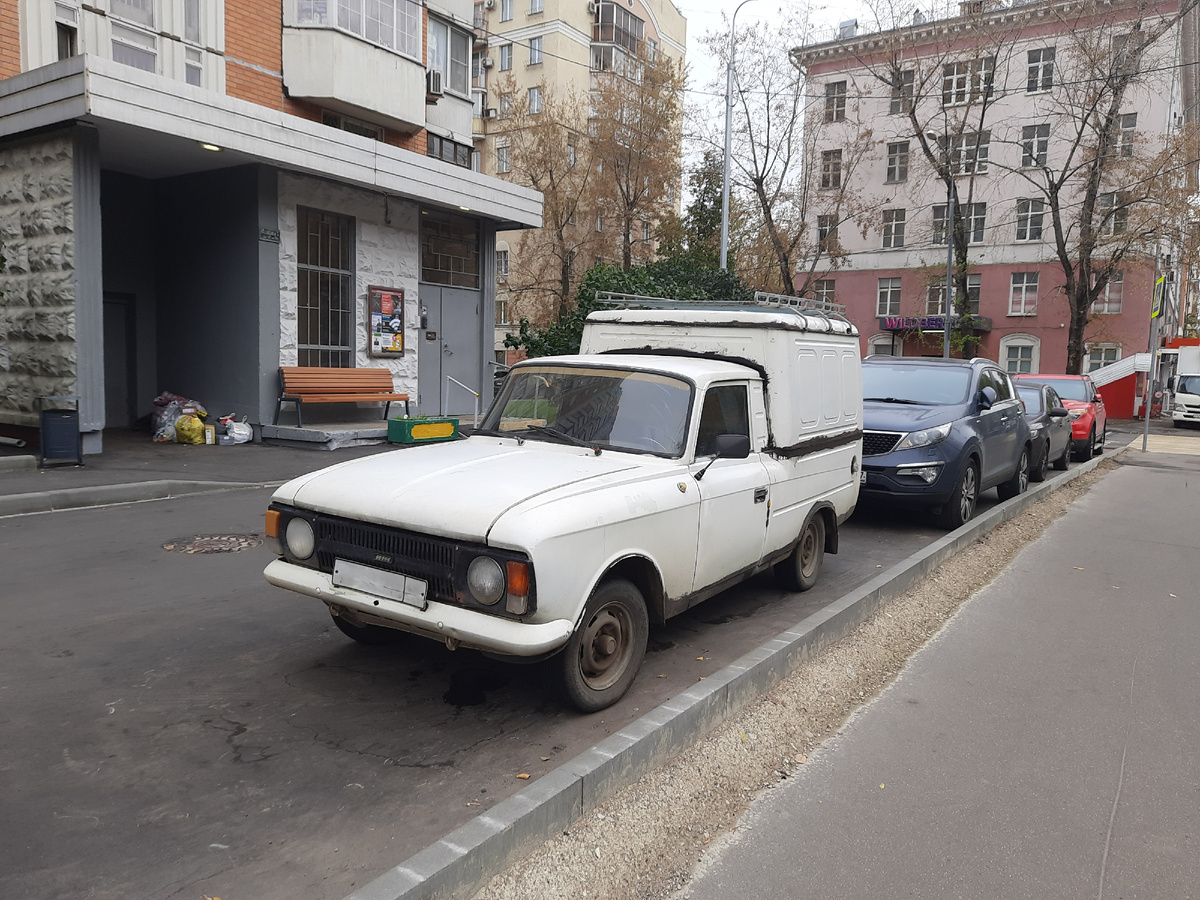
In automotive history, some cars are stars; others are the backbone. The IZH-2715 never graced a bedroom poster, yet it was the foundation of Soviet daily life and the early days of private enterprise. Known affectionately as the “Kabluk” (Heel) or “Pirozhok” (Pie Van), this was the USSR’s first truly mass-produced Light Commercial Vehicle (LCV). More than just a factory product, it was a mirror of a changing era.
From Sedan to Specialist
Until the early 1970s, small deliveries were handled by bulky trucks or cramped, modified sedans. In 1972, Izhevsk engineers made a bold move: they took the front end of a Moskvitch-412 and grafted a high-roof steel cargo box onto the back. This created the iconic "Heel" silhouette and a cavernous 2.6 cubic meters of cargo space.
While influenced by foreign models like the Datsun 520, the Izh was built for a harsher reality. It was designed to survive where service stations were non-existent, and repairs were done with a basic wrench and some grit. For 29 years, it held a total monopoly in its class.
The Mechanics of Endurance
Under the hood was the "Golden Ratio" of Soviet engineering: the 1.5L UZAM-412 engine. Featuring an aluminum block and "wet" liners, it could be rebuilt in a driveway by simply swapping the piston group. Depending on the fuel grade, it produced 67 to 75 hp.
The chassis was built for punishment. It paired independent front suspension for car-like handling with a heavy-duty leaf-spring rear axle. Officially rated for 400–500 kg, drivers routinely hauled up to 800 kg. It would sag, but it kept moving, supported by a generous 193 mm ground clearance.
Three Decades on the Line
Between 1972 and 2001, the factory churned out a staggering 2,317,493 units. By the mid-70s, production exceeded 45,000 annually. A 1982 facelift (model IZH-2715-01) introduced the modern black grille, flush door handles, and a dual-circuit braking system.
For years, the Izh was off-limits to private citizens; it was a state-owned "tool of production." You’d see them in blue or orange for the postal service or catering. It wasn’t until 1988 that the IZH-27156 "Combi" arrived—a clever passenger version with side windows and folding benches. Classified as a passenger car, it finally allowed early entrepreneurs to legally own their first business partner.
Light and Shadow
Operating a “Pie Van” was a test of character. Owners praised its legendary repairability but endured a vague gear linkage that made shifting a guessing game. It was prone to summer overheating, and in winter, the heater struggled to keep the side windows from freezing over.
The specimen in the photo features a unique detail: thick, sealant-smeared seams. This isn't a factory flaw, but a "lucky ticket." While standard units often fell victim to rust, this owner took the initiative to coat the joints in Plastisol. This proactive defense is exactly why this specific car survived to become a rare living witness to its era.
Epilogue
The IZH-2715 had a remarkable run, staying on the assembly line for nearly thirty years. It was the first to wake up to deliver fresh bread and the last to sleep in the garages on the outskirts of town. Today, it is a certified classic—a reminder of a time when a car’s value wasn't measured by screens in the cabin, but by honest metal and a willingness to work until the last bolt.