Saturn
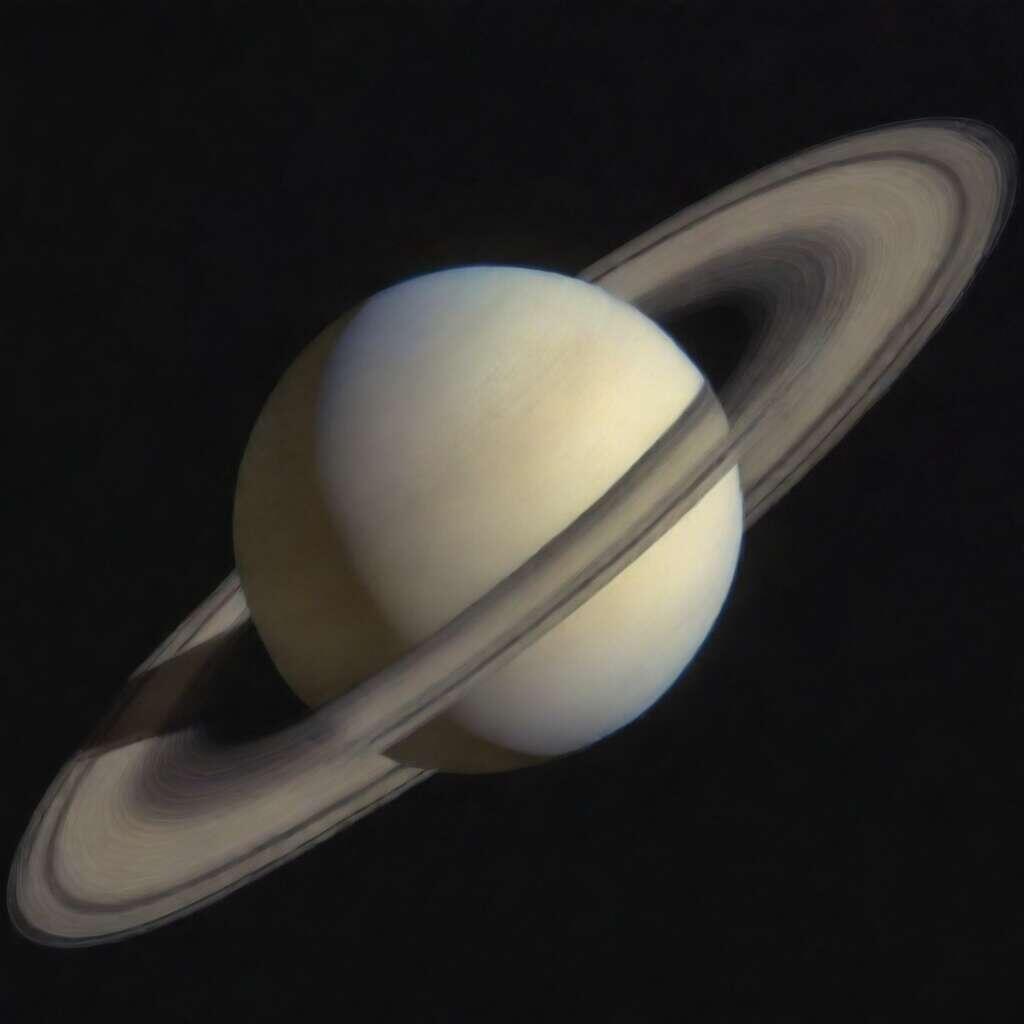
SaturnSaturn is the sixth planet from the Sun and the second largest in the Solar System after Jupiter. It is named after the Roman god of agriculture and wealth. With its prominent rings, Saturn is easily recognizable and has fascinated astronomers for centuries
Physical CharacteristicsSaturn is a gas giant made up mostly of hydrogen and helium. It has a rocky core surrounded by layers of liquid metallic hydrogen and helium. The planet's most distinctive feature is its ring system, which is made up of ice particles and rocks ranging in size from tiny grains to large boulders
ExplorationSaturn has been visited by multiple spacecraft, including Pioneer 11, Voyager 1 and 2, and the Cassini-Huygens mission. The Cassini spacecraft spent over 13 years studying Saturn and its moons, providing valuable data and stunning images of the planet and its rings
MoonsSaturn has over 80 known moons, with the largest being Titan, a world with a dense atmosphere and lakes of liquid methane and ethane. Titan is of particular interest to scientists as it resembles an early Earth, with the potential for complex organic chemistry and even the possibility of life
Future ExplorationFuture missions to Saturn may include orbiters to study the planet's atmosphere in more detail, as well as landers or rovers to explore its moons. Scientists are eager to learn more about Saturn's unique ring system and its diverse moons, with the hope of uncovering new insights into the formation and evolution of our Solar System.In conclusion, Saturn is a fascinating planet with a unique ring system and a diverse family of moons. Its beauty and mystery continue to captivate scientists and space enthusiasts alike, inspiring ongoing exploration and discovery.