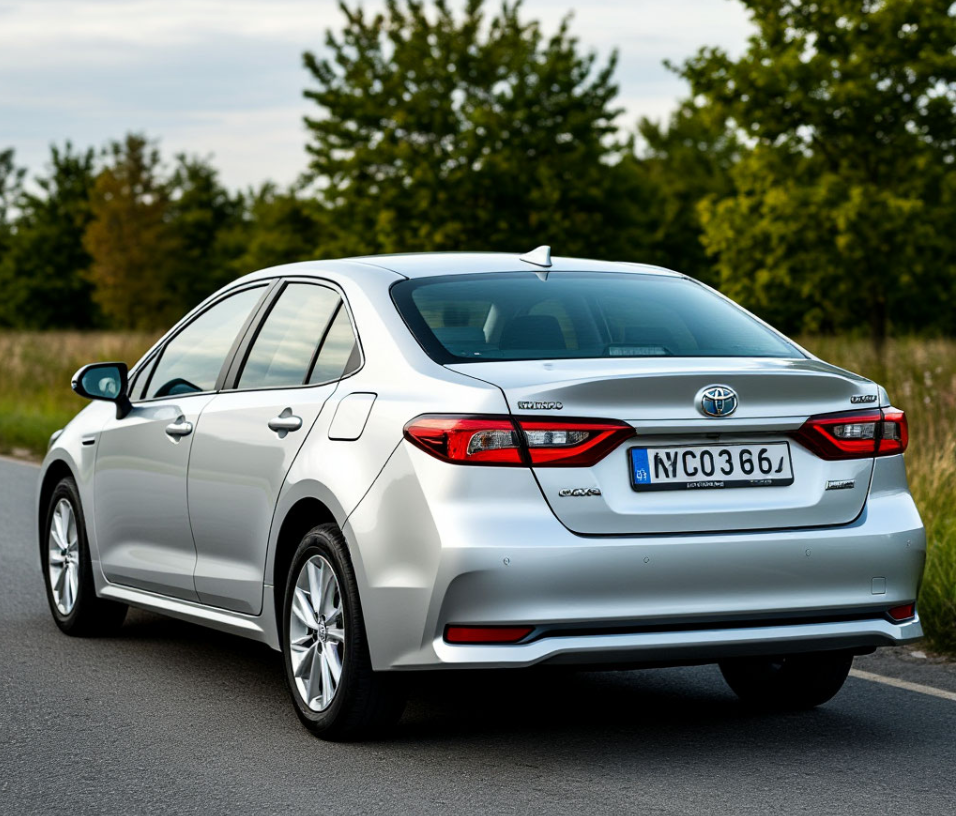
If your Toyota Corolla isn’t charging the battery, it can lead to a dead battery and a car that won’t start. Below is a step‑by‑step guide to diagnose and fix the issue.
Step 1. Check the warning light
Look at the dashboard: if the battery warning light stays on after starting the engine, it confirms a charging problem.
Step 2. Measure the voltage
Use a multimeter to check the battery voltage:
- With the engine off: the voltage should be around 12,6 V.
- With the engine running: the voltage should rise to 13,8–14,4 V. If it stays at 12,8 V or lower, the charging system isn’t working.
Step 3. Inspect the fuses
Check the relevant fuses under the hood (usually rated 50 A and 7,5 A). Replace any blown fuses with ones of the same rating.
Step 4. Examine the drive belt
- Look at the alternator drive belt.
- Make sure it’s not loose, cracked, or worn out.
- Check that it’s properly tensioned and hasn’t slipped off.
- Replace the belt if needed.
Step 5. Check the battery terminals
- Clean the battery terminals and cable ends from corrosion and dirt.
- Tighten the connections securely.
- Ensure the ground cable is firmly attached to the car body.
Step 6. Test the alternator output
Measure the voltage directly at the alternator’s output terminal while the engine is running. If the voltage is low there but the belt and connections are fine, the alternator is likely faulty.
Step 7. Diagnose the alternator components
The most common internal causes are:
- Worn brushes. If the brushes are worn down, they can’t transfer current properly. Replace them if necessary.
- Faulty voltage regulator. This part controls the output voltage. If it fails, the alternator may not charge at all or overcharge the battery.
- Failed diode bridge. A bad diode bridge can cause low or no output. Test the diodes with a multimeter (they should conduct in one direction only).
- Damaged stator windings. Check for open circuits or shorts to ground in the stator windings.
- Bad bearings. If the alternator makes noise or spins roughly, worn bearings can cause misalignment and poor performance.
Step 8. Inspect wiring and connectors
- Examine the wiring harness to the alternator.
- Look for broken, frayed, or corroded wires.
- Clean and secure the electrical connectors (especially the 3‑pin or 4‑pin plug to the alternator).
- Test the voltage at the connector pins with the ignition on (refer to the service manual for correct values).
Step 9. Test the battery
Even if the charging system works, a failing battery won’t hold a charge. Test it with a battery tester or load tester. Replace the battery if it’s old or damaged.
Step 10. Perform a load test
With the engine running, turn on electrical loads (headlights, heater fan, rear window defroster). The voltage should stay above 13 V. If it drops significantly, the alternator can’t handle the load.
Summary of common causes
Problem
Symptoms
Solution
Worn alternator brushes
Low voltage, warning light
Replace brushes
Faulty voltage regulator
No charge or overcharging
Replace regulator
Failed diode bridge
Low output, overheating alternator
Replace diode bridge
Loose/worn drive belt
Squealing noise, low voltage
Adjust or replace belt
Corroded battery terminals
Poor starting, voltage drop
Clean and tighten connections
Blown fuses
No charging, warning light
Replace fuses
Bad wiring/connectors
Intermittent charging
Repair or replace wiring
Failing battery
Hard starting, low voltage when off
Replace battery
Safety tips
- Always disconnect the negative battery terminal before working on electrical systems.
- Use insulated tools to avoid short circuits.
- Don’t test the alternator by disconnecting the battery while the engine is running — this can damage electronics.
- If you’re unsure, consult a professional mechanic or auto electrician.
By following these steps, you can identify and fix most battery charging issues on a Toyota Corolla. If the problem persists after basic checks, consider having the alternator bench‑tested at a repair shop.
Would you like me to expand on any particular step or provide more details?