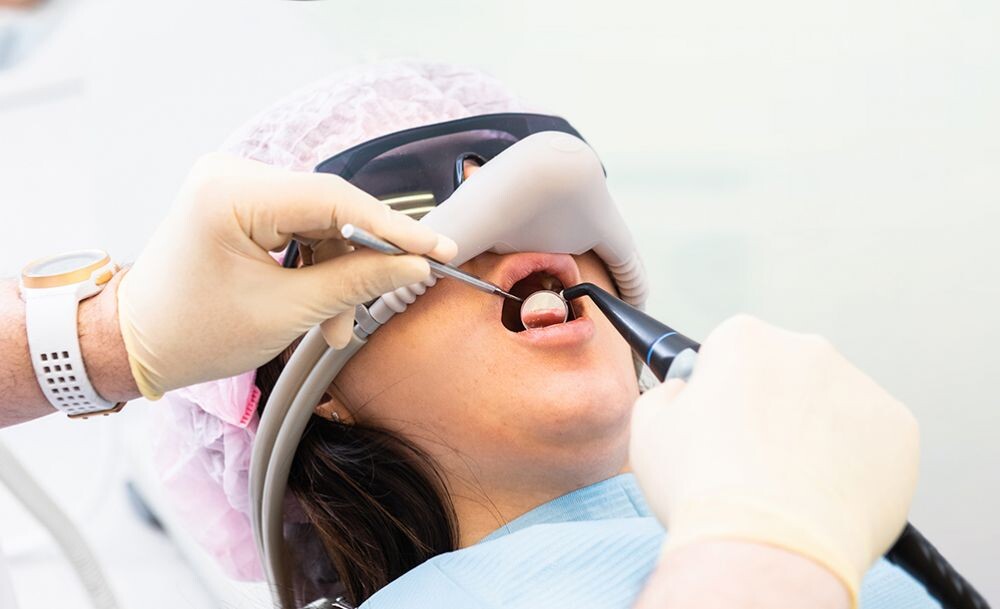
The cost of installing implants under anesthesia is one of the key factors that plays an important role for the comfort and safety of dental procedures. The price for this service is $750. Let's take a closer look at the stages of this operation, its advantages, disadvantages, and indications.
Indications for implantation under anesthesia:
Dental implantation may be necessary or recommended in a number of cases where there are medical or psychological indications that may make it difficult to perform the procedure under local anesthesia. Here are some of the possible indications for surgery under anesthesia:
Fear or phobia: If the patient experiences severe fear, phobia, or anxiety disorders related to dental visits, performing surgery under general anesthesia can help to cope with emotional discomfort and provide comfort during the service.
Complications in pain management: Some people have high pain sensitivity or a weakened ability to tolerate pain relief methods, which may force doctors to consider the possibility of an implantation procedure.
Medical indications: In patients with certain medical conditions, such as cardiac arrhythmias, epilepsy, immunodeficiency conditions, or other factors that may make the service more risky or difficult, implantation under general anesthesia may be recommended to ensure safety.
The need for more complex surgical procedures: In cases such as bone preparation stages, the use of general anesthesia can provide surgeons with more convenient conditions for performing the procedure and minimizing the risk of complications.

Stages of implantation under anesthesia:
Consultation and diagnosis:
- Consultation: Before starting the operation, a detailed consultation with a dentist is conducted. At this stage, the indications and contraindications for general anesthesia, the treatment plan and expectations are discussed.
- Diagnostics: The dentist performs the necessary diagnostic procedures, such as X-rays or CT scans, to assess the condition of the bone tissue and determine the optimal location for the implant.
Installing the abutment:
- Surgical intervention: The dentist performs surgery to insert an implant into the jaw bone. This process involves opening the gum, forming a hole in the bone, and fitting.
- Healing: After the installation, the patient may need time to heal the bone before the next stage of the procedure.
Prosthetics:
- Installation of the prosthesis: After the bone has healed well around the implant, the dentist proceeds to install the abutment, which will serve as the basis for the future denture.
- Manufacture and installation of the prosthesis: The prosthesis is specially made on the basis of an abutment. After manufacturing, it is installed on the abutment, completely recreating the missing tooth.
Each of these steps has its own importance in the overall operation process. Patients are given an important opportunity to restore their smile and chewing functions with this procedure. It is important to remember that each stage requires careful preparation and professional supervision.
Advantages of implantation under anesthesia:
1.No pain: When the patient is under anesthesia, it eliminates painful sensations during surgery.
Comfort: The procedure is performed in conditions of complete relaxation, which contributes to psychological comfort and stress reduction.
Efficiency and accuracy: The doctor can perform the procedure more thoroughly and accurately, since the patient is in a state of sedation, which improves the quality of implantation
4.Improved coordination: Due to the complete relaxation of muscles and the absence of pain, the doctor can perform the procedure without possible disruptions due to the pain reaction.
Anesthesia control: The delivery of anesthesia under the supervision of an anesthesiologist ensures precise control over the dosage of anesthetics, which ensures safety and comfort.
6.Reducing psychological discomfort: For patients with phobias or fear of dental surgery, it can be a good option, providing psychological comfort and confidence.
Implantation under anesthesia is an effective and convenient method of dental procedures, providing a painless and high-quality procedure, taking into account individual needs and characteristics.
Disadvantages of implantation under anesthesia:
Additional costs: The operation may be more expensive due to the need to involve an anesthesiologist and additional medical equipment.
Risks of anesthesia: During surgery, there is a certain risk associated with a reaction to anesthesia, although in most cases it is safe, rare complications are possible.
After anesthesia effects: After waking up from anesthesia, the patient may experience some unpleasant sensations such as dizziness, nausea or vomiting, which may require additional recovery time after the procedure.
Limitation of the choice of procedure: Not every person is always suitable for the procedure, depending on individual medical indications and state of health. This may limit the availability of this method for certain categories of patients.
Possible lengthening of the procedure time: Performing the procedure under anesthesia may lead to an increase in the session time, especially in case of unforeseen circumstances or complications.
Implantation under anesthesia at the Astra Dental Clinic in Tbilisi is a modern and effective method that provides patients with comfortable and high-quality dental procedures. The cost of this procedure is determined individually for everyone and will be calculated after consultation with our doctors.