Imagine a child watching a colorful commercial on TV. A girl in a pink dress is feeding a doll, and a boy in a blue T-shirt is driving a car. It might seem like nothing special. But it's moments like these that shape children's perceptions of what women and men should be like, what they can and cannot do. Advertising isn't just a way to sell a product. It's a powerful cultural tool that creates and reinforces social norms.
For decades, marketers have used gender stereotypes as a proven way to attract the attention of their target audience. But in an era when society increasingly talks about equality and diversity, an important question arises: are we still using outdated stereotypes in advertising, or have real changes already occurred?
Advertising language operates on two levels—visual and verbal. Moreover, words are often even more influential than images. Why?
· Differentiated vocabulary: Words like "gentle," "beautiful," "caring," and "emotional" are used for "women's" products. For "men's" products, they use words like "strong," "powerful," "technological," and "rational."
· Passive vs. active roles: Women are often shown in a state of mind ("she looks beautiful"), while men are shown in action ("he wins").
· Gender-specific voices: Women's voices are more often heard in advertisements for household goods, baby products, and cosmetics. Men's voices are more often heard in advertisements for electronics, financial services, and automobiles.
The problem isn't with any one specific advertisement, but rather with the systematic repetition of the same models that shapes viewers' perceptions of "normal" behavior for women and men. Research shows that children who are constantly exposed to gender-stereotypical advertising:
· Begin to consider certain professions "inappropriate" for their gender
· Limit their interests and hobbies
· Develop low or high expectations of themselves
This early channeling of interests has long-term consequences. As noted by researcher O.A. Khasbulatova in her analysis of Russian gender policy, "the choice of professions often depends not on legal barriers, but on deep socio-cultural attitudes" (Khasbulatova, 2011). The stereotypes perpetuated by advertising from childhood become part of these very attitudes, which later crystallize into tangible inequalities.
For example, advertising in the mid-20th century was open about its attitudes. Here are some striking examples:
· The kitchen is a woman's domain: Home appliance advertisements invariably showed women as the sole users
· Appliances are a man's domain: Cars, tools, and electronics were advertised exclusively to men
· Clear divisions of children's products: Toys were strictly divided into "for boys" and "for girls," with no overlap.
In the 21st century, stereotypes have become more subtle, but they haven't disappeared. Several phenomena have emerged:
1. Pseudo-progressive advertising ("woke-washing")
Some brands raise the theme of equality superficially, without any real changes in company policy.
Signs:
· Progressive slogan with traditional content
· Use of diverse models while maintaining stereotypical roles
· Emphasis on external form rather than the content of the message
2. Niche stereotyping
Instead of the crude "for men/for women" division, more nuanced categories have emerged:
· "For modern women who can do it all"
· "For men who value quality"
The wording has become softer, but the stereotypical foundation often remains.
Let's compare ads created for different audiences
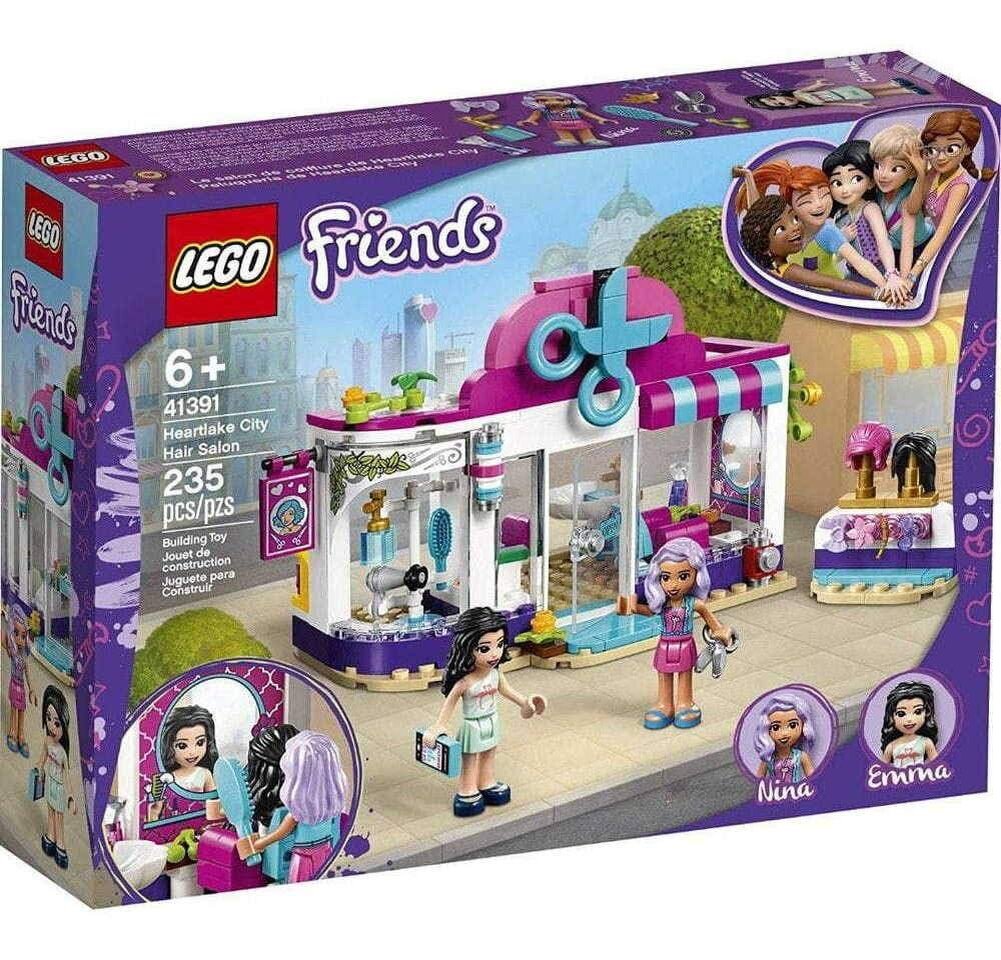
LEGO Friends ("girls'" series):
· Color scheme: Pink, purple, pastels
· Locations: Cafe, beauty salon, stable, tree house
· Themes: Party preparation, pet care, interior decoration
· Vocabulary in description: "friendship," "fun," "beauty," "creativity"
· Key verbs: decorate, help, care, have fun
LEGO City ("boys'" series):
· Color scheme: Blue, red, black, gray
· Locations: Police station, fire station, airport, construction site
· Themes: Chasing criminals, putting out a fire, construction
· Vocabulary in description: "adventure," "rescue," "technology," "power"
· Key verbs: catch, build, save, explore
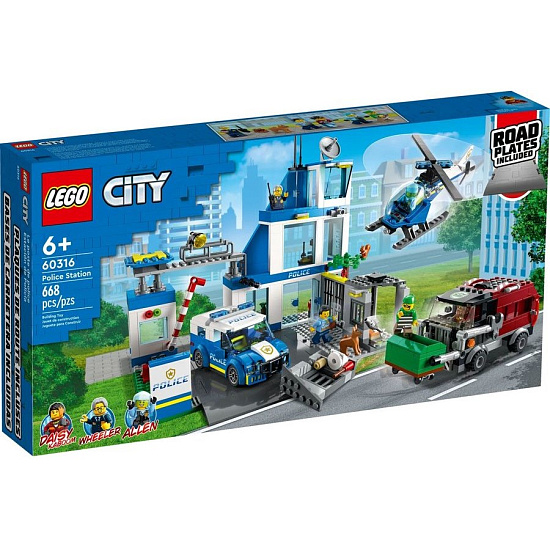
That is, even a single manufacturer creates a parallel universe of products where gender differentiation is evident in every element of communication—from colors to vocabulary. This shapes children's understanding of different areas of competence based on gender.
This childhood division mirrors and predetermines future professional segregation. Khasbulatova's research confirms this link: "Women make up the majority in low-paid 'feminized' spheres (education - 76%, healthcare - 72% of students), while men dominate in technical and leadership fields (university rectors - 92%, business leaders - 82%)" (Khasbulatova, 2011). The advertising of toys and children's products becomes the first stage in this social sorting.
To test these hypotheses, a survey was conducted among 14- to 16-year-olds.
The results were revealing:
· 82% of respondents believe that school advertising should avoid gender stereotypes
· 76% note that toys are still advertised with gender roles in mind
Important insight: Today's teenagers are critical of overt stereotypes, but often overlook more subtle forms of gender coding. This creates space for the "hidden" influence of advertising messages.
Based on the research, key principles for creating advertising free of gender stereotypes were formulated:
1. Focus on actions, not identity
Instead of: "For brave boys"
Better: "For those who love adventure"
2. Neutral language
Instead of: "Fast as a boy"
Better: "Quick decision"
3. Diversity of role models
· Show men in caring roles
· Show women in technical and leadership roles
· Avoid clichés when assigning activities
4. Emphasize potential, not limitations
Instead of: "Girls can do it too"
Better: "Everyone can"
A promotional video for a new type of school, School 1415 "Ostankino," was created as a proof of concept.
Concept: A school that values the unique potential of each student, not conformity to gender expectations.
Linguistic features of the video:
· Use of gender-neutral nouns: "students," "children," "researchers"
· Emphasis on action verbs: "create," "discover," "explore," "invent"
· Avoidance of gender-specific adjectives
· Use of the singular pronoun "they" to describe individual achievements
Conclusions: Balancing Commerce and Responsibility
You can watch the video ad just by scanning the qr-code
The study leads to several key conclusions:
1. Stereotypes evolve, but they do not disappear
Crude forms of gender segregation are becoming a thing of the past, but they are being replaced by more sophisticated methods of influence. Modern advertising is less likely to use the phrase "for boys" and "for girls," but continues to use color codes, specific vocabulary, and role models that implicitly convey the same messages.
2. Generation Z is ready for change
Young audiences are demonstrating a high level of critical awareness of gender stereotypes in advertising. This creates a demand for new communication formats and opens up opportunities for brands willing to abandon outdated templates.
3. Inclusivity is a new trend with potential
Advertising free of gender stereotypes is no longer a niche phenomenon. It meets the needs of modern society and can be commercially successful because it appeals to a wider audience.
4. Education is a key area for change
Schools and universities should become role models for inclusive communication. Their advertising materials should reflect the values of diversity and equal opportunity, as educational institutions shape the perceptions of new generations about social norms. However, as Khasbulatova notes, achieving real equality requires more than declarations: "Constitutional norms do not work automatically; they must be supported by specific government measures" (Khasbulatova, 2011). Inclusive advertising from educational institutions can become one such powerful practical measure.
By 2030, we can expect the following changes:
· Widespread adoption of gender-neutral marketing
· Development of personalized advertising based on interests rather than demographics
· Strengthening regulation of gender-stereotypical advertising
· Growing influence of artificial intelligence, capable of creating more inclusive content
Advertising language is more than just a sales tool. It is a powerful social construct that shapes our perceptions of the world and ourselves. Today, as society reexamines outdated gender roles, advertising stands at a crossroads: continue to exploit proven but limiting stereotypes or become an agent of positive change.
Research shows that stereotypes still exist, but their time is running out. A new generation of consumers, digital technologies, and changing social norms create a unique opportunity to reboot advertising language.
The phrase "We see potential" from our experimental video is more than just a slogan. This is a manifesto for a new approach, where advertising stops labeling and begins to reveal possibilities. And here lies the most important nuance: we do not want to destroy stereotypes — we want to expand them. We want the palette of acceptable and encouraged roles, qualities, and aspirations to become infinitely wider, freeing every person from the narrow corridor of "pink" or "blue" expectations.
The goal is not to declare that sensitivity is "unmanly" or that ambition is "unfeminine." On the contrary, it is to recognize that strength can be caring, and care can be strong. That leadership can be collaborative, and creativity can be analytical. It is to show a boy that his empathy is a superpower, and a girl that her logical mind can build empires. To expand stereotypes means to stop seeing them as rigid boxes and start treating them as a spectrum of human qualities available to all, regardless of gender.
It is about creating a world where a "real man" is defined not by the suppression of emotion, but by the depth of his character, and where a "real woman" is celebrated not for her conformity to an aesthetic ideal, but for the power of her intellect and will. This expansion enriches everyone, allowing for more authentic self-expression and more diverse, effective teams in every field of life.
Therefore, the future of advertising is not in negation, but in multiplication. It is in showing a million different ways to be successful, happy, and whole. It is in narratives where a father's tenderness is as heroic as a mother's resolve, where a female engineer and a male nurse are not exceptions, but natural representations of human potential.
It is in this direction—from limitation to expansion, from dichotomy to multiplicity—that lies the future not only of advertising but of society as a whole.
Every advertising copy, every visual image, every slogan is a brick in the creation of our shared culture. By choosing inclusive and expansive language today, we build a more just and creative world for everyone tomorrow. A world where the question is not "Are you a boy or a girl?" but "Who do you want to become?"
Ohanyan Adriana Ani