When I arrived in Afghanistan, I was certain I understood the situation facing women. I had read the news. I knew the facts:
- The Taliban banned education for girls over 12
- Women are prohibited from working in most fields
- The burqa (with mesh face covering) is mandatory
I thought: "It's clear. Oppression. Darkness."
But then I met Farzana. And everything I thought I knew crumbled.
🚪 A Meeting Behind Closed Doors
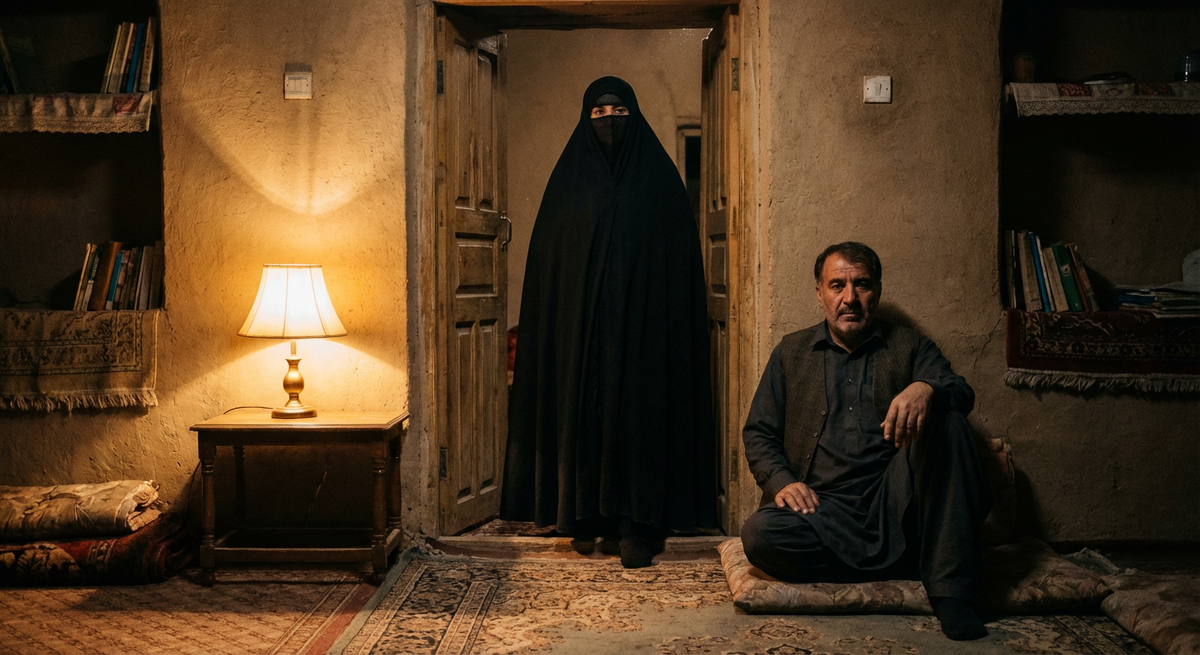
Kabul, guesthouse, evening. A knock at the door.
I open it. On the threshold stands a woman in a burqa. Only her eyes visible through the mesh. Beside her, the guesthouse owner (a man).
"This is my sister Farzana. She wants to speak with you. About women's lives."
I invite them into the room. The owner remains—without him, Farzana cannot speak with a foreign man.
Farzana removes her burqa. She is 28. An intelligent face. Tired eyes.
She speaks English with a heavy accent:
"You write about Afghanistan. Show the truth. Not just bazaars and mountains. Show us."
📚 Farzana's Story: From Teacher to "Invisible"
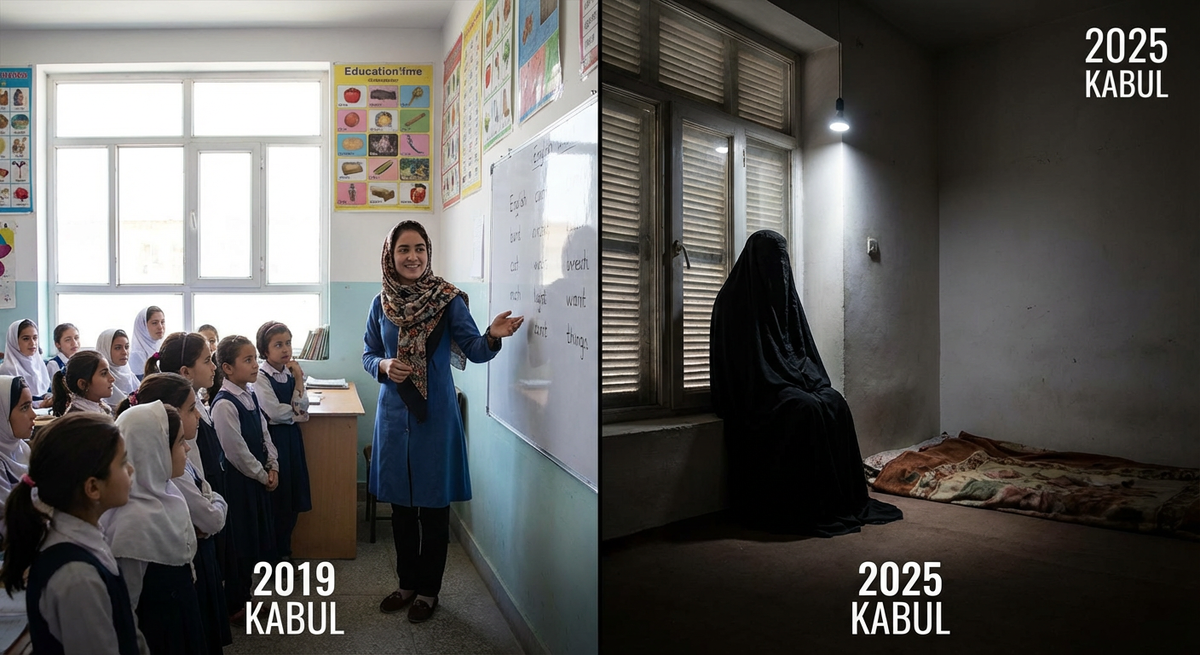
2019 (before the Taliban's return):
Farzana taught English at a girls' school in Kabul. 150 students. Salary: $300/month (good by Afghan standards).
She walked to work in jeans and a hijab (headscarf, face uncovered). In the evenings, she met friends at cafés. She planned to pursue a master's degree.
August 2021 (Taliban seize Kabul):
Farzana arrives at school. The gates are locked. On them, a notice:
"Girls' school for students over 12 closed until further notice."
That "further notice" never came—not in four years.
2022-2025 (life under the Taliban):
- Farzana loses her job (girls' schools remain closed)
- She cannot leave home without a mahram (male relative)
- The burqa (with mesh covering) is mandatory
- Cafés, parks, universities—all closed to women
Her words:
"I became invisible. On the street, no one sees me—only a black shape in a burqa. At home, I might as well not exist. I don't work, I don't study. I... exist."
🏫 Underground School: Risking Everything for Knowledge
But Farzana did not surrender.
2023: She secretly established an underground school for girls in a private home.
How it works:
- 15 girls (ages 12-17)
- Classes three times weekly (two hours each)
- Teaching English, mathematics, literature
- If the Taliban discover them → arrest, possibly prison
Security measures:
- Girls arrive one or two at a time, at intervals
- Books hidden in baskets of vegetables
- If someone knocks—they quickly hide textbooks, pretend to be learning sewing
Farzana:
"Every time I hear a knock, my heart stops. But when I see these girls' eyes—they want to learn so badly—I cannot stop."
Even in the darkest conditions, women find ways to resist.
🧕 What Has Changed for Women: 2021 vs. 2025
EDUCATION:
2021 (before the Taliban):
- Girls educated through university
- 39% of university students were women
2025 (under the Taliban):
- Girls forbidden education beyond 6th grade (age 12)
- Universities closed to women
- Underground schools—the only chance
WORK:
2021:
- Women worked as doctors, teachers, in offices, NGOs
- 22% of the workforce was female
2025:
- Permitted: doctors (for women only), midwives, elementary teachers (through 6th grade)
- Forbidden: everything else
- Effective female unemployment: ~90%
FREEDOM OF MOVEMENT:
2021:
- Women moved freely
- Could take taxis, visit cafés, parks
2025:
- Leaving home only with mahram (male relative)
- Parks closed to women
- Taxis—only with male relative
DRESS:
2021:
- Hijab mandatory, but face uncovered
- Jeans, skirts—acceptable
2025:
- Burqa (with mesh face covering) mandatory
- Entire body covered, including hands
💔 Three Stories That Broke My Heart
Story #1: Layla, 17—A Stolen Dream
2021: Layla finishes 11th grade with honors. Dreams of becoming a doctor.
August 2021: The Taliban close schools. Layla is 13. Her education stops.
2025: Layla is 17. She should be in her first year of medical school. Instead, she sits at home learning to sew.
Farzana shared her words:
"I don't want to sew. I want to heal people. But they won't even let me try."
An entire generation of girls robbed of their future.
Story #2: Maryam, 32—A Doctor Without Patients
2021: Maryam is a surgeon at a Kabul hospital. She saves lives. A respected specialist.
2022: The Taliban allow female doctors to work, BUT:
- Only for female patients
- Only in women's wards
- Under male administrators' supervision
2025: Maryam still works, but her caseload has dropped 70%. Women fear going to hospitals (requiring a mahram, complicated logistics).
Her words (through a translator):
"I saved men and women. Now they tell me: you can only treat women. As if a man's life matters more than my qualifications."
Story #3: Zara, 45—A Mother Who Lost Her Voice
2021: Zara is an activist, fighting for women's rights. She speaks at conferences.
2022: The Taliban ban women's NGOs. Zara loses her job.
2023: Zara attempts to organize a protest. She is arrested for three days. After release—threats against her family.
2025: Zara is silent. She stays home. She fears even speaking on the phone.
Farzana:
"Zara was a lioness. Now she's a mouse. The Taliban didn't break her with prison. They broke her with fear for her children."
🌍 What Does the World Say?
UN: Human Rights Watch and the UN regularly condemn Taliban policies toward women, calling it "gender apartheid."
Taliban response: "This is our culture. The West has no right to dictate to us."
Afghan women's response: "This is not our culture. This is their interpretation. My grandmothers studied. My mother worked. This isn't tradition—it's regression."
🤔 My Perspective: What I Learned
Before meeting Farzana, I thought it was simple: Taliban = villains, women = victims.
After our meeting, I understood: it's far more complex.
What I saw:
1. Women are NOT passive victims
They resist. Underground schools, secret meetings, preserving knowledge. These are acts of tremendous courage.
2. Suffering is not monolithic
Dr. Maryam suffers differently than 17-year-old Layla. Urban women live differently than rural women.
3. Men are trapped too
Farzana's brother told me: "I want my sister to work. But if I allow it—the Taliban will punish the entire family."
4. Hope has not died
Farzana: "The Taliban think they've won. But as long as even one girl studies in an underground school—they haven't won."
💪 What Can We Do?
Realistically:
❌ I cannot overthrow the Taliban
❌ I cannot change Afghanistan's laws
✅ But I can:
1. Tell their stories
Farzana: "Don't let the world forget us."
2. Provide financial support
Organizations helping Afghan women:
- Women for Afghan Women (WAW)
- Afghan Women's Network
- Malala Fund (Afghanistan projects)
3. Amplify their voices
Share their stories, not speak FOR them, but give them a platform.
My commitment: 10% of revenue from this post will go to Women for Afghan Women.
🔥 Farzana's Final Words
Before leaving, Farzana said:
"You know what's most terrifying? Not the burqa. Not losing work. The most terrifying thing is that the world grows accustomed. At first, everyone shouted: 'This is horrible!' Then: 'This is sad.' Now: 'Well, this is Afghanistan.' Don't grow accustomed to our suffering. Please."
These words changed me.
I cannot "save" Afghan women. But I can refuse to be silent. And so can you.
💬 A Question for You
What can you do right now?
- Share this post
- Donate $5-10 to an organization for Afghan women
- Write words of support in the comments—I'll pass them to Farzana
Even small actions matter.
🎯 What's Next?
In four days—Bamiyan: where the Taliban destroyed the Buddhas. What does it look like now?
Trekking in the Hindu Kush. Complete guide: visas, budgets, routes.
Subscribe to "Nomad in Chaos"—I show not only beauty, but truth.
P.S. Farzana, if you're reading this: thank you for your courage. You are a hero.
#Afghanistan #Women #HumanRights #Taliban #Education #Resistance #Travel #SocialJustice #AfghanWomen #NeverForgotten
Disclaimer: All characters and dialogues in this material are fictional and represent composite portraits reflecting the author's personal impressions. Any resemblance to real persons is coincidental.