Это простое визуальное сравнение двух моделей — Nano Banana Pro и Seedream 4.5. Никаких глубоких обзоров: я показал одинаковые промпты, референсные изображения которые использовал и конечные результаты.
Дальше — всё видно глазами. 1. Сочный двойной гамбургер 1.1. Подробный гипер-реалистичный промпт Nano Banana Pro (4К) Промпт: Create an ultra high-detail, hyper-realistic close-up image of a double hamburger. Requirements: - Composition: the double hamburger is positioned EXACTLY in the center of the frame, aligned to both the vertical and horizontal axis. The entire burger must be FULLY visible in the image, from the bottom of the lower bun to the top of the upper bun, with some empty space around it. No cropping of any part of the hamburger on any side of the frame. Shown from the side, with both beef patties and all layers clearly visible. No hands, no people. - Structure (from bottom to top): toasted sesame seed bun, fresh green lettuce, slice of tomato, first beef patty with me
Это простое визуальное сравнение двух моделей — Nano Banana Pro и Seedream 4.5. Никаких глубоких обзоров: я показал одинаковые промпты, референсные изображения которые использовал и конечные результаты.
Дальше — всё видно глазами.
1. Сочный двойной гамбургер
1.1. Подробный гипер-реалистичный промпт
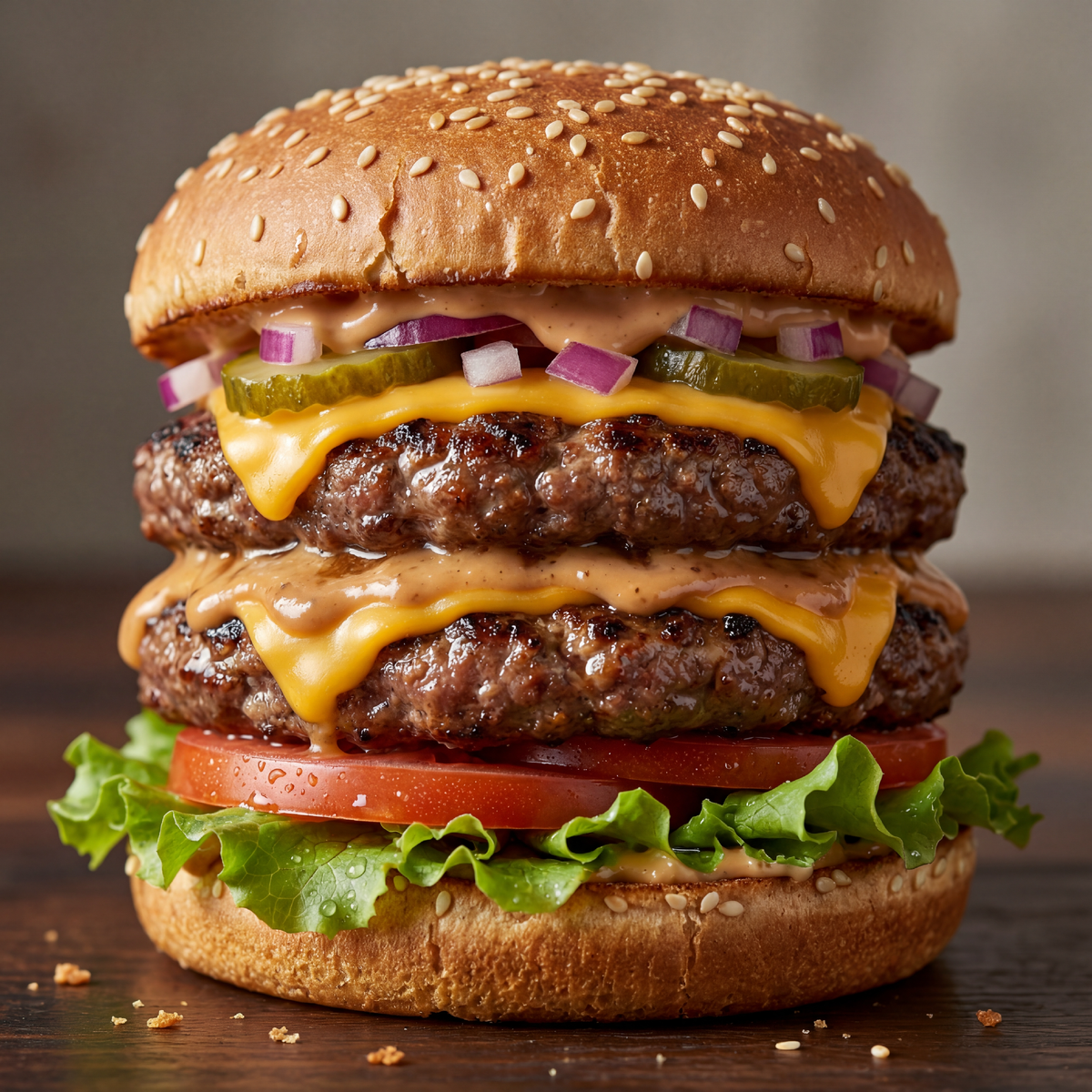
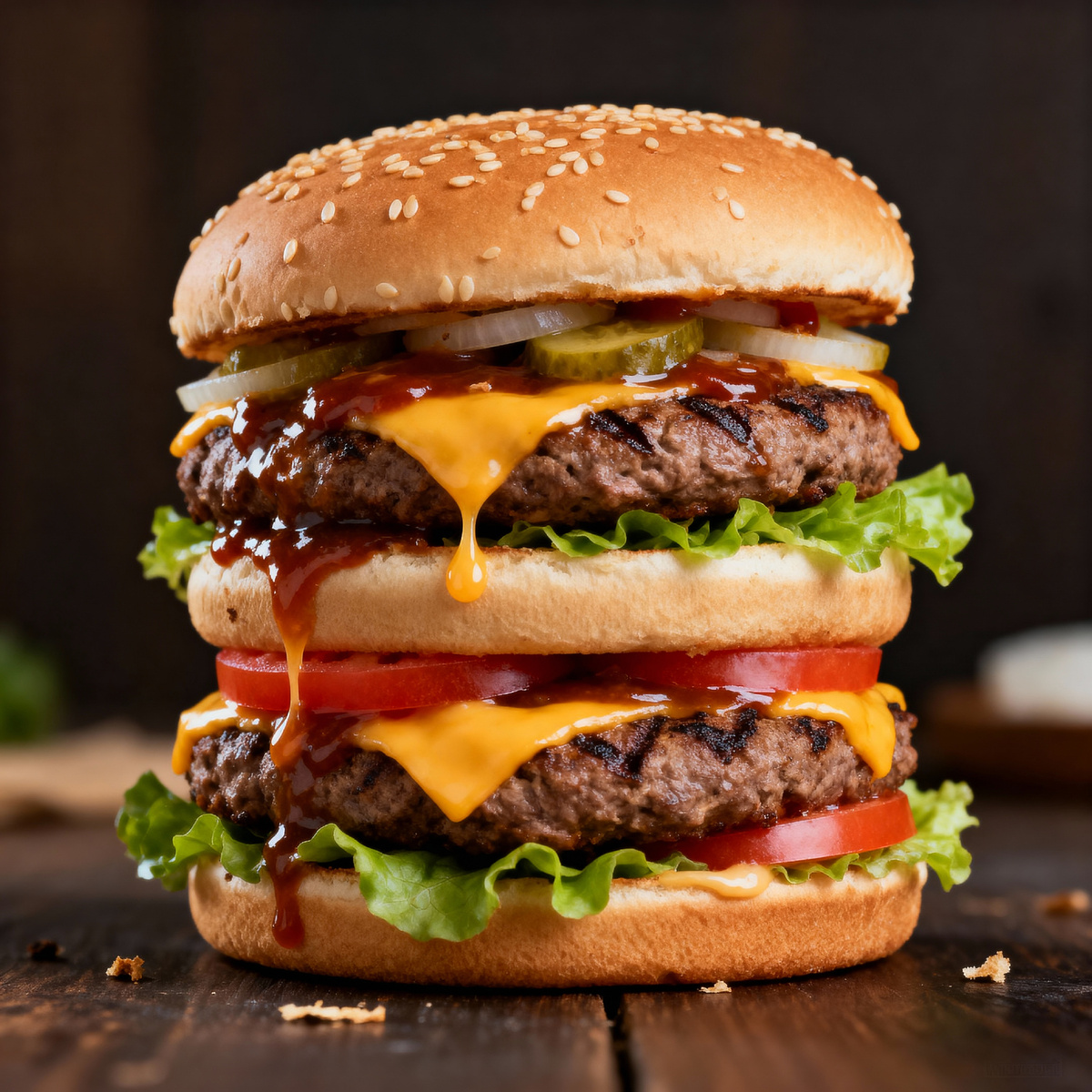
Промпт:
Create an ultra high-detail, hyper-realistic close-up image of a double hamburger.
Requirements:
- Composition: the double hamburger is positioned EXACTLY in the center of the frame, aligned to both the vertical and horizontal axis. The entire burger must be FULLY visible in the image, from the bottom of the lower bun to the top of the upper bun, with some empty space around it. No cropping of any part of the hamburger on any side of the frame. Shown from the side, with both beef patties and all layers clearly visible. No hands, no people.
- Structure (from bottom to top): toasted sesame seed bun, fresh green lettuce, slice of tomato, first beef patty with melted cheese, layer of sauce, second beef patty with melted cheese, pickles and onions, more sauce, top bun with sesame seeds.
- Visual details: emphasize juicy texture of the meat (grill marks, slight shine), melted cheese stretching over the patties, crispness of lettuce, moisture on tomato slices, realistic sauce thickness. Show crumbs and slight imperfections on the bun.
- Style: hyper-realistic food photography, shallow depth of field. The burger is sharply in focus, the background is softly blurred (simple neutral color or dark wooden table).
- Lighting: soft, directional light from the side, creating appetizing highlights and gentle shadows, without harsh reflections.
- Ultra-high resolution, no text, no logos, no additional objects except maybe a subtle, blurred surface under the burger. No partial views, no zoomed-in crops of the burger; show the whole hamburger in one shot.
1.2. Короткая версия промпта
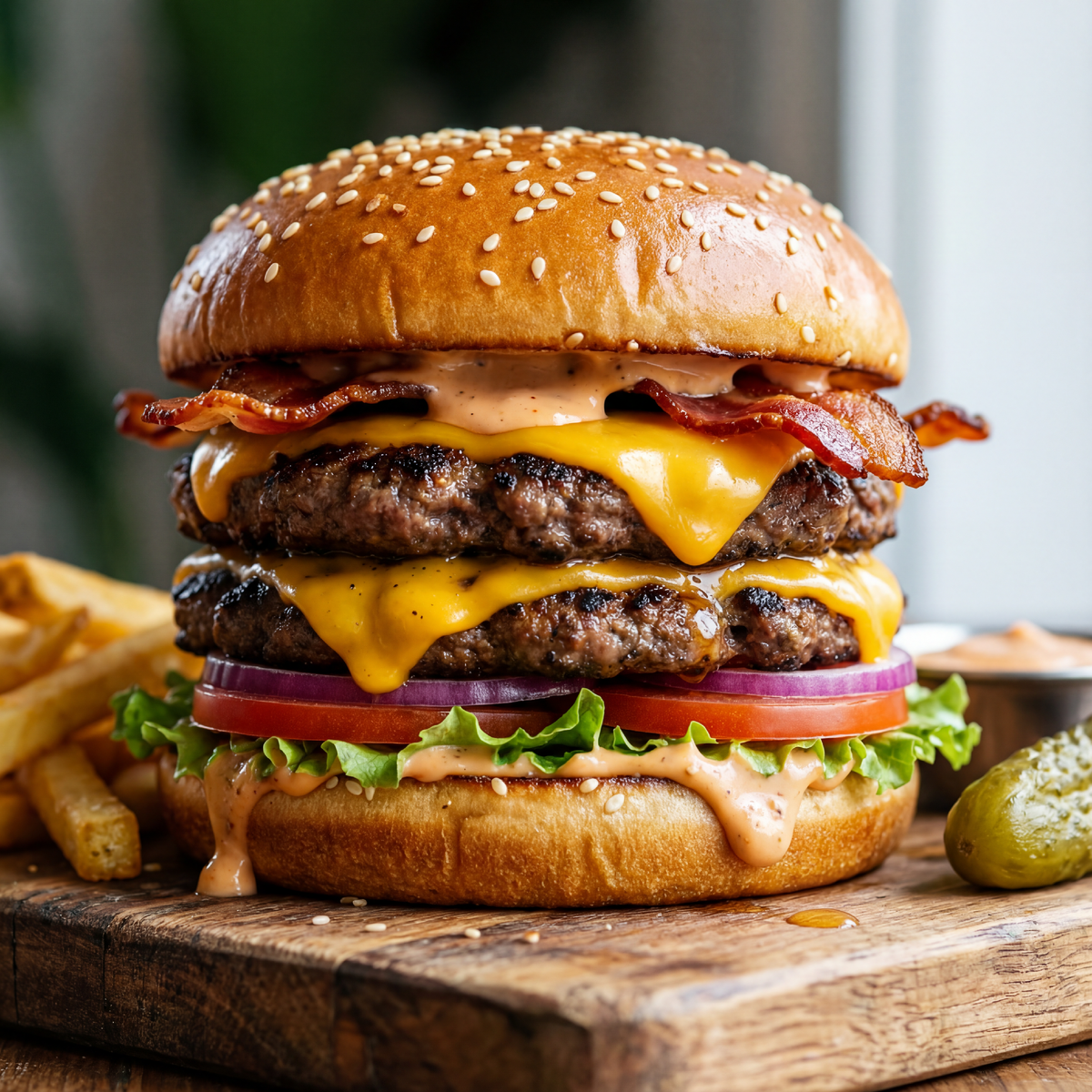
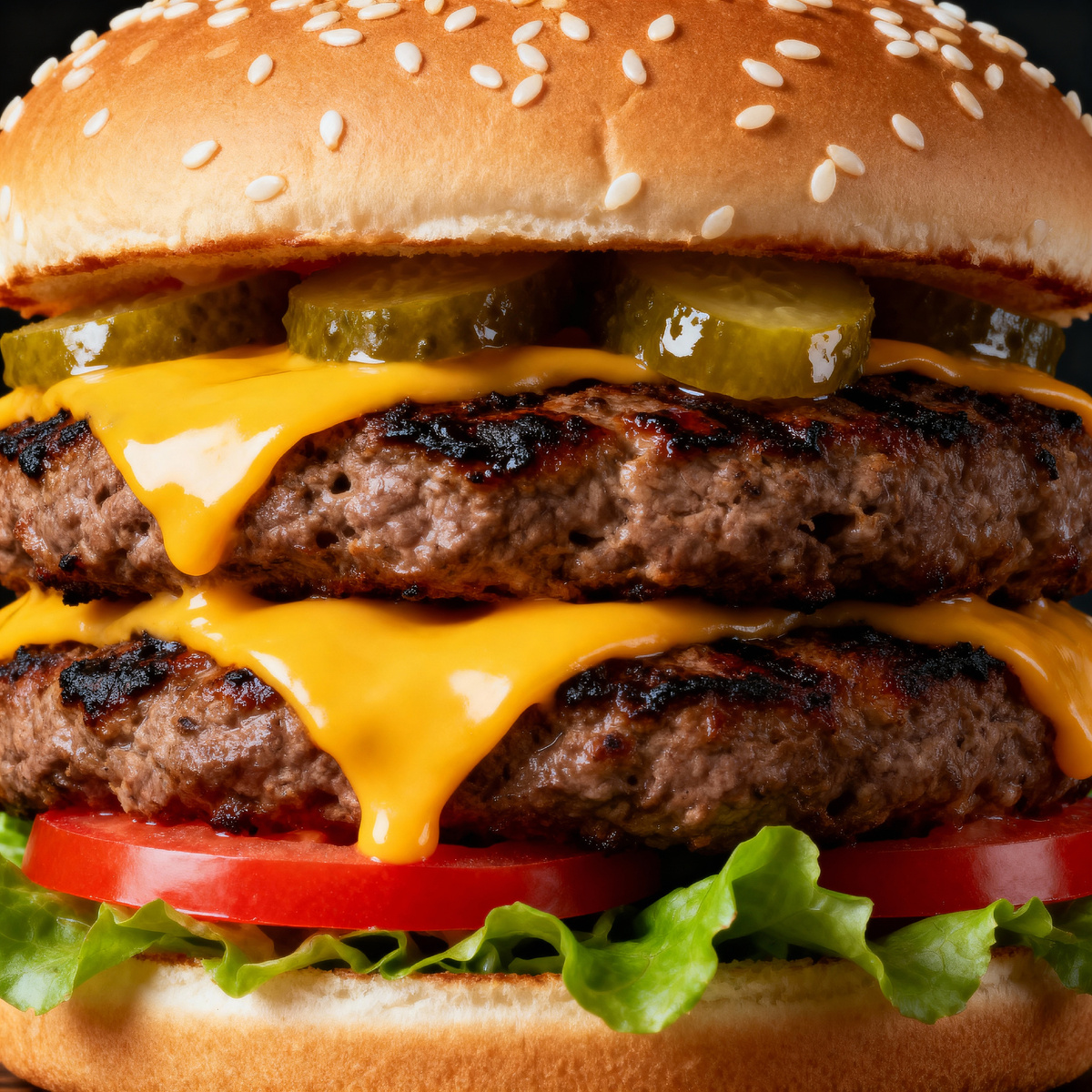
Промпт:
Create a highly detailed, hyper-realistic close-up image of a double burger, positioned precisely in the center. The burger should fit entirely within the frame, leaving visible margins on all sides.
2. Инфографика: английская и русская версии
2.1. Инфографика на английском (референс)
Промпт:
Create a clean, modern infographic that visually explains the full composition of ANY chosen food or drink item.
General idea:
The image should look like a professional food science infographic: a single main product in the center (for example, a dish or a drink) and clear, structured visual breakdowns around it that show what is inside.
Main object:
- Place ONE food or drink item in the exact center of the image (for example: a burger, a salad bowl, a cup of coffee, a smoothie, a pizza slice, etc.).
- Show it in a realistic but slightly simplified style (not photorealistic, closer to clean vector illustration or flat design with soft shading).
- The product must be large and clearly readable, occupying 40–60% of the canvas height.
Layer / ingredient breakdown:
- Around the main product, create multiple callout lines and labels pointing to different visible parts or layers:
- For solid dishes: buns/bread, sauces, cheeses, vegetables, meats, grains, herbs, etc.
- For drinks: liquid base, ice, foam, toppings, syrups, pieces of fruit, etc.
- For each callout, add:
1) Ingredient name (e.g. “Beef patty”, “Tomato slice”, “Whole milk”, “Sugar syrup”).
2) Short description or category (e.g. “Protein”, “Vegetable”, “Dairy”, “Carbohydrates”, “Fats”, “Spices”).
3) Optional: one simple numeric indicator (e.g. "% of total weight", or “≈ grams”, or “Low / Medium / High” for calories or sugar).
- Place ingredient labels in clean boxes or bubbles around the product, connected with straight or slightly curved lines.
Macro-structure / composition:
- On one side (left or right), add a compact “Composition summary” block:
- A small pie chart or bar chart with approximate distribution of:
- Proteins
- Fats
- Carbohydrates
- Fiber (if relevant)
- Simple, readable percentages (for example: Proteins 20%, Fats 35%, Carbs 45%).
- Use minimalist icons for each category (e.g. dumbbell for proteins, oil drop for fats, grain for carbs, leaf for fiber).
Style and readability:
- Use a light, neutral background (white or very light grey).
- Use a limited, harmonious color palette:
- One main accent color for headings and charts.
- Softer secondary colors for ingredient groups.
- Different, consistent colors for proteins / fats / carbs / vegetables / sauces, etc.
- Typography:
- Clear sans-serif font.
- Headings slightly larger, ingredient names medium, short descriptions smaller but still easily readable.
- Icons:
- Small, simple icons next to some labels (e.g. leaf = vegan, milk bottle = dairy, chili = spicy, wheat = gluten, etc.) when relevant.
Technical and layout constraints:
- No photographs of real people.
- No brand names, logos or packaging design copied from real companies.
- The infographic must work for ANY generic dish or drink: do not include specific restaurant branding.
- Arrange elements so that the layout is balanced: the central product is the visual focus, text and charts do not overcrowd the image.
- High resolution, vector-like crispness, suitable for print and web.
Optionally (if space allows):
- Add a small “Nutritional facts” mini-panel at the bottom or side:
- Simple table with 3–5 rows (Calories, Protein, Fat, Carbs, Sugar, Salt).
- Use generic example numbers, clearly presented, but not tied to a specific real product.
2.2. Инфографика на русском (референс)
Промпт:
Создай чистую, современную инфографику, которая на РУССКОМ ЯЗЫКЕ наглядно показывает состав ЛЮБОГО выбранного блюда или напитка.
Общий вид:
- Изображение похоже на профессиональную пищевую инфографику.
- В центре — один основной продукт (например, бургер, салат в миске, чашка кофе, смузи, кусок пиццы и т.п.).
- Вокруг — структурированное объяснение, из чего он состоит.
Главный объект:
- Помести ОДНО блюдо или напиток строго в центр изображения.
- Стиль рисования: аккуратная векторная/плоская иллюстрация с мягкими тенями, не фотореализм.
- Продукт крупный и легко читаемый, занимает около 40–60% высоты холста.
Разбор по слоям и ингредиентам:
- Вокруг главного продукта сделай выноски (линии) к разным слоям и видимым частям:
- Для блюд: булка/хлеб, соусы, сыр, овощи, мясо, крупы, зелень и т.д.
- Для напитков: жидкая основа, лёд, пенка, сиропы, фрукты, топпинги и т.д.
- Для КАЖДОЙ выноски добавь подпись на РУССКОМ:
1) Название ингредиента, например:
- «Говяжья котлета»
- «Лист салата»
- «Цельное молоко»
- «Сахарный сироп»
2) Краткая категория, например:
- «Белки»
- «Овощи»
- «Молочные продукты»
- «Углеводы»
- «Жиры»
- «Специи»
3) Небольшой числовой индикатор (примерно), например:
- «≈ 20% от массы»
- или «≈ 30 г»
- или «Калорийность: низкая / средняя / высокая»
- Подписи оформить в небольших блоках/плашках, соединённых с блюдом аккуратными линиями.
Сводка состава (макроуровень):
- С одной стороны (слева или справа) добавь компактный блок «Состав по БЖУ»:
- Заголовок: «Состав по БЖУ»
- Небольшая круговая диаграмма или столбики с подписями:
- «Белки»
- «Жиры»
- «Углеводы»
- Проставь простые примерные значения, например:
- «Белки — 20%»
- «Жиры — 35%»
- «Углеводы — 45%»
- Можно добавить строку «Клетчатка» с небольшим процентом, если уместно.
Иконки и доп. пометки:
- Используй небольшие простые иконки рядом с некоторыми надписями:
- Листик — «вегетарианский»
- Колосок — «содержит глютен»
- Капля — «масла / жиры»
- Перчик — «острое»
- Все подписи, заголовки, подписи к диаграммам — СТРОГО НА РУССКОМ ЯЗЫКЕ.
Стиль и читаемость:
- Фон: светлый, нейтральный (белый или очень светло-серый).
- Цветовая палитра:
- 1 основной акцентный цвет для заголовков и диаграмм.
- Мягкие дополнительные цвета для групп ингредиентов.
- Разные, но согласованные цвета для категорий: белки, жиры, углеводы, овощи, соусы и т.д.
- Шрифты:
- Без засечек, простой и читаемый.
- Иерархия: заголовки крупнее, названия ингредиентов средние, пояснения чуть мельче, но всё должно легко читаться.
Технические ограничения:
- Без фотографий людей, без лиц.
- Без реальных брендов, логотипов и фирменной упаковки.
- Инфографика должна подходить для ЛЮБОГО абстрактного блюда или напитка, без привязки к конкретному кафе/бренду.
- Композиция сбалансирована: основной продукт — главный визуальный акцент, текст и диаграммы не перегружают картинку.
- Высокое разрешение, чёткий «векторный» вид, подходит для печати и веба.
Опционально:
- Внизу или сбоку добавь небольшой блок «Пищевая ценность (на 100 г)» с таблицей:
- «Калории»
- «Белки»
- «Жиры»
- «Углеводы»
- «Сахар»
- «Соль»
- Все названия и значения в этой таблице тоже на РУССКОМ ЯЗЫКЕ.
2.3. Короткий промпт - для свободы действия нейросети
Промпт:
Use a reference image of a burger and create an eye-catching infographic about its ingredients.
3. Пять стилей в единой сцене
Тест на "понимание стиля" — одна сцена, одна композиция, разбитая на 5 вертикальных сегментов:
- Cyberpunk
- Cartoon
- Cinematic realistic
- Sketch
- Watercolor
3.1. Тест №1 — Nano Banana Pro
Промпт:
Create a single unified scene visually divided into five equal vertical sections, each occupying exactly 20% of the image width.
The scene must remain continuous and seamless across all sections — one composition, one perspective, one set of characters/objects, one environment.
Only the artistic style changes in each vertical segment. Hard, clearly visible vertical borders between the sections. No blending.
Apply art styles from left to right:
Left 20% — Cyberpunk:
Neon lights, holograms, rain reflections, futuristic tech, saturated blues and magentas, glowing signs.
Second 20% — Cartoon:
Rounded shapes, bold outlines, simplified expressive forms, bright cheerful colors, stylized lighting.
Center 20% — Cinematic realistic:
Ultra-detailed realism, film-grade color grading, dramatic shadows, volumetric light, crisp textures.
Fourth 20% — Sketch:
Pencil/ink sketch style, cross-hatching, visible strokes, grayscale or minimal color hints, rough artistic texture.
Right 20% — Watercolor:
Soft bleeding pigments, pastel tones, transparent washes, paper grain, subtle gradients.
Important details:
— The subject must remain consistent across all styles (same shapes, poses, proportions, perspective).
— One continuous background that transitions perfectly despite the style breaks.
— Clear and sharp vertical division lines between each 20% segment.
— No distortion when switching styles, no misalignment.
— High resolution, clean rendering, accurate style identity.
3.2. Тест №2 — Nano Banana Pro
Промпт:
Create a single unified scene visually divided into five equal vertical sections, each occupying exactly 20% of the image width.
The scene must remain continuous and seamless across all sections — one composition, one perspective, one set of characters/objects, one environment.
Only the artistic style changes in each vertical segment. Hard, clearly visible vertical borders between the sections. No blending.
Apply art styles from left to right:
Left 20% — Cyberpunk:
Neon lights, holograms, rain reflections, futuristic tech, saturated blues and magentas, glowing signs.
Second 20% — Cartoon:
Rounded shapes, bold outlines, simplified expressive forms, bright cheerful colors, stylized lighting.
Center 20% — Cinematic realistic:
Ultra-detailed realism, film-grade color grading, dramatic shadows, volumetric light, crisp textures.
Fourth 20% — Sketch:
Pencil/ink sketch style, cross-hatching, visible strokes, grayscale or minimal color hints, rough artistic texture.
Right 20% — Watercolor:
Soft bleeding pigments, pastel tones, transparent washes, paper grain, subtle gradients.
Important details:
— The subject must remain consistent across all styles (same shapes, poses, proportions, perspective).
— One continuous background that transitions perfectly despite the style breaks.
— Clear and sharp vertical division lines between each 20% segment.
— No distortion when switching styles, no misalignment.
— High resolution, clean rendering, accurate style identity.
3.3. Тест №3 — Nano Banana Pro (версия с бургером по референсу)
Промпт:
Using the provided hamburger reference photo, create ONE image (only on one canvas; DO NOT create multiple images, pages, grids, or thumbnails).
Canvas and Layout:
- The image is a single image of a hamburger, divided into 5 equal vertical sections, each exactly 20% of the width.
- Place thin, clear, clearly visible vertical dividers at exactly 20%, 40%, 60%, and 80% of the canvas width (2-4 pixels, neutral light color).
Vertical Style (ONLY the rendering style changes; identity, pose, and geometry remain unchanged):
- Left 20% - Cyberpunk: Neon lighting, futuristic glow of skin and hair, rich blue and purple tones, subtle holographic effects.
- Second 20% — Cartoon: Rounded, simplified shapes, crisp, clear contours, even, vibrant colors, stylized shading, yet recognizably the same person.
- Middle 20% — Cinematic Realistic: Ultra-detailed realism, cinematic-grade color correction, natural skin texture, dramatic yet naturalistic lighting, as close as possible to the original photo.
- Fourth 20% — Sketch: Pencil or ink drawing, visible lines, shading, predominantly grayscale with minimal color tints, paper texture.
- Right 20% — Watercolor: Soft, flowing pigments, pastel tones, transparent washes, visible paper grain, slightly jagged edges.
Section Titles: - Add a small stylistic label at the bottom of each section, centered at 20%:
Text from left to right: "CYBERPUNK," "CARTOON," "CINEMATORIAL," "SKETCH," "WATERCOLOR."
- Use a clean, sans-serif font, all caps, small size, and high contrast with the background (a soft, translucent background behind the text can be used).
- All five labels are aligned to the same baseline. The image should not contain any other text or logos.
Specifications:
- High resolution; the canvas width should be a multiple of 5 (e.g., 5000×3000 or 4000×2500) to ensure the accuracy of the 20% sections.
- Consistent lighting direction and perspective, taken from the original reference.
3.4. Тест №4 — короткий промпт (5 стилей)
Промпт:
Create a single scene visually divided into five equal vertical sections, each occupying exactly 20% of the image width. Within each vertical section, only the art style changes. There are five art styles in total.
4. Seedream 4.5 — повторяем те же тесты
4.1. Тест №1 — Seedream 4.5
Промпт:
Create a single unified scene visually divided into five equal vertical sections, each occupying exactly 20% of the image width.
The scene must remain continuous and seamless across all sections — one composition, one perspective, one set of characters/objects, one environment.
Only the artistic style changes in each vertical segment. Hard, clearly visible vertical borders between the sections. No blending.
Apply art styles from left to right:
Left 20% — Cyberpunk:
Neon lights, holograms, rain reflections, futuristic tech, saturated blues and magentas, glowing signs.
Second 20% — Cartoon:
Rounded shapes, bold outlines, simplified expressive forms, bright cheerful colors, stylized lighting.
Center 20% — Cinematic realistic:
Ultra-detailed realism, film-grade color grading, dramatic shadows, volumetric light, crisp textures.
Fourth 20% — Sketch:
Pencil/ink sketch style, cross-hatching, visible strokes, grayscale or minimal color hints, rough artistic texture.
Right 20% — Watercolor:
Soft bleeding pigments, pastel tones, transparent washes, paper grain, subtle gradients.
Important details:
— The subject must remain consistent across all styles (same shapes, poses, proportions, perspective).
— One continuous background that transitions perfectly despite the style breaks.
— Clear and sharp vertical division lines between each 20% segment.
— No distortion when switching styles, no misalignment.
— High resolution, clean rendering, accurate style identity.
4.2. Тест №2 (альтернативная версия промпта)
Промпт:
Create a single unified scene visually divided into five equal vertical sections, each occupying exactly 20% of the image width.
The scene must remain continuous and seamless across all sections — one composition, one perspective, one set of characters/objects, one environment.
Only the artistic style changes in each vertical segment. Hard, clearly visible vertical borders between the sections. No blending.
Apply art styles from left to right:
Left 20% — Cyberpunk:
Neon lights, holograms, rain reflections, futuristic tech, saturated blues and magentas, glowing signs.
Second 20% — Cartoon:
Rounded shapes, bold outlines, simplified expressive forms, bright cheerful colors, stylized lighting.
Center 20% — Cinematic realistic:
Ultra-detailed realism, film-grade color grading, dramatic shadows, volumetric light, crisp textures.
Fourth 20% — Sketch:
Pencil/ink sketch style, cross-hatching, visible strokes, grayscale or minimal color hints, rough artistic texture.
Right 20% — Watercolor:
Soft bleeding pigments, pastel tones, transparent washes, paper grain, subtle gradients.
Important details:
— The subject must remain consistent across all styles (same shapes, poses, proportions, perspective).
— One continuous background that transitions perfectly despite the style breaks.
— Clear and sharp vertical division lines between each 20% segment.
— No distortion when switching styles, no misalignment.
— High resolution, clean rendering, accurate style identity.
4.3. Тест №3 (попытки по бургеру — неудачные)
Промпт:
Using the provided hamburger reference photo, create ONE image (only on one canvas; DO NOT create multiple images, pages, grids, or thumbnails).
Canvas and Layout:
- The image is a single image of a hamburger, divided into 5 equal vertical sections, each exactly 20% of the width.
- Place thin, clear, clearly visible vertical dividers at exactly 20%, 40%, 60%, and 80% of the canvas width (2-4 pixels, neutral light color).
Vertical Style (ONLY the rendering style changes; identity, pose, and geometry remain unchanged):
- Left 20% - Cyberpunk: Neon lighting, futuristic glow of skin and hair, rich blue and purple tones, subtle holographic effects.
- Second 20% — Cartoon: Rounded, simplified shapes, crisp, clear contours, even, vibrant colors, stylized shading, yet recognizably the same person.
- Middle 20% — Cinematic Realistic: Ultra-detailed realism, cinematic-grade color correction, natural skin texture, dramatic yet naturalistic lighting, as close as possible to the original photo.
- Fourth 20% — Sketch: Pencil or ink drawing, visible lines, shading, predominantly grayscale with minimal color tints, paper texture.
- Right 20% — Watercolor: Soft, flowing pigments, pastel tones, transparent washes, visible paper grain, slightly jagged edges.
Section Titles: - Add a small stylistic label at the bottom of each section, centered at 20%:
Text from left to right: "CYBERPUNK," "CARTOON," "CINEMATORIAL," "SKETCH," "WATERCOLOR."
- Use a clean, sans-serif font, all caps, small size, and high contrast with the background (a soft, translucent background behind the text can be used).
- All five labels are aligned to the same baseline. The image should not contain any other text or logos.
Specifications:
- High resolution; the canvas width should be a multiple of 5 (e.g., 5000×3000 or 4000×2500) to ensure the accuracy of the 20% sections.
- Consistent lighting direction and perspective, taken from the original reference.
4.4. Тест №4 — короткий промпт (5 стилей)
Промпт:
Create a single scene visually divided into five equal vertical sections, each occupying exactly 20% of the image width. Within each vertical section, only the art style changes. There are five art styles in total.
5. Портрет: сетка 3×3
5.1. Подробный промпт
Промпт:
Using the provided reference photo of the elderly man, create ONE ultra‑realistic portrait image arranged as a 3×3 symmetric grid.
Reference:
- The SAME man from the reference must appear in all 9 cells: same face shape, bone structure, nose, eyes, mouth, ears, jawline, age and skin details.
- Keep his natural expression very close to the reference (neutral, calm).
Grid & framing:
- 3×3 grid, 9 equal cells in one single image.
- In every cell: shoulders-up portrait, no cropping of the top of the head or chin.
- The man is always centered within each cell, with a small margin to the edges.
- Use the SAME neutral, softly blurred background and the SAME soft studio lighting in all cells.
Angles (left to right, top to bottom):
Row 1:
1) Left profile (head turned 90° to the left, looking fully sideways).
2) Left 3/4 view (about 45° left, eyes looking slightly toward the camera).
3) Front view (like the reference, facing camera).
Row 2:
4) Slight left turn (about 20° left, eyes toward camera).
5) Perfect front view (exactly like the reference, eyes into camera).
6) Slight right turn (about 20° right, eyes toward camera).
Row 3:
7) Front view, chin slightly raised (about 10–15° up).
8) Right 3/4 view (about 45° right, eyes toward camera).
9) Right profile (head turned 90° to the right, looking fully sideways).
Consistency:
- Identity, hairstyle, clothing (sweater) and lighting must remain consistent in all 9 cells.
- Only the head angle and gaze direction change; no changes to age, expression, or outfit.
- No text, logos or extra elements; the 3×3 layout itself should clearly show the different angles.
5.2. Короткий промпт
Промпт:
Take a reference image of an elderly man and create a 3x3 symmetric grid with the same character's face in nine different angles.
Мой Telegram-канал: ещё больше готовых промптов и материалов
Если хотите больше примеров, загляните в мой Telegram-канал — там я выкладываю:
- новые готовые промпты,
- наборы для игры «Мемо»,
- sref-коды для Midjourney,
- короткие видео,
- тесты нейросетей и сравнения моделей,
- рабочие примеры генераций и эксперименты.
Мои предыдущие статьи
Если пропустили — вот другие мои материалы по работе с нейросетями:
- Новогоднее поздравление из 80-х
- Зимняя нейрофотосессия в стиле «Холодного сердца»