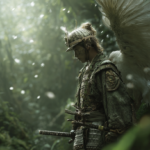
The Enigmatic Dawn: Tracing the Mythical First Samurai in Ancient Japan 🇯🇵✨
Have you ever pondered the very beginnings of a legendary warrior class, one whose name evokes images of honor, discipline, and the gleaming curve of a katana? It’s a profound question, one that delves deep into the mists of history and the shimmering tapestry of myth. Truly, the samurai stand as iconic figures, yet their genesis remains a fascinating subject for contemplation.
Ancient Japan, a land of verdant mountains and mystical forests, was, in a sense, a cradle for remarkable deeds and extraordinary individuals. Long before the term «samurai» became firmly established, describing the warrior elite who served their lords, there were, indeed, other mighty figures. These ancient heroes, often of divine lineage or possessing superhuman strength, perhaps laid the spiritual and martial groundwork for what would eventually evolve into the Way of the Warrior.
One might argue that the true progenitor, the mythical archetype embodying the earliest spirit of the samurai, is none other than **Yamato Takeru** (倭建命). This illustrious protagonist, whose epic adventures are recounted in the Kojiki and Nihon Shoki—Japan’s oldest historical chronicles—was, in many ways, an epitome of martial prowess and tragic nobility. Born Prince Ousu, he was, by all accounts, a prince with a ferocity that bordered on the untamed, a spirit untamed by common constraints. His own father, Emperor Keikō, became, rather tellingly, somewhat apprehensive of his formidable son’s temperament.
His most celebrated exploits involved venturing forth into the wild frontiers of the burgeoning Japanese state, subduing rebellious tribes and formidable deities. It seems, for instance, that one of his most famous tales recounts his encounter with the Kumaso people. Disguising himself as a maiden, he infiltrated their feast, then, with a lightning-quick draw of his potent weapon, struck down their chieftains. This act of cunning and decisive action is, arguably, a hallmark of what would later define the strategic mind of a samurai. During his journey, he received the famed sword Kusanagi-no-Tsurugi from his aunt, Princess Yamato-hime. This incredible blade, which means «Grass-Cutting Sword,» possessed its own mystical energy.
The legend of Yamato Takeru culminates in a truly poignant and almost ethereal manner. After numerous harrowing campaigns and confrontations with supernatural forces, he faced a formidable deity, the god of Mount Ibuki, without his sacred sword, Kusanagi. This oversight proved to be his undoing. Gravely wounded, he began his final journey, his body, it is said, transforming into a great white bird upon his demise. This majestic swan flew towards the heavens, leaving behind a trail of sorrow and wonder, a powerful symbol of a warrior spirit too grand for earthly bounds.
The echoes of Yamato Takeru’s extraordinary life resonate through centuries, informing the very essence of the warrior code that would later guide generations of samurai. His unwavering loyalty, his readiness to confront peril, his skill in combat, and, ultimately, his tragic fate, weave a narrative that speaks to the heart of what it means to be a guardian of the realm. He was, in a profound sense, the first heroic figure to forge a path of self-sacrifice and unwavering dedication for the Japanese people, setting a powerful precedent for the feudal knights who would follow.
So, while the historical «first samurai» might be debated among scholars, the mythical figure of Yamato Takeru stands as a compelling candidate for the legendary ancestor, the spiritual wellspring from which the ideals of Bushido, the Way of the Warrior, sprang forth. His tale serves as a timeless reminder that courage and honor are, indeed, qualities that transcend any single era or definition.
Want to dive deeper into more myths and legends from around the world? Join our community for daily dose of captivating stories!
👉 https://t.me/Miphiuy 👈