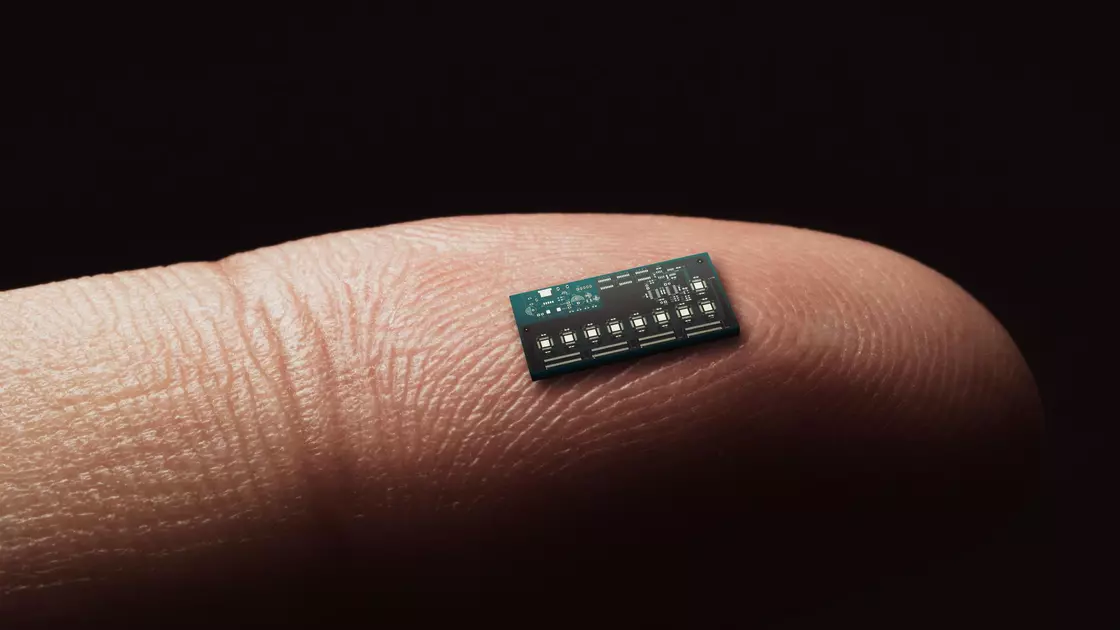
Илон Маск заявил, что его компания сумела вживить чип в мозг человека – по его словам, испытания прошли удачно. Имплант позволяет управлять компьютером, смартфоном и другими гаджетами.
Как рассказал Илон Маск в соцсети Х, вчера первому человеку вживили в мозг имплант от Neuralink.
"Первому человеку вживили имплантат от Neuralink вчера,
он хорошо восстанавливается.
Первые результаты показывают многообещающее обнаружение нейронных спайков", – пишет он.
Данный продукт компании носит название Telepathy (телепатия).
"(Продукт – прим. ред.) позволяет управлять телефоном или компьютером, а через них – практически любым устройством, просто подумав.
Первыми пользователями станут те, кто потерял возможность пользоваться своими конечностями.
Представьте, если бы Стивен Хокинг мог общаться быстрее, чем скоростная машинистка или аукционист. Такова и была цель", – заявил Маск.
Как пишет NBC News, на данный момент независимых подтверждений прогресса Neuralink не было. Отмечается, что один из конкурентов компании Маска, компания Precision Neuroscience, впервые имплантировала свое устройство в мозг человеку в прошлом году.
Восемь месяцев назад Neuralink получила разрешение Управления по санитарному надзору за качеством пищевых продуктов и медикаментов США на проведение первого клинического исследования на человеке.
Маск стал одним из основателей Neuralink в 2016 году. Штаб-квартира компании расположена в Сан-Франциско. В 2022 году он заявлял, что сам планирует вживить себе чип.
Напомним, что в августе 2020 года Маск сообщил, что компания впервые успешно чипировала мозг свиньи.
In neuromorphic computing, however, a "spike input" — a set of discrete electrical signals — is fed into the spiking neural networks (SNNs), represented by the processors. Where software-based neural networks are a collection of machine learning algorithms arranged to mimic the human brain, SNNs are a physical embodiment of how that information is transmitted. It allows for parallel processing and spike outputs are measured following calculations.
Like the brain, Hala Point and the Loihi 2 processors use these SNNs, where different nodes are connected and information is processed at different layers, similar to neurons in the brain. The chips also integrate memory and computing power in one place. In conventional computers, processing power and memory are separated; this creates a bottleneck as data must physically travel between these components. Both of these enable parallel processing and reduce power consumption.
Scientists at Intel have built the world's largest neuromorphic computer, or one designed and structured to mimic the human brain. The company hopes it will support future artificial intelligence (AI) research.
The machine, dubbed "Hala Point," can perform AI workloads 50 times faster and use 100 times less energy than conventional computing systems that use central processing units (CPUs) and graphics processing units (GPUs), Intel representatives said in a statement. These figures are based on findings uploaded March 18 to the preprint server IEEE Explore, which have not been peer-reviewed.
Hala Point will initially be deployed at Sandia National Laboratories in New Mexico, where scientists will use it to tackle problems in device physics, computing architecture and computer science.
You may like
The technician laying the CPU chip in the motherboard's socket.
China solves 'century-old problem' with new analog chip that is 1,000 times faster than high-end Nvidia GPUs
The low-power microchip in a person's hand.
Scientists create world's first microwave-powered computer chip — it's much faster and consumes less power than conventional CPUs
an illustration of a brain in a futuristic, digital style
Scientists say they've eliminated a major AI bottleneck — now they can process calculations 'at the speed of light'
Related: China develops new light-based chiplet that could power artificial general intelligence — where AI is smarter than humans
Powered by 1,152 of Intel's new Loihi 2 processors — a neuromorphic research chip — this large-scale system comprises 1.15 billion artificial neurons and 128 billion artificial synapses distributed over 140,544 processing cores.
It can make 20 quadrillion operations per second — or 20 petaops. Neuromorphic computers process data differently from supercomputers, so it's hard to compare them. But Trinity, the 38th most powerful supercomputer in the world boasts approximately 20 petaFLOPS of power — where a FLOP is a floating-point operation per second. The world's most powerful supercomputer is Frontier, which boasts a performance of 1.2 exaFLOPS, or 1,194 petaFLOPS.
How neuromorphic computing works
Neuromorphic computing differs from conventional computing because of its architecture, Prasanna Date, a computer scientist with the Oak Ridge National Laboratory (ORNL), wrote on ResearchGate. These types of computers use neural networks to build the machine.
Sign up for the Live Science daily newsletter now
Get the world’s most fascinating discoveries delivered straight to your inbox.
Your Email Address
Contact me with news and offers from other Future brands
Receive email from us on behalf of our trusted partners or sponsors
By submitting your information you agree to the Terms & Conditions and Privacy Policy and are aged 16 or over.
In classical computing, binary bits of 1s and 0s flow into hardware like the CPU, GPU or memory before processing calculations in sequence and spitting out a binary output.