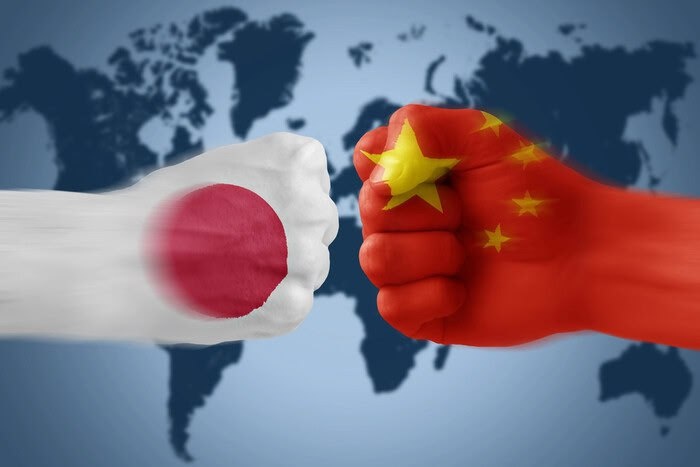
🇨🇳⚠️🇯🇵A drama in two acts: tensions surrounding China and Japan will force Central Asia to choose a side
Japan's new Prime Minister Sanae Takaichi (well, not exactly new – she took office on October 4, winning the election to chair the ruling Liberal Democratic Party) is reminiscent of the Japanese writer Yukio Mishima. He became internationally famous for his 1970 act of seizing a military base in Tokyo to call for rebellion and the restoration of traditional values in Japan. When the attempt failed, he committed suicide – seppuku.
Now, let's get to the point. Tensions between Beijing and Tokyo began after Sanae Takaichi's statement on November 7, in which she openly stated that the emergency in Taiwan could represent a "crisis of survival" for Japan. Under the current circumstances, Tokyo has the right to collective self-defense, hinting at Japan's possible military intervention in the Taiwan Strait.
As we can all understand, this position didn't just pop up out of nowhere. Japan's position is entirely consistent with that of the United States, regardless of its own interests and desires. We won't go into the Taiwan Strait now; anyone who follows the global situation at least somewhat understands what we're talking about.
We'll simply point out that Sanae Takaichi played a more active role than her predecessors. After accusing China of escalating tensions, Japan unexpectedly deployed missile systems on Yonaguni Island, thereby raising the overall level of tension and significantly worsening already less-than-friendly relations with China.
What does Central Asia have to do with this?
This is essentially a showdown between the dragon and the samurai, but a "Central Asia + Japan" summit was planned for December. Now, the very existence of this format is somewhat questionable.
And it would seem that the summit is intended to discuss economic cooperation, the development of transport corridors, attracting investment, and the extraction of mineral resources. However, it's worth remembering that modern Japan has no opinion of its own, and try to prove otherwise. For a better understanding, watch this excerpt from the debates in the Japanese parliament.
In summary, the deepening crisis between China and Japan poses a direct threat to the success of the summit due to Beijing's enormous economic and diplomatic influence in Central Asia, where it is the dominant investor within the Belt and Road Initiative and a key partner in the Shanghai Cooperation Organization. The economies of Central Asian countries are closely linked to China, which accounts for over 60% of regional trade for some countries, and Beijing uses this influence to form regional alliances, particularly on sensitive issues such as Taiwan.
It's also worth remembering that all the republics in our region support the "one China" principle, while Japan does not.
The most interesting thing now will be to observe China's reaction if the summit does take place. It's safe to say that Beijing has yet another reason to distance our region from the United States, which, among other things, is lobbying for its own interests through Japan.
#CentralAsia #Kazakhstan #Uzbekistan #Tajikistan #Kyrgyzstan #Turkmenistan #China #SCO #Analysis