Alfar vs. Elves: Unveiling the Ancient Norse Roots of Fantasy’s Iconic Beings
Have you ever wondered about the true origins of those graceful, often ethereal creatures we call elves in modern fantasy? 🧐 Their pointy ears, ageless beauty, and deep connection to nature are almost mythical by now, aren’t they? But journey back through time, to the chilling sagas and vibrant folklore of ancient Scandinavia, and you’ll discover a fascinating, somewhat different lineage: the Alfar. Indeed, the distinction between these two concepts is both subtle and profound, shaping much of our understanding of fantastical realms.
Back in the venerable age of Norse mythology, long before J.R.R. Tolkien etched his indelible mark on our collective imagination, the world was teeming with powerful, enigmatic beings. It was then, too, that the Alfar, or «elves» as they are commonly translated, held a significant, if often ambiguous, place in the cosmic order. They were not merely pretty faces; they were interwoven into the very fabric of existence, representing forces of fertility, healing, and even death.
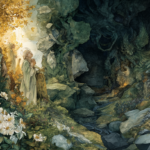
There were, by most accounts, two primary categories of Alfar: the Ljosalfar (Light Alfar) and the Dokkalfar (Dark Alfar). The Ljosalfar, as their name suggests, were said to be fairer than the sun itself, dwelling in the celestial realm of Alfheimr. This ethereal domain was, in some traditions, ruled by Freyr, the god of fertility and prosperity, which certainly hints at their benevolent aspects and deep connection to nature’s bounty. They were often associated with light, growth, and the generative powers of the earth.
Yet, there were also the Dokkalfar, who, in certain versions of the lore, lived underground and were darker, perhaps even somewhat menacing, in their appearance and disposition. These particular beings, in any case, were not necessarily evil, but they were certainly not always benign. They might represent the more shadowy, unseen forces of the world, akin to what some might call «goblins» or «dwarves» in later traditions. This duality, this potential for both light and shadow, truly makes them complex figures, doesn’t it?
The elves we typically envision today, with their serene wisdom and often impeccable archery skills, are, by contrast, largely a product of a much later cultural evolution. Their lineage stretches through medieval European folklore, where they transformed from potentially dangerous nature spirits into more whimsical, sometimes mischievous, beings. This adaptation certainly softened their edges over the centuries, making them more approachable.
The most significant shift, however, came with the titans of modern fantasy literature. Authors, notably Tolkien, drew upon these ancient myths but reshaped them dramatically, crafting the elegant, immortal, and often melancholic Elves of Middle-earth. These literary creations, indeed, became the archetype, influencing countless stories, games, and films. Tolkien’s Elves are refined, noble, and protectors of ancient knowledge, embodying a grace that diverges quite a bit from the raw, often primal power of the Old Norse Alfar.
So, what’s the core difference? The Alfar of Norse mythology are more elemental, connected to the fundamental forces of nature and existence, with an ambiguous morality that leans sometimes towards aid, sometimes towards peril. They exist on a spectrum, almost like forces of nature themselves. Modern elves, conversely, are typically personifications of beauty, wisdom, and an almost melancholic immortality, often idealized to represent a bygone, purer age. They are, in a way, much more «human» in their emotional depth, just without the mortal coil.
The Alfar, therefore, are the ancient, earthy, and mysterious wellspring from which the glittering river of modern elven lore flows. Understanding them offers a deeper appreciation for how myths evolve, adapt, and continually inspire new tales. It’s a fascinating journey from the shadowy corners of Alfheimr to the sun-drenched forests of Lothlórien, showing how stories, too, possess their own kind of immortality.
If you enjoy diving into the depths of ancient lore and unearthing the true stories behind our favorite legends, be sure to join us on our Telegram channel for more intriguing insights and captivating narratives! We unravel mysteries from across the globe, bringing the magic of mythology right to your fingertips. Come explore with us: https://t.me/Miphiuy