Chinvat Bridge’s Sentinels: Unveiling the Ancient Guardians of the Persian Underworld’s Gates
The unknown beyond life’s final breath has forever fascinated and terrified humanity. Indeed, this eternal mystery also gives birth to narratives of mighty guardians who safeguard the sacred or dreadful thresholds, determining the ultimate fate of departing souls. ✨
From the lands kissed by the ceaseless sun of ancient Persia emerged a profound system of belief that left an indelible mark on civilizations to come: Zoroastrianism. Yet, this venerable faith, perhaps, offers a singularly intricate view on the afterlife’s challenging path, focusing less on a static ‘hell’ and more on a place of ultimate reckoning.
Unlike the blazing chasm of torment with a lone warden of the threshold we often envision from other mythologies, the Iranian (or Persian) afterlife journey is, in some respects, a more individual spiritual pilgrimage. Nevertheless, this passage through the spiritual realms quite certainly involves powerful celestial beings who collectively determine one’s destiny.
At the crux of this profound passage lies the Chinvat Bridge, frequently described as the «Bridge of the Requiter» or the «Bridge of Separation.» It is, in some sense, the final inspection point where the accumulated actions of one’s mortal sojourn are assessed with unwavering precision.
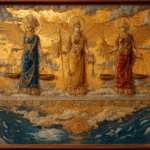
Standing ever vigilant, posted as watchmen at this pivotal point of decision, are three venerated spiritual beings: Rashnu, Mithra, and Sraosha. Indeed, these deities collectively function as the uncompromising dispensers of cosmic fairness, not so much physical ‘guards’ of a specific entrance, but rather the very embodiment of the boundary itself.
Rashnu is the celestial adjudicator, holding the cosmic balance of veracity with an unflinching hand. He, for all intents and purposes, ensures that no single good or bad deed goes uncounted, a true spiritual bookkeeper.
Mithra, though famously known as a deity overseeing agreements and sworn oaths, also takes his appointed place at the Chinvat Bridge. He, some would argue, represents the divine pact between humankind and the sacred order, guaranteeing adherence to solemn vows.
Sraosha, often translated as «Obedience» or «Hearkening,» personifies the faculty for attentive hearing of the sacred utterance and the willingness to act accordingly. It is, perhaps, his presence that guides the soul through its daunting trial, offering essential inner fortitude.
But there is yet another crucial ‘guardian’ – not a deity, but a manifestation sprung from the soul’s deepest core: the Daena. This unique concept, it seems, is the very embodiment of one’s moral compass and the sum total of decisions made throughout existence.
For those who have walked the path of virtue, the Chinvat Bridge widens into a comfortable thoroughfare, leading to the House of Song (Garothman). Conversely, for those steeped in maleficence, the bridge narrows to a blade’s sharpest point, seemingly plunging them into the chilling, barren chasms of Duzakh, the Zoroastrian ‘hell’ or realm of suffering and ultimate cleansing.
At this critical juncture, the Daena appears to the soul, either as a radiant youthful woman or a repulsive ancient crone, precisely reflecting the soul’s own ethical spotlessness or depraved decay. This profound encounter, it could be argued, is the most intimate and unmasking assessment of all, a true mirror to one’s spiritual essence.
The Zoroastrian vision of the afterlife, with its emphasis on personal responsibility and the collective role of divine beings in judging ethical behavior, strikes a profound chord even today. It is, perhaps, a timeless narrative reminding us that our daily choices truly shape our ultimate fate beyond this life.
So, when we speak of guardians of the underworld, remember the Persian way: less of a solitary jailor of the great gate, and more of a deeply meaningful spiritual challenge safeguarded by justice, truth, and one’s very own conscience. What narratives, then, do our own deeds spin for our Daena?
—
Dive deeper into the world of myths and legends with us! For more captivating tales, join our Telegram channel: 👉 https://t.me/Miphiuy 👈