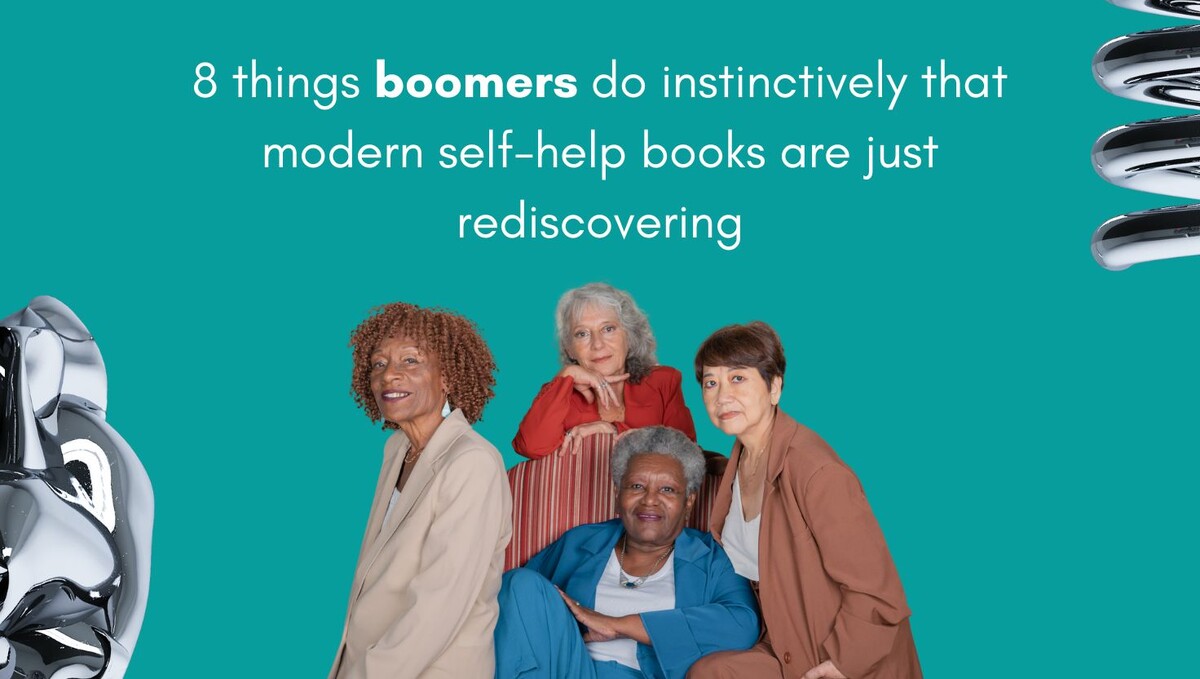
Article: "8 things boomers do instinctively that modern self-help books are just rediscovering" from VegOut Magazine.
Level: Intermediate to Advanced (B1-C1)
Time: 60 Minutes
Materials:
• Article
Lesson Aims:
•Main Aim: By the end of the lesson, students will be able to discuss and express opinions on the topic of modern vs. traditional habits, using new vocabulary and grammatical structures from the article.
•Sub-Aims:
•Students will learn and practice 8-10 new vocabulary items and idioms related to habits and lifestyle.
•Students will review and practice using the Present Simple tense for habits and the phrase "instead of" for contrast.
•Students will improve their reading comprehension and critical thinking skills by analyzing the article.
•Students will enhance their speaking fluency and confidence through pair and group discussions.
Lesson Stages
| Stage | Timing | Interaction | Procedure - [ ] Warm-up & Lead-in (5 mins) - T-S, S-S
Vocabulary Presentation & Practice (15 mins) - T-S, S-S
Grammar Presentation & Practice (10 mins) - T-S, S-S
Reading Comprehension & Discussion (15 mins) - S-S, T-S
Production (Speaking/Writing) (10 mins) - S-S, S
Cool-down & Homework (5 mins) - T-S
1. Warm-up & Lead-in (5 minutes)
Interaction: Teacher-Student (T-S), Student-Student (S-S)
Procedure:
1.Warm-up: "This or That?" (3 mins)
•The teacher writes a few pairs of contrasting activities on the board:
•Calling or Texting?
•Physical book or E-book?
•Home-cooked meal or Takeout?
•Planned schedule or Spontaneous day?
•The teacher asks students to quickly choose one from each pair and share their preference with a partner, giving a brief reason. (e.g., "I prefer texting because it's faster.")
•The teacher elicits a few answers from the class to generate a brief, energetic discussion.
2.Lead-in: Introducing the Topic (2 mins)
•The teacher connects the warm-up activity to the lesson's topic: "It's interesting how we all have different habits. Today, we're going to read an article about habits that were common for our parents' or grandparents' generation—the 'Boomers'—and how many of these habits are now being rediscovered as 'new' ideas in self-help books."
•The teacher introduces the article title and asks a predictive question: "What kind of habits do you think the article will mention?" Elicit a few ideas from the students.
2. Vocabulary Presentation & Practice (15 minutes)
Interaction: Teacher-Student (T-S), Student-Student (S-S)
Procedure:
1.Pre-teaching Vocabulary (8 mins)
•The teacher presents 8-10 key vocabulary items from the article on the board. The teacher should elicit the meaning from the students first before providing definitions. Use concept-checking questions (CCQs) to ensure understanding.
•Target Vocabulary & CCQs:
•Instinctively (adv.): Do you think about it, or does it happen naturally? (Naturally) Is it a planned action? (No)
•Advocate for (phrasal v.): Are you for or against something? (For) Are you silent about it? (No, you speak in favor of it.)
•Impersonal (adj.): Does it show a lot of personal feeling? (No) Is it warm and friendly? (No, it can be cold.)
•Mindful (adj.): Are you paying attention? (Yes) Are you distracted? (No)
•Digital minimalism (n.): Is this about using more technology or less? (Less) Is it about using it randomly or intentionally? (Intentionally)
•Combat loneliness (phrase): Are you trying to increase or decrease loneliness? (Decrease) Is it a passive or active process? (Active)
•Analog (adj.): Is this about computers or physical objects? (Physical objects) Is a vinyl record analog or digital? (Analog)
•Circadian rhythms (n.): Is this about your daily, weekly, or monthly body clock? (Daily) Does a consistent sleep schedule help or hurt it? (Help)
•Superficial (adj.): Is it deep or on the surface? (On the surface) Does it involve a lot of serious thought? (No)
•Pick up the phone (idiom): Are you starting a call or ending one? (Starting) Can it also mean answering a call? (Yes)
•Cover to cover (idiom): Do you read the whole book or just parts? (The whole book)
2.Vocabulary Practice: Gap-Fill & Discussion (7 mins)
•The teacher provides students with a few sentences with gaps to be filled by the new vocabulary.
1.She ________ knew that her friend was upset, even though she was smiling.
2.Many doctors ________ a diet rich in fruits and vegetables.
3.He found the automated email response to be cold and ________.
4.Practicing yoga helps me be more ________ of my breathing.
5.To ________, he deleted all social media from his phone.
6.Reading a book from ________ is one of my greatest pleasures.
•Students complete the sentences in pairs. The teacher then elicits the answers.
•Follow-up: In their pairs, students ask each other one of the following questions:
•What is something you do instinctively?
•What is a cause you would advocate for?
•Do you prefer analog or digital tools for organizing your life? Why?
3. Grammar Presentation & Practice (10 minutes)
Interaction: Teacher-Student (T-S), Student-Student (S-S)
Procedure:
1.Guided Discovery: Present Simple for Habits (5 mins)
•The teacher writes two sentences on the board from the article:
•"Boomers pick up the phone and call."
•"My father reads one book cover to cover."
•The teacher asks students: "What tense are the verbs in these sentences? (Present Simple). Are we talking about something happening right now, or something that happens regularly? (Regularly). So, what do we use the Present Simple for? (Habits and routines)."
•The teacher quickly drills the form if necessary (e.g., I/you/we/they read, but he/she/it reads).
2.Guided Discovery: Contrasting with "Instead of" (5 mins)
•The teacher writes another sentence on the board:
•"They call people instead of texting."
•The teacher asks: "Does this sentence describe one action or two? (Two). Are they doing both actions? (No, just the first one). What is the function of the phrase 'instead of'? (To show an alternative or a contrast)."
•The teacher highlights that "instead of" is followed by a gerund (-ing form) here: "texting."
•Practice: The teacher asks students to work in pairs and create two sentences of their own using "instead of" to describe their own habits. For example, "I write lists by hand instead of using an app." They share their sentences with their partner.
4. Reading Comprehension & Discussion (15 minutes)
Interaction: Student-Student (S-S), Teacher-Student (T-S)
Procedure:
1.Skimming for Main Ideas (5 mins)
•Students are given the article (or link) and asked to skim it quickly (2-3 minutes) to find the 8 habits the author mentions.
•In pairs, students list as many of the habits as they can remember.
•The teacher elicits the 8 habits from the class and writes them on the board in a shortened form (e.g., 1. Calling, not texting. 2. Set meal times, etc.).
2.Scanning for Detail (5 mins)
•The teacher asks students to scan the text to find the answers to a few specific questions:
•According to the article, what does hearing someone's voice create that texting can't match? (Intimacy)
•What do productivity books call the practice of focusing on one thing at a time? (Single-tasking or deep work)
•What does the author say is supplementary "at best" for maintaining friendships? (Social media)
•Students check their answers in pairs before the teacher confirms them with the whole class.
3.Group Discussion (5 mins)
•Students are divided into small groups of 3-4.
•The teacher puts discussion questions on the board:
1.Which of these 8 habits do you think is the most beneficial? Why?
2.Do you agree that younger generations have had to "relearn" these habits from self-help books? Why or why not?
3.The article says, "Sometimes the old ways were right." Can you think of another example of an "old way" that is better than the modern alternative?
•Students discuss the questions in their groups. The teacher monitors, provides assistance, and encourages participation.
•The teacher can ask one person from each group to share a key point from their discussion with the class.
5. Production (Speaking/Writing) (10 minutes)
Interaction: Student-Student (S-S), Individual (S)
Procedure:
1.Role-Play: The Intergenerational Debate (10 mins - Speaking Focus)
•Setup: Students work in pairs. One student takes the role of a "Boomer" who believes in traditional habits. The other student takes the role of a "Millennial" or "Gen Z" who embraces modern, tech-driven habits.
•Task: They must have a friendly debate about the best way to live. They should try to use the new vocabulary and grammar from the lesson.
•Example Prompts:
•Boomer: "You young people are always on your phones! You should pick up the phone and have a real conversation instead of just texting."
•Millennial/Gen Z: "But texting is more efficient! And I can talk to multiple people at once. Besides, I use my phone for mindful activities, like meditation apps."
•The teacher monitors the role-plays, taking notes on good language use and common errors for later feedback.
2.Alternative Task (Writing Focus - can be set for homework if time is short)
•Task: Students write a short paragraph (50-75 words) giving advice to a friend who is feeling stressed and overwhelmed by modern life. They should recommend at least two of the "Boomer habits" from the article and use at least three of the new vocabulary words.
•Example Start: "I heard you've been feeling stressed. I think you should try to be more mindful in your daily life. For example, you could try having set meal times instead of eating at your desk..."
6. Cool-down & Homework (5 minutes)
Interaction: Teacher-Student (T-S)
Procedure:
1.Lesson Review & Feedback (3 mins)
•The teacher asks students: "What was the most interesting thing you learned today?" and "Which of the new vocabulary words do you think you will use the most?"
•The teacher provides brief feedback on any common errors noted during the production stage, writing corrections on the board.
2.Homework Assignment (2 mins)
•The teacher sets the homework assignment:
•Option 1 (Writing): Write a short blog post (150-200 words) titled "Three Old Habits I Want to Try." You should choose three habits from the article (or your own ideas) and explain why you want to try them. Use at least 5 new vocabulary words/phrases from today's lesson.
•Option 2 (Speaking): Prepare a 2-minute audio recording where you interview an older family member or friend about their daily habits. Ask them about their routines and compare them to your own.
#englishlessonplan #englishlearning #lessonplan #английскийязык