Maria Santos stepped out of a hyperbaric chamber for home use feeling exactly the same as when she entered 90 minutes earlier. No sudden burst of energy, no miraculous transformation, no immediate signs that she'd just spent $500 on what some claim is the closest thing science has found to a fountain of youth.
The 67-year-old retired executive from Miami had just completed her 40th session of hyperbaric oxygen therapy, not for a medical condition, but for something far more elusive = reversing the aging process itself.
She's part of a growing wave of wellness-focused individuals turning to pressurized oxygen as an anti-aging strategy, despite limited evidence and significant costs.
"My friends think I'm crazy," Santos admits. "But if there's even a chance this could give me more quality years with my grandchildren, isn't it worth trying?"
The science behind HBOT's anti-aging claims centers on cell structures called telomeres = protective caps on chromosomes that shorten as we age.
A breakthrough study found that telomeres at the ends of chromosomes grew longer instead of shorter, at a rate of 20%-38% for different cell types following HBOT treatments [1].
These findings, published in respected journals, have sparked intense interest in the wellness community.
But before we get carried away, let's examine what these studies actually involved. The research included 35 healthy adults over 64 who underwent extensive HBOT protocols = 60 sessions over three months. Telomeres length of T helper, T cytotoxic, natural killer and B cells increased significantly by over 20% following HBOT [2].
Dr. Rachel Kim, a cell biologist who studies aging, cautions against premature excitement.
"Telomere length is linked to aging, but we don't know if artificially lengthening them translates to actual health benefits or longer life. It's like polishing the outside of an old car and claiming you've rebuilt the engine."
The mechanisms proposed for HBOT's anti-aging effects go beyond telomeres.
HBOT affects biological processes at the genetic level by altering gene expression, delaying cell aging, and assisting in telomere length improvement [3].
Researchers theorize that the same processes that help heal wounds = increased oxygen delivery, reduced swelling, and improved cell repair = might also combat aging.
The treatment protocol for anti-aging differs significantly from medical HBOT.
Instead of addressing specific injuries or conditions, patients undergo preventive sessions designed to improve cell function.
The study indicates that HBOT may induce significant cell-cleansing effects including significantly increasing telomere length and clearance of aging cells in older populations [4].
Yet the gap between laboratory findings and real-world benefits remains enormous. Most anti-aging HBOT research involves highly controlled conditions with carefully selected participants.
The question "Will this work for me?" becomes nearly impossible to answer without conducting your own expensive experiment.
The costs are substantial. A typical anti-aging HBOT protocol involves 40-60 sessions at $200-$500each, totaling $8,000-$20,000 for a complete course. Most insurance plans don't cover wellness-focused treatments, making this an entirely out-of-pocket expense for most patients.
Santos financed her treatment through retirement savings, viewing it as an investment in her future health. "I spend less on this than some people spend on cars," she reasons. "If it gives me five extra healthy years, that's $8,000 per year. What's that worth to you?"
The wellness industry has enthusiastically embraced HBOT's anti-aging potential.
Luxury clinics in major cities market the therapy alongside other high-end wellness services, creating an atmosphere that's part medical facility, part spa. Some celebrities have publicly endorsed HBOT for anti-aging, though their testimonials carry little scientific weight.
Did you Know? King of Pop, Michael Jackson once had an HBOT chamber in his house.
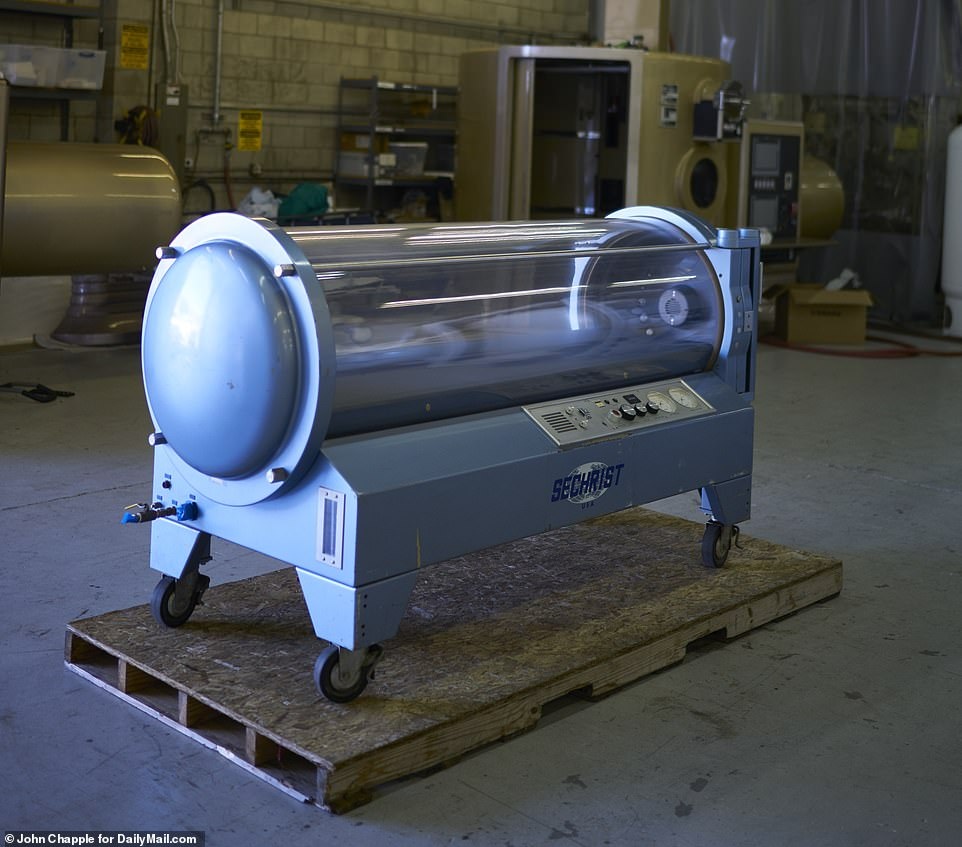
Dr. Michael Chen, who operates an anti-aging clinic in Beverly Hills, acknowledges the uncertainty while defending the practice.
"We're transparent with patients that this is experimental. But we're seeing improvements in energy levels, sleep quality, and overall wellbeing that go beyond what we can measure in the lab."
The challenge lies in separating placebo effects from genuine benefits.
When people spend significant money on a treatment they hope will make them feel younger, they often report improvements regardless of the therapy's actual effectiveness.
An average of 25-37% increase in lymphocyte telomere length was reported in a group of 35 healthy elderly adults [5].
Critics point out that the most dramatic anti-aging claims come from small, preliminary studies that haven't been replicated by independent researchers. The field lacks the large, long-term trials that would be needed to prove actual anti-aging benefits.
"Show me a study that follows 1,000 people for 20 years, half getting HBOT and half not, then we can talk about anti-aging effects," challenges Dr. Elena Rodriguez, a geriatric medicine specialist. "Until then, we're making expensive bets based on limited data."
The safety profile for anti-aging HBOT appears good in healthy adults, though risks increase with age and underlying health conditions. Risks include ear pain, sinus issues, and rare cases of oxygen poisoning.
Older adults considering treatment need thorough medical evaluation to identify potential complications.
Some researchers are exploring modified HBOT protocols specifically for aging-related applications. These involve lower pressures and shorter sessions than traditional medical treatments, potentially reducing risks while maintaining potential benefits.
The broader question extends beyond individual choice to societal implications. If HBOT proves effective for healthy aging, who gets access? The current cost structure makes it available only to wealthy individuals, potentially creating new forms of health inequality based on economic status rather than medical need.
For now, the anti-aging applications of HBOT remain in a gray area between promising research and unproven therapy.
Despite the conventional wisdom that excessive oxygen accelerates aging, appropriate HBOT protocols without exceeding the toxicity threshold have shown promise in therapies against aging [6].
Santos completed her treatment course six months ago. She reports feeling more energetic and sleeping better, though she admits these improvements could result from other lifestyle changes she made simultaneously.
Blood tests show some improvements in inflammatory markers, but her doctor cautions against attributing these changes solely to HBOT.
"Would I do it again? Probably," Santos reflects. "Not because I'm convinced it worked, but because the potential upside seems worth the cost if you can afford it. I'm not getting any younger either way."
The future of anti-aging HBOT will likely depend on larger, more rigorous studies that can separate genuine effects from wishful thinking. Until then, it remains an expensive experiment that some are willing to try and others consider a costly gamble with their health and finances.
The fountain of youth has always been more myth than reality. Whether hyperbaric oxygen therapy represents a genuine step toward healthy aging or just the latest expensive wellness trend remains an open question that only time = and better science = will answer.
References
[1] ScienceDaily - "Hyperbaric oxygen treatment: Clinical trial reverses two biological processes associated with aging in human cells" - May 25, 2025
[2] PubMed - "Hyperbaric oxygen therapy increases telomere length and decreases immunosenescence in isolated blood cells: a prospective trial" - November 18, 2020
[3] Frontiers - "Hyperbaric oxygen therapy: future prospects in regenerative therapy and anti-aging" - April 12, 2024
[4] PMC - "Hyperbaric oxygen therapy increases telomere length and decreases immunosenescence in isolated blood cells: a prospective trial" - November 18, 2020
[5] Frontiers - "The effect of hyperbaric oxygen therapy on cognition, performance, proteomics, and telomere length—The difference between zero and one: A case report" - June 28, 2022
[6] ScienceDirect - "Hyperbaric oxygen therapy for healthy aging: From mechanisms to therapeutics" - May 27, 2022