📄 “You're Ready, Aren’t You?” — Tactical Use of Tag Questions
🧭 To: Recruits of the Syntax & Sentence Operations Division
🔍 From: GS Department of Confirmation Mechanics & Interpersonal Linguistics
📅 Date: 2.10.2025
🎯 Mission Objective:
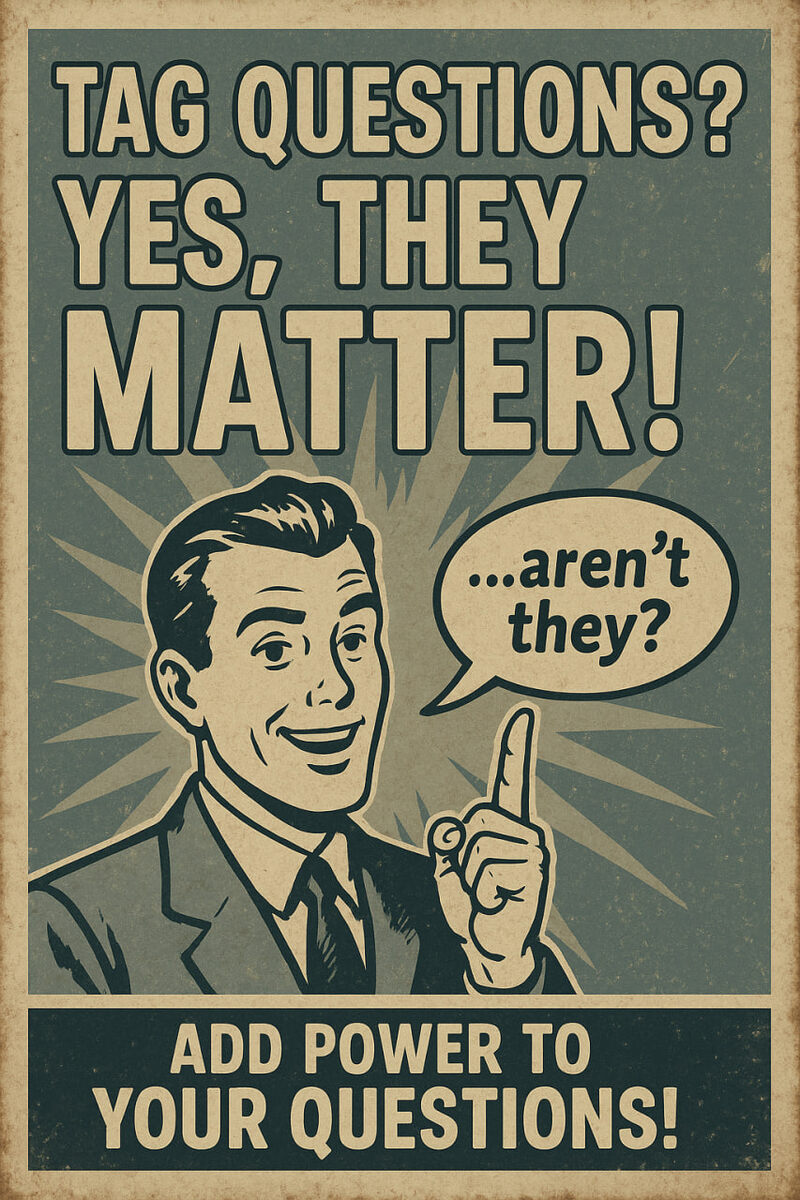
Investigate and deploy Tag Questions — short confirming questions added at the end of statements. These compact tools can clarify facts, check understanding, or invite agreement. Learn how to form them, how they work with tone, and when to use them strategically in both casual and formal English.
⚙️ Intel Unpacked:
Tag Questions are used to:
1) Confirm information:
“You’re a mutant, aren’t you?”
2) Invite agreement:
“This mission was intense, wasn’t it?
3) Check facts politely:
“You didn’t see Magneto, did you?”
🧩 Structure Breakdown:
[Statement] + [Auxiliary verb + Pronoun in opposite polarity]
- If the statement is positive, the tag is negative:
“You’re coming, aren’t you?”
- If the statement is negative, the tag is positive:
“You don’t like loud noises, do you?”
🛡 Tone matters! A rising intonation = genuine question. Falling = expectation or confirmation.
🧠 Response Protocol:
Confirm or deny naturally:
- “Yes, I am.” / “No, I’m not.”
- “I think so.” / “Not really.”
- “Absolutely.” / “Nope.”
🛠 Common Errors to Avoid:
❌ She can play the violin, isn’t she?
✔️ She can play the violin, can’t she?
❌ You didn’t call them, did not you?
✔️ You didn’t call them, did you?
🧬 Why It Matters:
Tag Questions aren’t just grammar — they’re tools of social calibration. They help build rapport, soften commands, confirm intel, and avoid misunderstandings in high-stakes communication. For field agents and language learners alike, this is essential diplomacy.
Train your ear. Tag with purpose. Speak with confidence.
End of Transmission
🧪