The diamonds market holds a profound significance in the luxury goods sector, influencing both economic trends and consumer preferences. In 2022, the market was valued at approximately USD 79 billion, growing at a compound annual growth rate (CAGR) of around 4% through 2028. This growth is fueled by increased disposable incomes and changing perceptions of diamonds among consumers.
- Market Composition: The market is primarily segmented into natural and synthetic diamonds, with natural diamonds accounting for the larger share due to their traditional allure. However, the synthetic diamond sector is witnessing rapid growth, appealing to eco-conscious consumers.
- Geographic Insights: North America and Europe dominate the market, with a high concentration of buyers in the U.S. and luxury outlets in countries like the UK and France. Conversely, Asia-Pacific is emerging as a significant growth region, driven by rising demand in countries like India and China.
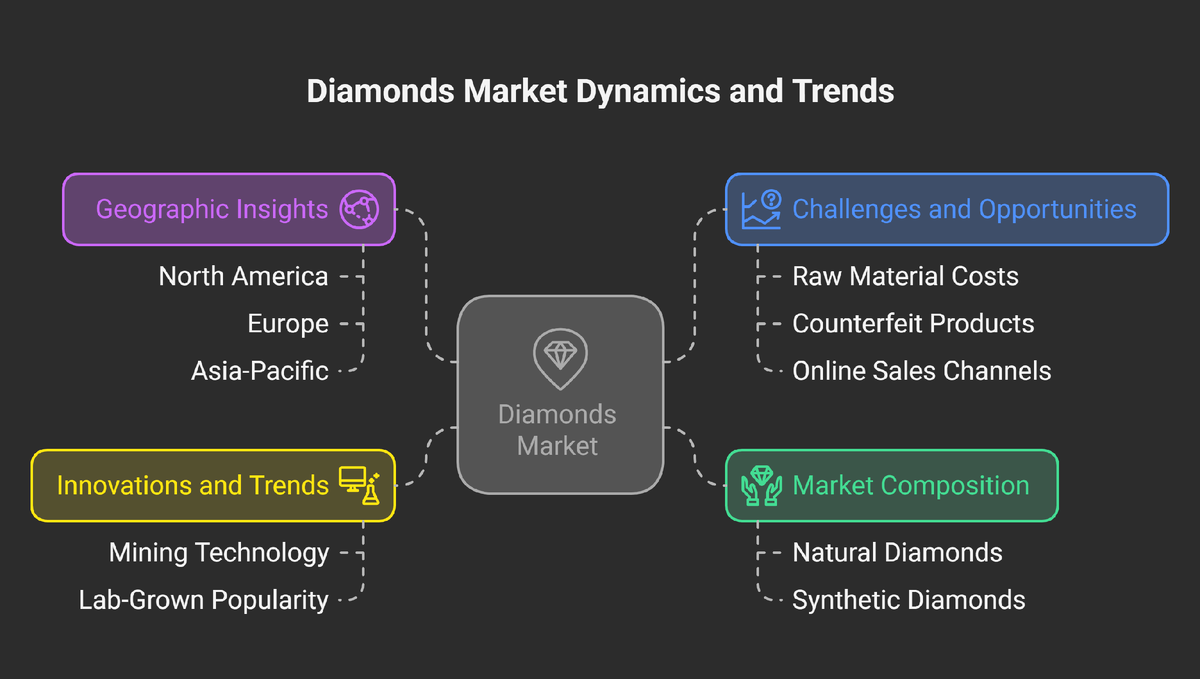
- Innovations and Trends: Advances in technology have enhanced diamond mining methods and led to the growing popularity of lab-grown diamonds. These innovations have not only made diamonds more accessible but have also increased transparency within the market.
- Challenges and Opportunities: The market faces challenges such as fluctuation in raw material costs and the impact of counterfeit products. However, there are considerable opportunities tied to expanding the market for lab-grown diamonds and leveraging online sales channels to reach more consumers.
For a deeper look at how the diamonds market is evolving, explore the Europe Diamonds Market. The report covers growth projections, consumer sentiment, and competitive positioning in depth.
Trends Shaping the Diamonds Market
The diamonds market is experiencing significant changes driven by evolving consumer preferences and the increasing popularity of lab-grown diamonds. As more consumers become environmentally conscious and seek ethical sourcing, traditional diamond markets are adjusting to these new dynamics.
- Consumer Preference Shifts: Modern consumers, particularly millennials and Gen Z, are more inclined towards products with a positive environmental impact. This demographic values sustainability and authenticity, leading to increased demand for ethically sourced diamonds and lab-grown alternatives, which are often more affordable.
- Rise of Lab-Grown Diamonds: Lab-grown diamonds present a viable alternative to mined diamonds, showcasing similar physical and chemical properties. Their popularity is surging due to their ethical advantages, lower prices, and customizable nature, making them an appealing choice for engagement rings and other jewelry.
- Technological Advancements: Innovations in technologies related to diamond synthesis have improved the quality and availability of lab-grown diamonds. As production methods become more refined, these diamonds are increasingly indistinguishable from their mined counterparts, further enhancing their market appeal.
- Marketing Strategies: Brands are adapting their marketing strategies to highlight the value of lab-grown diamonds. Storytelling related to environmental benefits and ethical sourcing is becoming commonplace, resonating with a consumer base that prioritizes meaningful purchases.
See how evolving consumer preferences are reshaping the diamonds market in the Global Diamonds Market Insights. This study compares trends and growth drivers that can inform your market strategies.
Challenges Facing the Diamonds Industry
The diamonds industry has been grappling with significant ethical and sustainability challenges that affect consumer perception and market growth. As awareness of sourcing practices increases, manufacturers and retailers must navigate complex dynamics that could potentially disrupt the traditional diamond market.
- Ethical Sourcing: Many consumers demand assurance that their diamonds are sourced responsibly. Issues like conflict diamonds and labor rights violations greatly tarnish the industry's reputation. Brands are now under pressure to provide transparent supply chains to rebuild trust with ethically-conscious consumers, thus leading to an increased focus on certifications and traceable sourcing practices.
- Sustainability Concerns: The environmental impact of diamond mining is significant, contributing to habitat destruction and pollution. The rise of lab-grown diamonds, which offer a more sustainable alternative, is reshaping consumer preferences while challenging traditional mining practices. Companies are pivoting towards eco-friendly operations to mitigate these effects.
- Market Volatility: Fluctuations in pricing and demand for natural diamonds, influenced by both synthetic alternatives and economic trends, lead to market instability. Businesses face challenges in maintaining profitability as they adapt to changing consumer preferences, which can lead to diminished stock values and investor confidence.
- Changing Consumer Preferences: A generational shift in buying habits, especially among millennials and Gen Z audiences, emphasizes ethics and sustainability over traditional luxury. This demographic favors brands that align with their values, prompting companies to evolve their marketing strategies and product offerings to maintain relevance.
To understand how brands are adapting to these challenges, review the Europe Diamonds Market Insights. It details market-entry tactics and strategies that can help navigate the evolving landscape.
Opportunities for Growth and Innovation
The diamonds market is poised for significant growth, driven by emerging markets and innovative technologies. Changes in consumer preferences and advancements in technology are reshaping the industry landscape, creating opportunities for both established players and new entrants.
- Emerging Market Potential: Regions such as India and China are witnessing increasing demand for diamonds, fueled by rising disposable incomes and a growing middle class. The expanding demand in these markets indicates potential for lucrative investments and sales growth in the coming years, particularly in the luxury sector.
- Lab-Grown Diamonds: The rising popularity of lab-grown diamonds is revolutionizing the market. These diamonds offer an eco-friendly and cost-effective alternative to mined diamonds, appealing to environmentally conscious consumers. As technology improves, the quality and acceptance of lab-grown diamonds continue to rise, expanding their market share significantly.
- Technological Innovations: Innovations in blockchain technology are enhancing transparency in the supply chain, helping consumers authenticate the origins of their diamonds. This transparency is increasingly valued by consumers, leading to a higher level of trust and influencing purchasing decisions. Moreover, enhanced online shopping experiences are attracting a younger demographic to the market.
- Personalization Trends: Customized diamond jewelry is gaining traction, with consumers seeking unique, personalized options. The trend towards bespoke designs allows companies to cater to individual preferences, enhancing customer satisfaction and loyalty in an increasingly competitive marketplace. Businesses that leverage customization may experience higher sales conversion rates.
The diamond industry is at a critical juncture where embracing these opportunities can lead to sustainable growth and innovation. For broader insights on market dynamics, refer to the Global Diamonds Market Insights, featuring forecasts and trends shaping the industry.
Conclusion
The diamonds market is undergoing significant transformations driven by evolving consumer preferences, technological advancements, and a growing emphasis on ethical sourcing. As the industry adapts to shifting consumer priorities and embraces technology, future trends will likely redefine the diamond’s place in luxury markets. For a deeper understanding of the shifts in the market, refer to the Europe Diamonds Market Insights. This report provides comprehensive analysis and insights into regional developments and emerging opportunities.