The app market is witnessing rapid evolution driven by technological advancements and shifting user behaviors. Businesses must stay attuned to these trends to capitalize on emerging opportunities and ensure competitiveness.
- Increased Focus on Privacy and Security: As data breaches become more frequent, users are prioritizing apps that demonstrate robust privacy features. Incorporating end-to-end encryption and transparent data usage policies can enhance user trust and engagement.
- Growth in Artificial Intelligence and Machine Learning: AI-driven features are transforming user experiences, from personalized recommendations to enhanced customer service through chatbots. Integrating AI can lead to improved user retention and satisfaction.
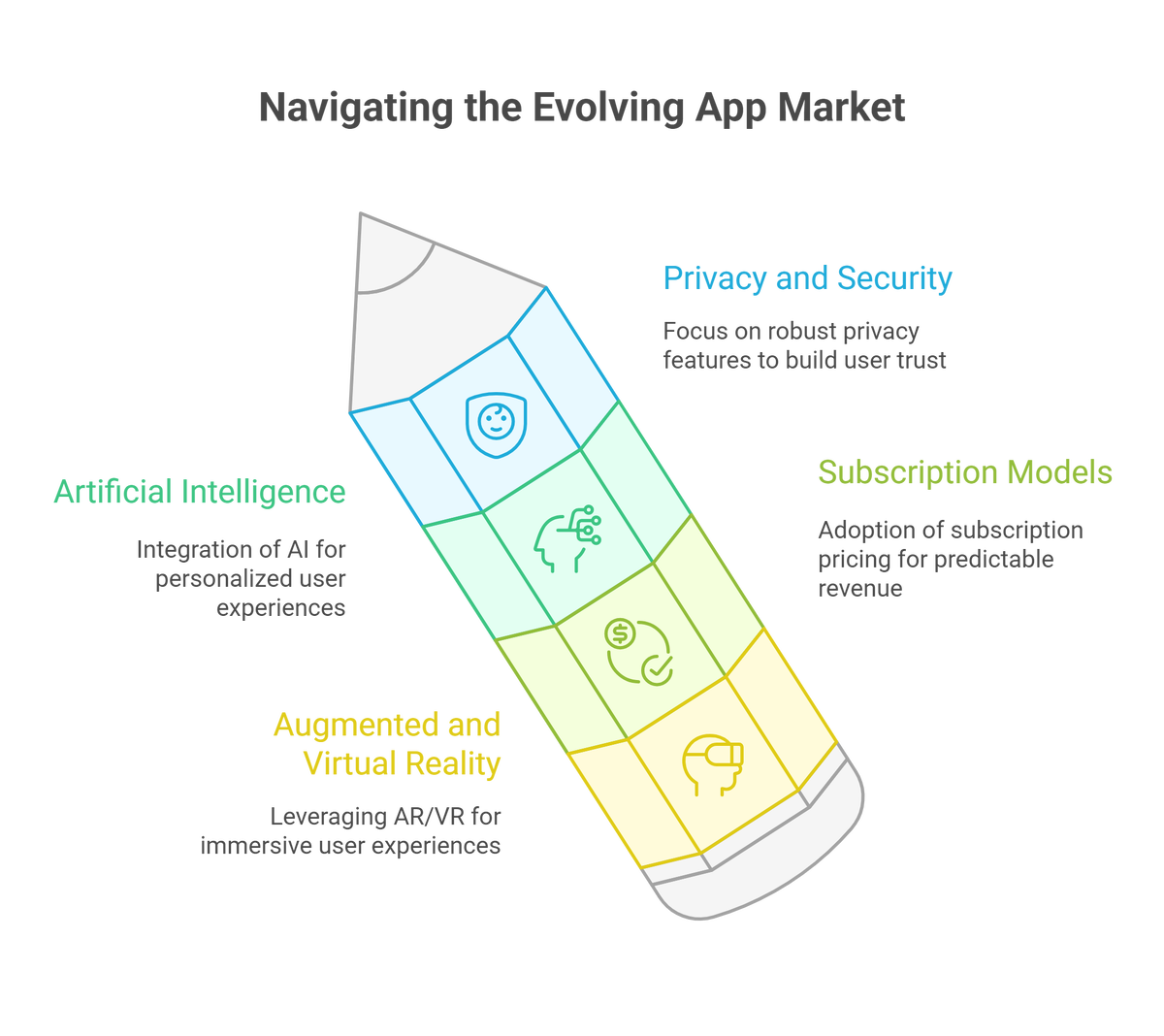
- Rise of Subscription-Based Models: More apps are adopting subscription pricing, providing predictable revenue streams while allowing users to access premium features. This shift has been particularly evident in gaming and productivity applications, attracting users with continuous content updates.
- Shift Towards Augmented Reality (AR) and Virtual Reality (VR): As AR and VR technologies mature, apps in sectors like gaming, retail, and education are leveraging these innovations to create immersive experiences that increase user engagement and satisfaction.
Market analysis indicates that developers should adapt to these trends to enhance their app offerings and align with user expectations. For a deeper look at how the app market is evolving, explore the Global App Market. The report covers growth projections, consumer sentiment, and competitive positioning in depth.
Navigating Challenges in the App Market
The app market presents numerous challenges for developers and businesses striving to succeed in a highly competitive environment. Understanding these hurdles is crucial for crafting effective strategies to navigate the complexities of the industry.
- Intense Competition: The app market is overcrowded, with millions of apps available. Developers must focus on unique value propositions and innovative features to stand out from the competition. Regular market research is vital to observe consumer trends and preferences, which can guide feature development and marketing strategies.
- Regulatory Compliance: Adhering to privacy laws and app store regulations is paramount. Non-compliance can lead to app removals or legal penalties. Developers should stay informed about evolving regulations, such as data protection laws, to ensure their apps meet the necessary compliance standards and maintain user trust.
- User Retention Challenges: Attracting users is only half the battle; retaining them is crucial for success. Engaging app experiences, regular updates, and effective communication through push notifications can help maintain user interest. Implementing feedback mechanisms also allows developers to adapt their offerings based on user input.
- Monetization Issues: Determining the right monetization strategy can be difficult. Options include in-app purchases, subscriptions, and ad-based revenue models. Developers should evaluate their target audience to choose a monetization approach that aligns with user expectations while maximizing revenue. A/B testing different models may yield insights into customer preferences.
To understand how premium app developers tailor their strategies in different markets, review the Global App Development Market. It details market-entry tactics, after-sales innovations, and partnership models proven to build brand equity.
Leveraging Opportunities for Growth
The app market is witnessing a remarkable shift fueled by emerging technologies and continuously evolving consumer needs. Businesses that strike the right balance in positioning themselves can capitalize on these expansive growth opportunities. Here’s how:
- Embrace Emerging Technologies: Businesses can leverage Artificial Intelligence (AI) and Machine Learning (ML) to enhance user experiences. This includes personalized recommendations and predictive analytics, which significantly increase user retention and satisfaction. The integration of blockchain technology also offers secure transactions, making apps more trustworthy and appealing to users.
- Tap into Niche Markets: There's an increasing demand for specialized applications catering to specific audiences. For instance, fitness apps catering to health-specific demographics or educational apps focusing on particular age groups can carve out significant market share. Identifying and targeting these niche segments allows businesses to reduce competition and foster loyalty among dedicated users.
- Focus on Sustainability: As consumers lean towards environmentally friendly products, app developers can innovate by creating solutions that promote sustainability. Features like carbon footprint tracking or eco-friendly product suggestions can attract environmentally conscious consumers and contribute to a positive brand image.
- Adopt Agile Development Practices: Utilizing Agile methodologies can accelerate the app development lifecycle, enabling businesses to quickly adapt to changes and user feedback. This flexibility can result in higher quality apps that meet evolving market demands promptly, thus enhancing competitive advantage.
For insights into the growth potential in the digital landscape, explore the Indonesia In App Advertising Market, which discusses how innovation in app development can contribute to community engagement and user retention strategies.
Introduction to the App Market
The app market plays a pivotal role in the digital economy, serving as a catalyst for innovation and user engagement across various sectors. With smartphones becoming ubiquitous, applications are essential for enhancing user experiences and driving business growth.
- Market Segmentation: The app market is segmented into categories such as gaming, social media, productivity, and e-commerce. Each segment has shown varied growth rates and revenue-generating capacities, highlighting the importance of targeted strategies for developers.
- Key Players: Major players like Apple, Google, and Amazon dominate the app ecosystem, controlling a significant share of both revenue and downloads. These companies leverage their vast resources to continuously innovate and improve user experience, keeping competitors at bay.
- Emerging Trends: There is a shift towards using artificial intelligence and machine learning in app development. These technologies enhance personalization, improving user engagement and retention rates. Apps utilizing AI are increasingly becoming favorites among users, prompting more developers to integrate these features.
- Revenue Models: Various revenue models exist, including in-app purchases, subscription services, and advertising. Subscriptions have gained immense popularity across numerous applications, providing consistent revenue streams while enhancing user loyalty.
To gain further insights into the current landscape, refer to the USA App Market. This report provides detailed analysis and forecasts that can help businesses strategize effectively in the competitive app environment.
Emerging Trends in the App Market
The app development landscape is rapidly evolving, particularly with the rise of No-Code and Low-Code development platforms. These emerging methodologies are democratizing application creation, enabling a broader range of professionals to build applications without extensive coding knowledge. This shift is not only accelerating development times but also reducing costs significantly for businesses.
- No-Code Platforms: These platforms empower users with minimal technical expertise to create applications using visual interfaces. By leveraging drag-and-drop functionalities, companies can develop applications quickly, enhancing innovation at a lower cost. With the global no-code market projected to grow, businesses are increasingly adopting these solutions to streamline operations and improve efficiencies.
- Low-Code Platforms: Unlike no-code tools, low-code platforms offer room for customization and integration with existing systems, appealing to developers while still accessible to non-technical users. This duality fosters collaboration between IT teams and business units, allowing for rapid iteration and deployment of applications. Organizations are benefiting from a significant reduction in development cycle times.
- Integration of AI and Machine Learning: Many new applications are incorporating AI and machine learning capabilities to enhance user experiences and provide personalized features. As these technologies develop, they will increasingly integrate into both no-code and low-code platforms, enabling predictive analytics and intelligent automation within applications.
- Focus on Cross-Platform Development: With a growing emphasis on creating applications that work seamlessly across multiple devices and operating systems, developers are leveraging frameworks that facilitate cross-platform compatibility. This focus not only broadens user reach but also simplifies maintenance and updates, ultimately lowering operational costs.
The ongoing trends in the app market underscore a significant shift towards more accessible development processes, with No-Code and Low-Code solutions leading the way. For broader global context on app development trends, consult the Global App Development Market, featuring forecasts, tech roadmaps, and regulatory shifts shaping demand worldwide.
Challenges Facing App Developers
The app development landscape has grown increasingly competitive, presenting a myriad of challenges for developers striving to capture user attention and market share. Some of the significant obstacles include:
- Market Saturation: With millions of apps available, standing out is a daunting task. Developers must continually innovate and offer unique features or exceptional user experiences to grab attention in a crowded marketplace.
- Keeping Up with Technology: Rapid technological advancements necessitate that developers stay updated with the latest programming languages, development frameworks, and tools. Failing to adapt can lead to outdated applications that may not meet user expectations.
- User Retention: Attracting users is only the first step; retaining them is equally challenging. Developers face the task of ensuring that their apps provide continuous value through updates and new features, as user preferences can shift quickly.
- Monetization Strategies: Finding effective ways to monetize apps without alienating users poses a significant challenge. Developers need to navigate through options like in-app purchases, subscriptions, and ads while ensuring a positive user experience.
To understand how app developers are overcoming these challenges, refer to the Global App Development Market. This report provides insights into market trends and strategies that can help developers improve their chances of success.
Opportunities for Growth and Innovation
The current landscape underscores a pivotal chance for businesses to achieve growth by tapping into emerging markets and leveraging diverse user demographics. As technological advancements continue to shape consumer behavior, several sectors exhibit significant potential for innovation and market penetration.
- Emerging Markets Expansion: Companies can explore untapped regions—like Southeast Asia and Africa—where smartphone penetration and internet access are rapidly increasing. According to recent trends, these markets are experiencing a surge in app downloads, presenting an opportunity for tailored solutions that cater to local needs. The Global App Development Market reveals that localized apps can significantly enhance user engagement.
- Diverse User Demographics: Understanding the preferences of various demographics—such as Gen Z and older adults—can guide product innovation. Adapting features such as accessibility options or social engagement tools can drive higher user retention rates. Research suggests that apps catering to specific age-related features show increased adoption, especially among older populations keen on technology.
- Sustainability Initiatives: Focusing on environmentally friendly practices offers a dual advantage of appealing to eco-conscious consumers and aligning with global sustainability trends. Brands that incorporate green technologies into their products are not only boosting their market reputation but also enjoying substantial growth. The demand for sustainable app solutions is projected to rise, particularly in the context of a digitized economy.
- Innovative Monetization Strategies: Exploring alternative revenue streams—such as subscription models or in-app purchases—can open new avenues for profitability. Businesses adapting to user preferences for flexible payment options are capturing a larger share of the market. Data from the Global App Development Market shows that the subscription model has garnered substantial consumer acceptance across various apps.
By concentrating efforts on these opportunities, companies can position themselves for enduring growth and maintain a competitive edge in the evolving market landscape.
Conclusion: Navigating the Future of the App Market
In the rapidly evolving app market, staying ahead requires businesses to not only adapt to emerging trends but also strategically overcome challenges while seizing potential opportunities.
- Embracing User-Centric Design: Making the user experience paramount in app development is critical, as intuitive designs foster retention and engagement. Companies that prioritize user feedback can refine features that enhance usability and satisfaction.
- Data-Driven Decision Making: Leveraging analytics is essential for understanding user behavior, optimizing marketing strategies, and personalizing content. This approach allows businesses to allocate resources effectively to maximize their reach and conversions.
- Adapting to Market Trends: The rise of in-app advertising and subscription models presents new revenue streams. As seen in the Indonesia In App Advertising Market, integrating ads seamlessly can enhance monetization without compromising user experience.
- Overcoming Regulatory Challenges: As privacy regulations tighten, compliance becomes vital. Businesses must implement robust data protection measures to avoid penalties and build trust with users.
For broader global context on app market trends, consult the USA App Market, featuring forecasts, tech roadmaps, and regulatory shifts shaping demand worldwide.