The review was written on Feb 25, 2024 by Erene.
The short story The Birds by British writer Daphne du Maurier is one of her short stories of the 1952 collection. Daphne’s craving for paranormal elements led to her horror genre classification, which inspired Alfred Hitchcock to make a film adaptation of “The Birds.”
However, was The Birds actually a horror novel only narrowing down to paranormal events portrayed in it? I’ll come up with some concepts of existing conflicts in the story, after providing a synopsis of the novel.
Making The Story Short
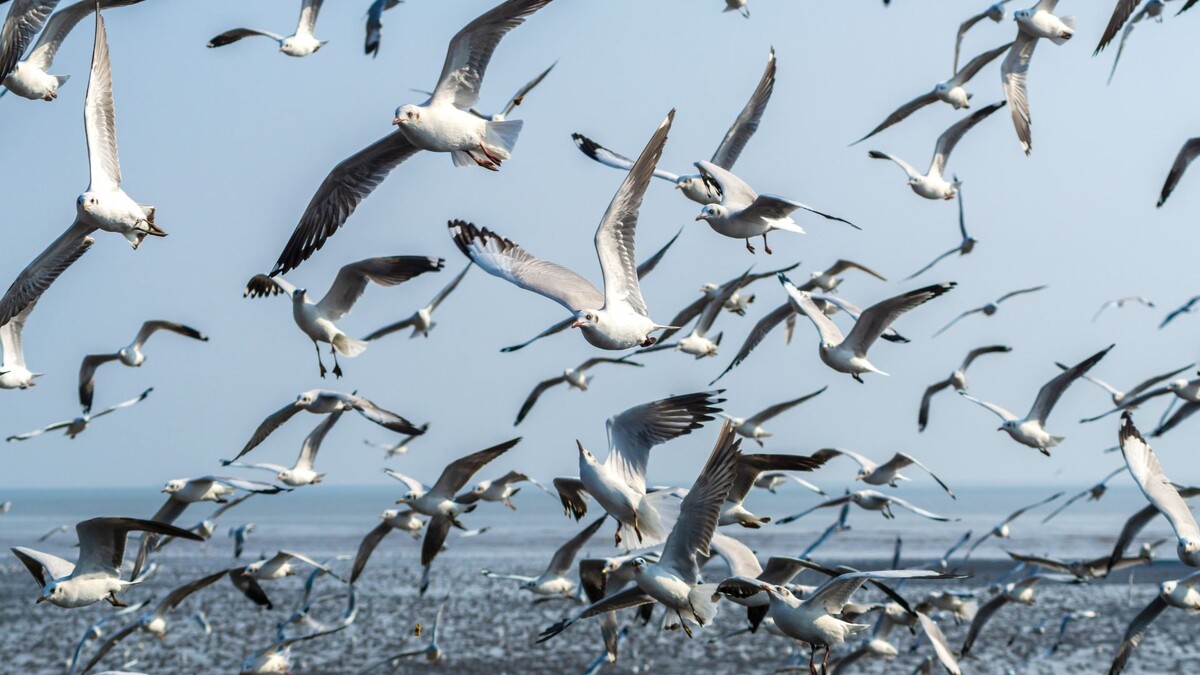
Set on a peninsula along the Cornish coast of England, the story unfolds on December 3rd as the weather undergoes a change. The wind rises, and the tide ups too, which urges the birds to flock, cry, and leave the shore before winter comes. At this time of year, the wind is too unpredictably forceful to let the situation go as naturally as possible. Birds become more hungry and aggressive as ever as the powerful gusts of wind come from the east. Not only do they attack people and their homes, but they also become mad and reckless when hitting against the houses’ walls, breaking their wings, and dying when falling onto the ground or floors, or into the chimney stacks. Nat Hocken, his wife, and their two children—a schoolgirl and a toddler boy—experience a few horrible nights as angry birds break into the house, particularly into the bedrooms, scores of them. Enumerable dead birds remain lying on the rooms’ floors and on the ground surrounding the house. The radio regularly informs the residents about a forthcoming uncontrolled disaster across the entire country, possibly caused by maddened birds. The radio voices warn households that they should take every precaution and stay indoors. One day, however, even the radio goes dead. During one lull between attacks, for the reason of running on empty, even bread is low, Nat has to go to the nearby farm where he has a part-time job apart from having a government pension for his wartime disability. He takes his family with him in his car. Reaching the turn to the farm, Nat commands his wife to stay put with the children until he returns. When he steps onto the farmland, he sees dead birds piled near a farmer’s body. Mr. Trigg’s dead body is in the house near the telephone, whose receiver is hanging loose, while Mrs. Trigg’s legs are protruding from the open bedroom upstairs. Nevertheless, Nat loads up with what he finds on the farm and comes back to his wife and the children waiting for him. They, full of supplies, return home from the farm. A few hours later, the attacks of birds begin again.
Conflict Number One
Speaking from where I stand, I insist on political aspects that wound up through the entire story. The story was written in 1952, seven years after WW2 was over. Even after the war, the British were still fearful of anything related to the Soviet Union’s triumph over Nazi Germany. Du Maurier’s work appears rather as a metaphor for which I can see a few red flags pointing out the fears and hatred among average Britons and politicians in front of socialist movements, the hatred driven by political brainwashing presenting the USSR as the primary enemy. So the first conflict in the story has pure political roots. Ridiculous though it may sound, the farmer of the story says: “They’re saying in town the Russians have done it. The Russians have poisoned the birds”.
Conflict Number Two
Well, one more conflict in the novel lies in the economy. The family of Nat lived in an isolated area of a small peninsula where food, industrial, and medicine stuff were difficult to ship for them. When the family didn’t venture out they ran out of supplies of goods. In her story, du Maurier almost professes the wind of change. In the 50s under the Conservatives, the Goods Movement Reference was reduced, the steel industry and road transport were denationalised. Funds for social purposes and civil industries were reduced consequently. Control over rent growth was abolished. The British colonial empire was eliminated.
Interesting References
The Cornish coast in the story gives an impression of a symbol of England’s isolation itself. Nat’s wife airs the question when the next attack of angry-hungry birds follows. “‘Won’t America do something?’, said his wife.” For example, in 1951, the oil production of Iran and the refining industry were nationalised. This was a serious blow to Britain’s interests in the Near and Middle East. Remember, the wind in the story came from the east. So, the same year, Churchill appealed to the United States for throwing their weight behind the British position on the Iranian issue. America’s then interests, however, were rather in Korea. Didn’t Britain feel at least in isolation if not in the lurch?
Conclusion
To put it a nutshell, with a spice of imagination, one can make an assumption that Daphne du Maurier, either consciously or subconsciously, presented the conflict between upper and work classes in the society of then Britain, illustrating the birds’ struggles for life and food as the prime example of forthcoming economic problems falling on families with low income. That wild mess led to destroying the farm, whose owner certainly represented the upper class. The wind of change could lead to the growth of social dis-balance, which prompted the government to create a spark silhouette of the enemy in the face of the USSR to scare the residents of England by it. Whatever paranoid form it took, the image of the principal enemy, Russians, was encrypted in the minds of British people for a long-lasting effect. These conflicts have not been resolved yet at the global level, for obvious reasons, which are clearly outlined in my previous passages.